
Building a Sustainable Eating Pattern When You Have No Time to Cook

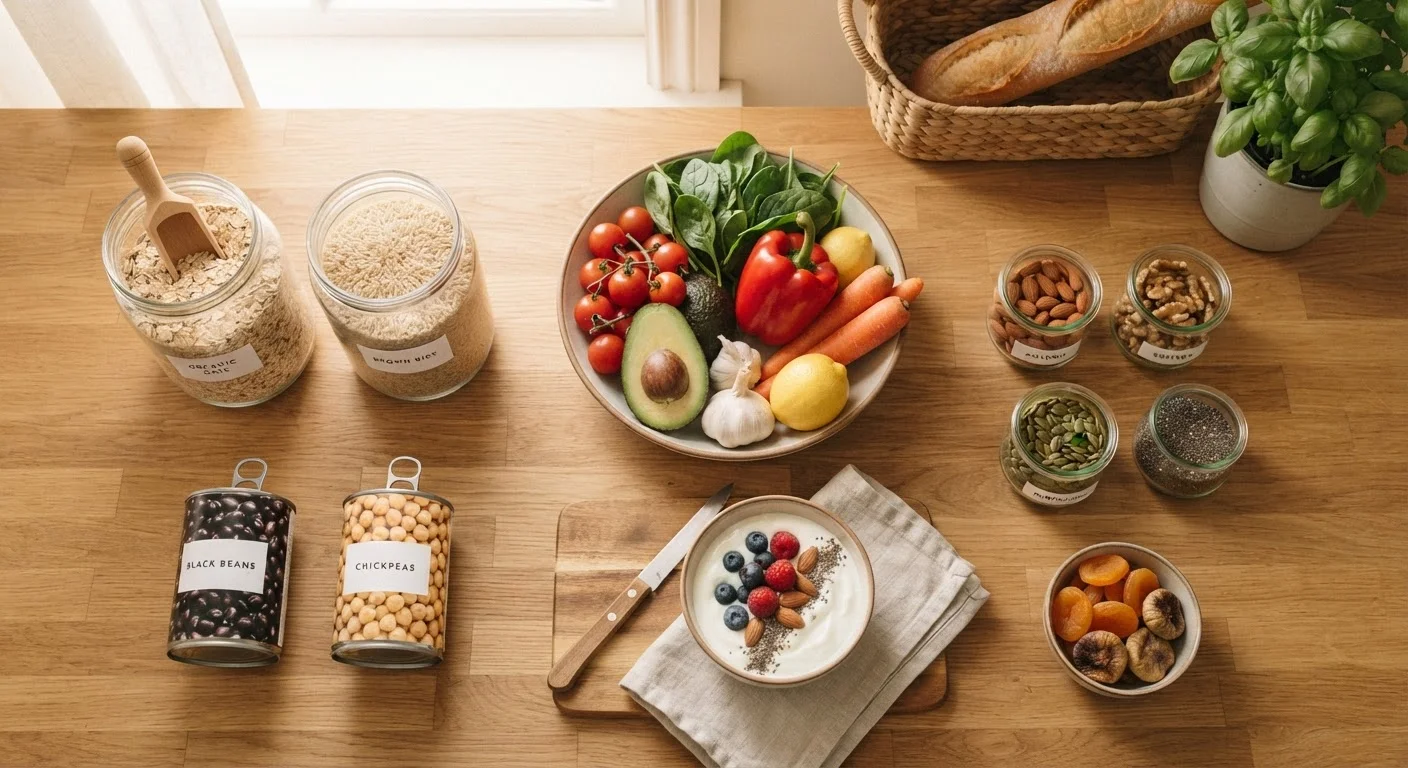
Photo: ArticleHood.com | Precision In Every Word editorial
Key Takeaways
- A well-stocked pantry is the single highest-leverage investment for eating well under time pressure.
- Dietary quality is built over the course of a week, not a single meal - consistency matters more than perfection.
- Simple assembly-style meals can meet most nutritional needs without any actual cooking.
- Strategic batch cooking of just one or two items per week reduces daily decision fatigue significantly.
- Convenience foods can fit a healthy pattern when chosen thoughtfully - ingredient quality counts more than format.
Why Time Pressure Derails Eating Habits
Most people don't abandon healthy eating because they lack motivation - they abandon it because the friction gets too high. When a long workday collides with an empty fridge and a short decision window, the path of least resistance wins every time. Understanding this dynamic is more useful than willpower-focused advice.
Research in behavioral nutrition consistently shows that food environment and available options shape choices more powerfully than intentions. That means the solution isn't forcing yourself to cook when you're exhausted - it's restructuring your environment so that a reasonably nutritious choice is also the easy one. For a deeper look at the structural barriers at play, see why healthy eating is harder than it should be.
Core Practices for Eating Well Without Cooking Time
The following practices are grounded in nutritional science and behavioral research. They require minimal time investment while supporting consistent dietary variety and adequacy.
Stock a rotation of five to seven pantry staples that require no preparation.
Batch-cook just one ingredient per week rather than full meals.
Use a 'protein + vegetable + base' mental template for assembly meals.
Evaluate convenience and takeout options by ingredient quality rather than avoiding them entirely.
Anchor each day with at least one structured, intentional eating occasion.
If you want a framework for building balanced meals regardless of cuisine or cooking method, the principles in building a healthier plate apply directly here.
Quick Wins You Can Implement Today
Sustainable change rarely comes from overhauling everything at once. These actions are small enough to do immediately but meaningful enough to shift your overall pattern.
For a structured way to evaluate where your diet currently stands, a weekly nutrition habits audit can surface gaps you might not notice day to day.
What the Evidence Says About Dietary Pattern vs. Individual Meals
One of the most practically liberating findings in nutrition science is that dietary quality is assessed over days and weeks, not single meals. No single food or meal determines health outcomes - cumulative patterns do. This means a rushed, imperfect lunch doesn't undermine your nutrition; it's the recurring choices across the week that add up.
~77%
Adults who report time as a barrier to healthy eating
According to survey data compiled by the International Food Information Council, time constraints consistently rank among the top reported barriers to healthier food choices in the US.
3-5 min
Typical assembly time for a nutritionally adequate no-cook meal
Nutrition educators and dietitians frequently cite assembly-style meals - combining pantry staples without cooking - as a practical standard for time-constrained eating occasions.
This pattern-level thinking also means that convenience foods aren't automatically incompatible with a healthy diet. Canned legumes, frozen vegetables, pre-cooked whole grains, and plain Greek yogurt are all minimally processed, nutrient-dense options that require zero cooking. What matters is the overall composition of what you eat regularly - not whether it came from a pot you stirred yourself.
“The goal of dietary guidance should be to make the healthy choice the easy choice - by designing food environments that support good decisions rather than relying on willpower alone.”
— Dariush Mozaffarian, Dean Emeritus, Friedman School of Nutrition Science and Policy, Tufts University
For a complementary perspective on how non-food factors like sleep and stress quietly shape your food decisions, see how sleep and stress shape appetite.
This article is for general informational and educational purposes only and is not a substitute for professional medical or dietary advice. Consult a qualified healthcare provider or registered dietitian for guidance tailored to your individual health needs.
The content on this site is for informational purposes only and is not a substitute for professional advice. Always consult a qualified professional for guidance specific to your situation.