
Home Insulation Types at a Glance: Batts, Blown-In, Spray Foam, and Rigid Board

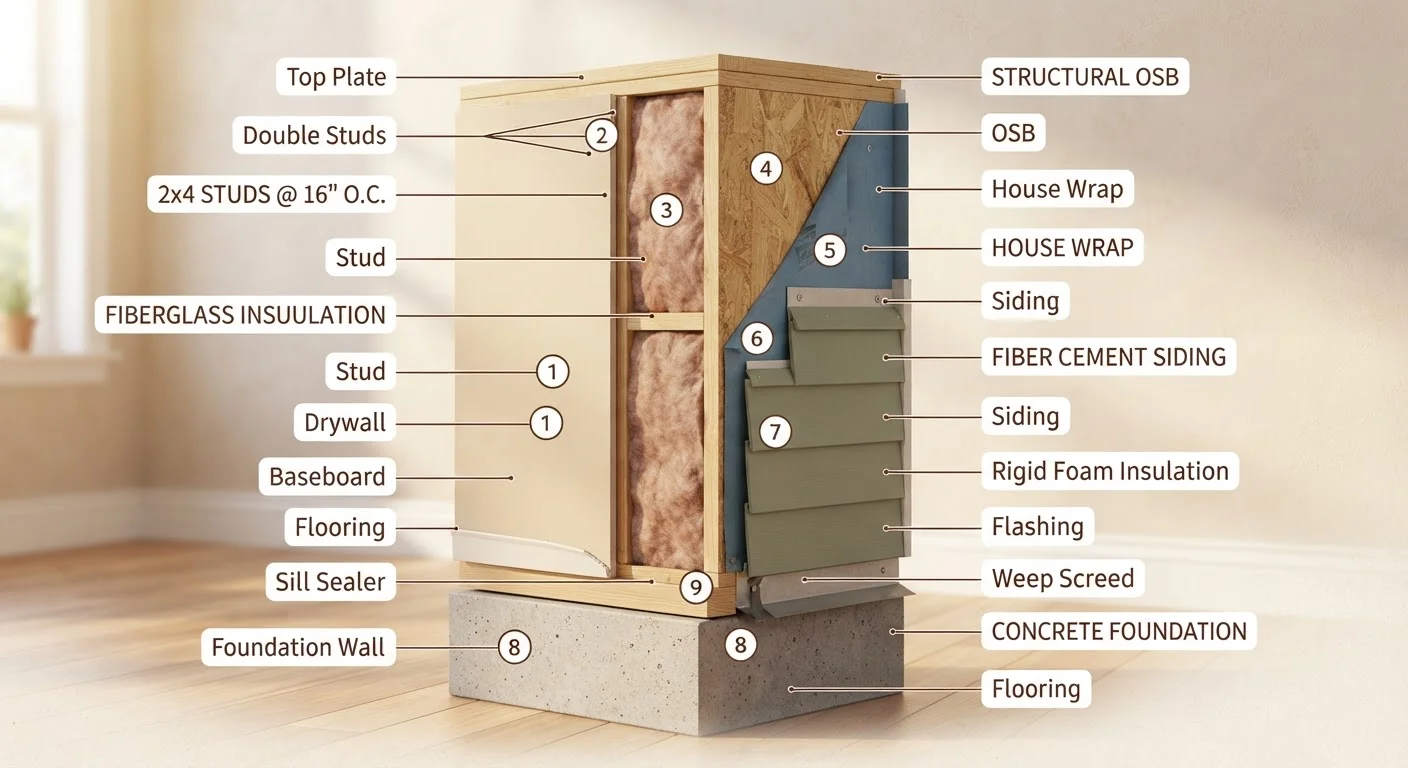
Photo: ArticleHood.com | Precision In Every Word editorial
What Homeowners Should Know Before Choosing Insulation
Insulation is one of the most impactful upgrades you can make to a home's energy performance - yet many homeowners aren't sure which type does what. The four most common residential options are batt insulation, blown-in insulation, spray foam insulation, and rigid board insulation. Each suits different spaces, budgets, and installation scenarios.
Before comparing them, it helps to understand R-value, the standard measure of how well insulation resists heat flow. Higher R-values mean better thermal resistance. Your local climate, the area being insulated, and whether you're doing new construction or retrofitting an existing home all influence which type makes the most sense.
| Batt R-Value Range | R-11 to R-38 (Varies by thickness and material (fiberglass vs. mineral wool)) |
| Blown-In R-Value Range | R-13 to R-60 (Depends on material depth and type (cellulose, fiberglass, mineral wool)) |
| Closed-Cell Spray Foam R-Value | ~R-6 to R-7 per inch (Open-cell foam is approximately R-3.5 per inch) |
| Rigid Board R-Value Range | ~R-3.8 to R-6.5 per inch (Varies by board type: EPS, XPS, or polyisocyanurate) |
| Most DIY-Friendly Option | Batt insulation (Blown-in requires rental equipment; spray foam requires professional installation) |
| Best for Air Sealing | Closed-cell spray foam (Expands to fill gaps and acts as both insulation and air barrier) |
This article provides general educational information only. Always consult a licensed insulation contractor or building professional before starting any insulation project, and verify local building codes and permit requirements in your area.
The Four Main Insulation Types Explained
Batt Insulation
Batts are pre-cut panels or rolls - typically made from fiberglass or mineral wool - sized to fit standard stud and joist spacing. They're one of the most widely recognized types and are often used in open wall cavities, floors, and attics during new construction or major renovations. R-values generally range from about R-11 to R-38 depending on thickness and material. Batts work best when cut and fitted carefully; gaps or compression significantly reduce their effectiveness.
Blown-In Insulation
Also called loose-fill insulation, blown-in material - usually fiberglass, cellulose, or mineral wool - is pneumatically blown into place using specialized equipment. It excels at filling irregular spaces, attic floors, and enclosed existing wall cavities without major demolition. R-values typically range from R-13 to R-60 depending on depth and material. Cellulose is often made from recycled content, which appeals to sustainability-minded homeowners.
Spray Foam Insulation
Spray polyurethane foam (SPF) expands on contact to fill cavities, gaps, and cracks, offering both insulation and an air seal in one application. It comes in two forms: open-cell foam (lower density, R-value around R-3.5 per inch) and closed-cell foam (denser, R-value roughly R-6 to R-7 per inch). Spray foam is particularly effective in hard-to-reach areas, around pipes, and in crawl spaces. Because it involves chemical mixing and curing, installation should be handled by trained professionals.
Spray Foam Requires Professional Installation
Rigid Board Insulation
Rigid foam boards - made from materials such as expanded polystyrene (EPS), extruded polystyrene (XPS), or polyisocyanurate - are sold in flat panels and used on exterior walls, basement walls, under slab foundations, and rooflines. They offer high R-values per inch (roughly R-3.8 to R-6.5 depending on type) and are moisture-resistant, making them suitable for areas where other insulation types would be vulnerable. Rigid boards are often used in combination with other insulation types for enhanced performance.
R-Value
A measure of thermal resistance - how well a material slows the transfer of heat. Higher R-values indicate greater insulating effectiveness.
Batt Insulation
Pre-cut panels or rolls of insulation material, commonly fiberglass or mineral wool, designed to fit between wall studs or floor joists.
Blown-In (Loose-Fill) Insulation
Insulation material blown into cavities or attic floors using specialized equipment. It conforms to irregular spaces and is commonly made from fiberglass, cellulose, or mineral wool.
Spray Polyurethane Foam (SPF)
A two-component chemical mixture that expands into foam when applied, simultaneously insulating and sealing air gaps. Available in open-cell and closed-cell varieties.
Rigid Board Insulation
Flat foam panels used on walls, roofs, or foundations. Common materials include EPS, XPS, and polyisocyanurate, all offering high R-values per inch.
Air Sealing
The process of closing gaps, cracks, and openings in a building's envelope to reduce uncontrolled air leakage, which improves energy efficiency alongside insulation.
Thermal Bridging
Heat transfer that occurs through structural elements like studs, bypassing the insulation. Rigid board insulation on exterior walls can help reduce thermal bridging.
The content on this site is for informational purposes only and is not a substitute for professional advice. Always consult a qualified professional for guidance specific to your situation.