
Laundry Symbols Decoded: A Room-Ready Reference

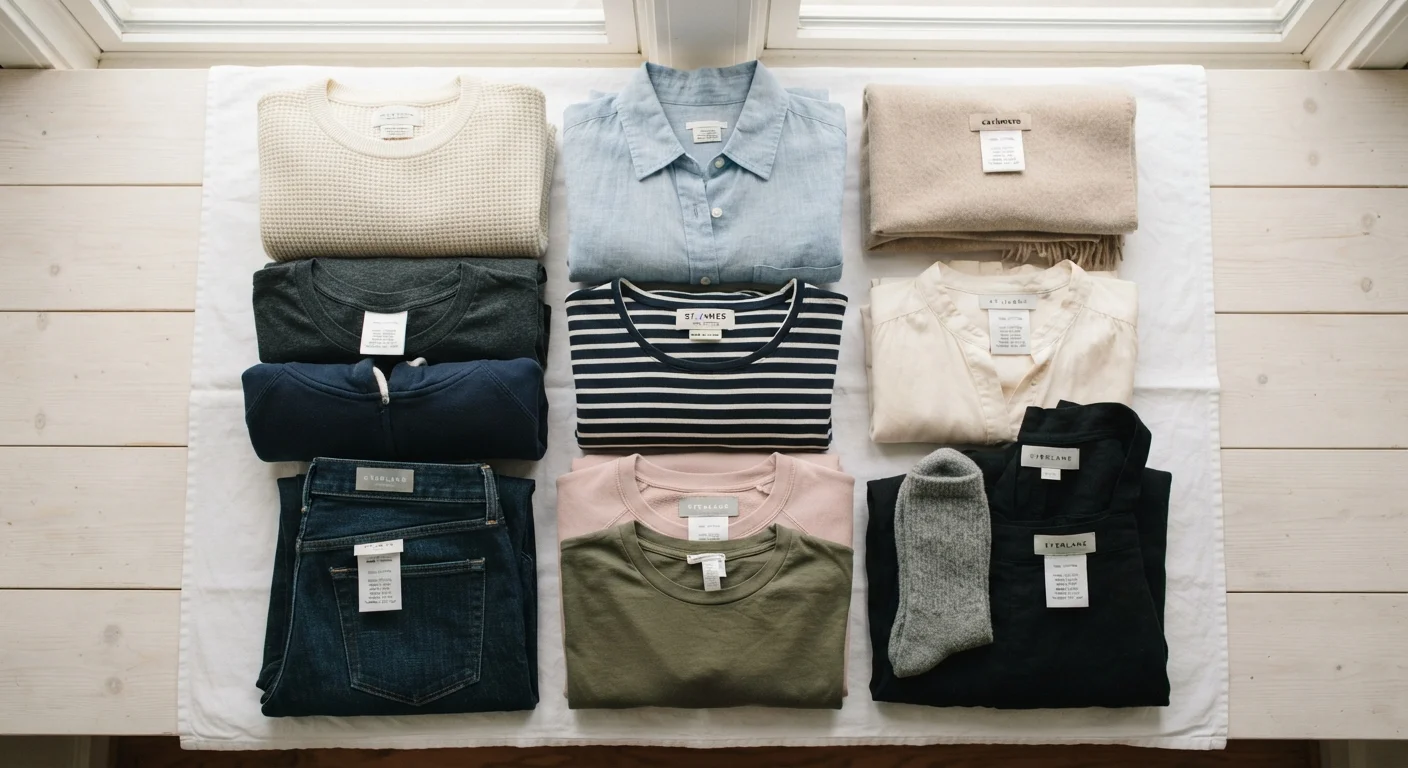
Photo: ArticleHood.com | Precision In Every Word editorial
Why Care Labels Exist (and Why They're Worth Reading)
Every garment sold in the United States is required by federal regulation to carry a permanent care label. These labels use standardized symbols - developed by industry bodies and recognized internationally - to tell you exactly how a fabric should be washed, dried, ironed, bleached, and dry-cleaned.
Ignoring them isn't always catastrophic. But it's the most common reason clothes shrink, fade, pill, or fall apart ahead of schedule. Think of a care label as the manufacturer's clearest instructions for keeping what you paid for. This guide decodes the five main symbol categories so you can use them as a quick reference at the machine.
If you enjoy reading guidance labels in other parts of daily life, you may find our complete guide to managing your home's daily systems equally useful - it covers laundry routines alongside other household essentials.
| Number of symbol categories | 5 (wash, bleach, dry, iron, dry clean) (ASTM D5489 and ISO 3758 care labeling standards) |
| US labeling requirement | Mandatory on all garments sold in the US (Federal Trade Commission Care Labeling Rule) |
| Coolest standard wash temp | 30°C (approx. 86°F) (International care symbol standard) |
| Most heat-sensitive common fiber | Wool (felts and shrinks with heat and agitation) (General textile industry guidance) |
| Blended fabric rule | Follow care instructions for the most delicate fiber (Standard textile care guidance) |
The Five Symbol Categories, Explained
Washing (Basin Symbol)
A bucket or basin shape represents machine or hand washing. The number inside indicates the maximum water temperature in Celsius (30°C ≈ cool, 40°C ≈ warm, 60°C ≈ hot). One line beneath the basin means a permanent-press cycle; two lines mean a gentle cycle. A hand dipping into the basin means hand-wash only. An X through the basin means do not wash with water at all.
Bleaching (Triangle Symbol)
A plain triangle means any bleach is acceptable. A triangle with diagonal lines means only non-chlorine (oxygen) bleach. An X through the triangle means no bleaching - typically used for colors that will bleed or fabrics that will degrade.
Drying (Square Symbol)
A square with a circle inside means tumble dry is safe. Dots inside the circle indicate heat level: one dot is low heat, two dots are medium, three dots are high. A square with lines inside (no circle) means lay flat or hang to dry. An X through the square-and-circle means do not machine dry.
Ironing (Iron Symbol)
An iron silhouette with one dot means low heat (synthetics), two dots mean medium (wool, polyester blends), and three dots mean high heat (cotton, linen). Lines beneath the iron with an X through them mean no steam. An X through the iron means do not iron - delicate surfaces like velvet or sequined fabrics fall here.
Dry Cleaning (Circle Symbol)
A plain circle means dry clean. Letters inside (P, F, W) signal which solvents are safe for the cleaner to use - you don't need to memorize these; they're instructions for the professional. An X through the circle means do not dry clean.
Permanent Press
A wash and dry cycle that uses moderate heat and a cool-down phase to reduce wrinkling. Indicated by one line beneath a washing or drying symbol.
Delicate / Gentle Cycle
A machine cycle with reduced agitation and lower spin speed, designed for fragile fabrics. Indicated by two lines beneath a washing or drying symbol.
Non-chlorine Bleach
Also called oxygen bleach, this is a milder alternative to chlorine bleach. It's safer for colors and most fabrics, indicated by a triangle with diagonal lines.
Felting
An irreversible matting of wool fibers caused by heat, moisture, and agitation together. The primary reason wool items are labeled dry-clean or hand-wash only.
Lay Flat to Dry
A drying method where a garment is reshaped and left horizontal on a clean surface. Prevents gravity-induced stretching common in knits when hung wet.
Dry Cleaning
A professional cleaning process that uses chemical solvents instead of water. Required for fabrics that cannot tolerate moisture without warping, shrinking, or staining.
What Happens When You Ignore the Label
Each violation has a predictable consequence. Washing a dry-clean-only garment in water can cause wool to felt - a permanent, irreversible matting of the fibers. Tumble-drying a lay-flat item can cause stretching or distortion in knit structures. Using chlorine bleach on a no-bleach item may weaken fabric threads, causing tears after just a few washes.
Temperature is the most commonly ignored instruction. Hot water shrinks natural fibers (cotton, wool, linen) and degrades elastic. A 40°C wash instead of a 30°C wash may not ruin a garment immediately, but repeated exposure accelerates wear. When in doubt, cooler and gentler is almost always the safer choice.
Note: Care instructions apply to the most delicate fiber in a garment. A blended fabric that is 80% cotton and 20% spandex should be treated according to the spandex - the more fragile component.
The content on this site is for informational purposes only and is not a substitute for professional advice. Always consult a qualified professional for guidance specific to your situation.