
Snowball vs. Avalanche: Two Paths to Paying Off Debt

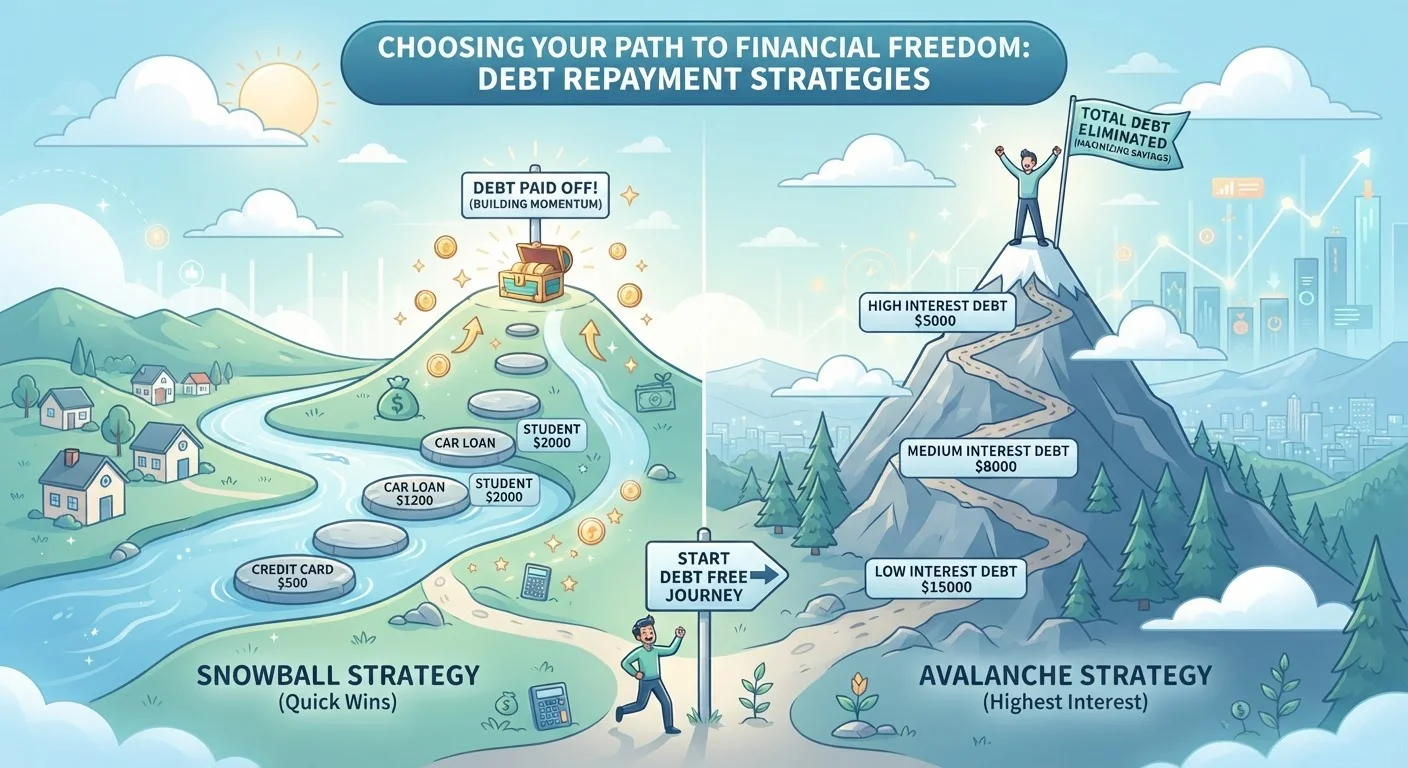
Photo: ArticleHood.com | Precision In Every Word editorial
Key Takeaways
- The snowball method pays off the smallest balance first, regardless of interest rate.
- The avalanche method targets the highest-interest debt first, reducing total interest paid.
- Snowball builds momentum through quick wins; avalanche saves more money over time.
- Neither method is universally superior - the right choice depends on your habits and situation.
- Both methods require paying at least the minimum on all other debts while focusing extra payments on one target.
How Each Method Works
Both strategies share the same core mechanic: pay the minimum on every debt each month, then direct any extra money toward one specific target. Where they differ is in how they choose that target.
The Debt Snowball starts with your smallest balance, regardless of its interest rate. Once that debt is cleared, you roll its payment into the next-smallest balance - just like a snowball picking up mass as it rolls downhill. The cycle continues until all debts are gone.
The Debt Avalanche starts with the debt carrying the highest annual percentage rate (APR - the yearly cost of borrowing, including interest). Once that debt is eliminated, you move to the next highest rate. Because you're attacking the most expensive debt first, you reduce the amount of interest accruing across your whole debt load.
For a deeper look at foundational repayment concepts, see principles behind effective debt repayment plans.
| Criterion | Debt Snowball | Debt Avalanche |
|---|---|---|
| Repayment order | Smallest balance first | Highest interest rate first |
| Total interest paid | Typically higher | Typically lower |
| Motivation style | Frequent early wins | Delayed but larger payoff |
| Best psychological fit | Needs visible progress | Comfortable with slow build |
| Mathematical efficiency | Lower | Higher |
| Simplicity to start | Easy - sort by balance | Easy - sort by APR |
The Real Trade-Off: Psychology vs. Math
Research in behavioral economics consistently shows that motivation plays a large role in whether people stick to financial plans. The snowball method leverages this by delivering frequent, visible wins. Paying off a $400 medical bill or a small store card in the first month feels like real progress - because it is. That feeling matters.
The avalanche method, by contrast, can feel slow at first. If your highest-interest debt also carries a large balance, it may take many months before you fully eliminate it. For some people, that delay erodes commitment.
~$1,000+
Potential interest savings with avalanche vs. snowball
The exact savings vary widely by debt size and interest rates, but higher-rate debt left unaddressed compounds quickly over months and years.
40%
US adults carrying credit card debt month to month
According to Federal Reserve survey data, a significant share of US households carry revolving credit card balances subject to interest charges.
The honest answer is that a plan you stick to will outperform a theoretically superior plan you abandon. If the avalanche method feels discouraging after three months and you revert to making only minimum payments, the snowball would have served you better - even if it costs a little more in interest.
If you're navigating debt alongside savings goals, saving while in debt explores how to balance both simultaneously.
Choosing the Right Path for Your Situation
Before choosing a method, take stock of your full debt picture: list every debt, its balance, its interest rate, and its minimum payment. This is the same starting point for either strategy - and for the broader framework covered in our complete guide to saving and debt.
Consider the snowball if:
- You have several small debts you could realistically clear within a few months.
- You've struggled with financial motivation or consistency in the past.
- Simplifying the number of accounts you manage is a priority.
Consider the avalanche if:
- You carry high-APR debt - particularly credit card balances above 20% APR.
- You have a stable budget and track spending reliably.
- You're comfortable delaying the satisfaction of a fully paid account.
Some people start with the snowball to build confidence, then switch to the avalanche once their debt load is more manageable. That hybrid approach is entirely valid. What matters most is that you maintain consistent extra payments over time.
Both Methods Require a Budget Foundation
If your debt load feels unmanageable with either strategy, debt consolidation is another option worth understanding - though it comes with its own trade-offs.
This article is for general informational and educational purposes only and does not constitute personalized financial advice. Consult a qualified financial professional for guidance tailored to your individual circumstances.
The content on this site is for informational purposes only and is not a substitute for professional advice. Always consult a qualified professional for guidance specific to your situation.