
The Difference Between an Emergency Fund and a Savings Account

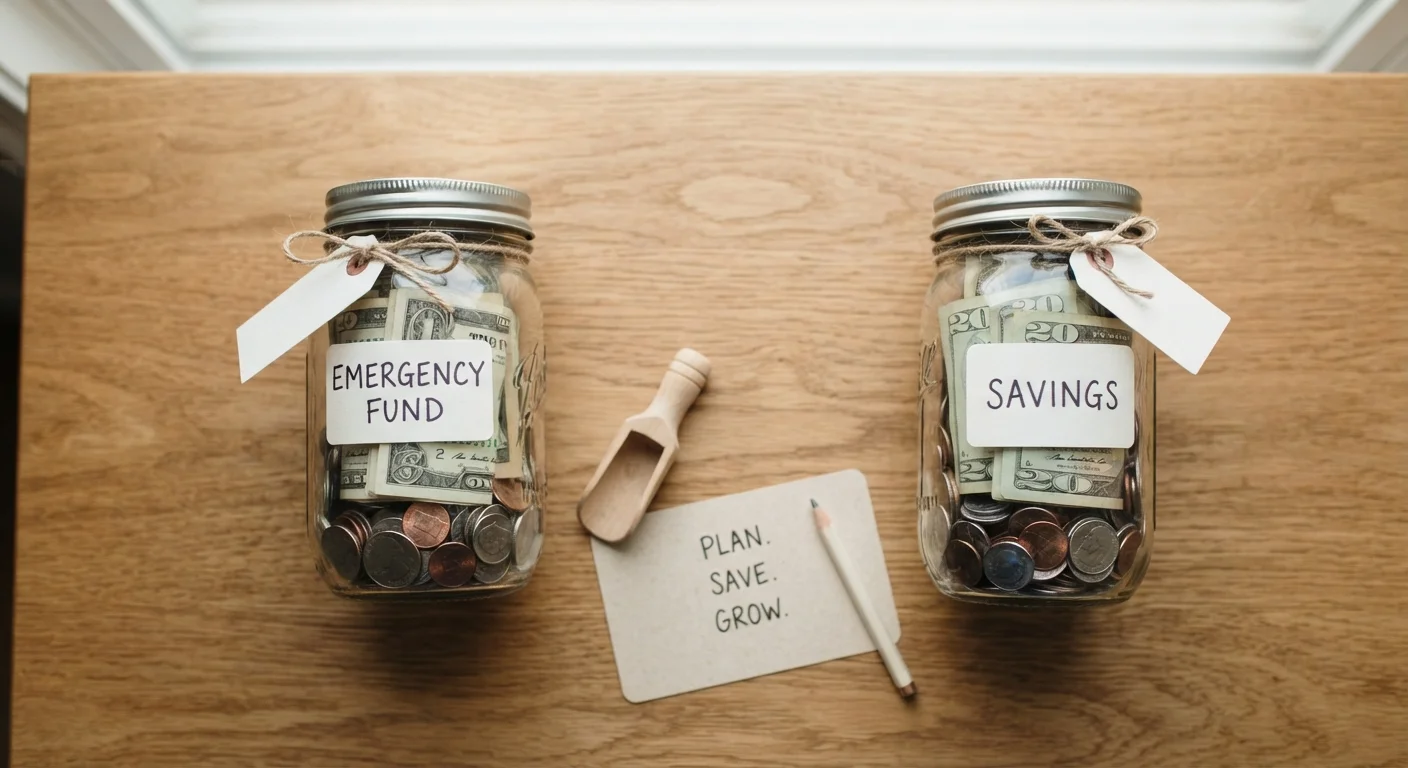
Photo: ArticleHood.com | Precision In Every Word editorial
Key Takeaways
- An emergency fund is defined by its purpose - covering true financial crises - not by where the money is stored.
- A savings account is a bank product that can hold emergency funds, vacation money, or any other financial goal.
- Most financial guidance recommends keeping three to six months of essential living expenses in an emergency fund.
- Mixing emergency savings with other savings goals can lead to spending your safety net by accident.
- High-yield savings accounts can be a practical home for an emergency fund without sacrificing accessibility.
Why People Confuse the Two
It's easy to assume that having a savings account automatically means you have an emergency fund. After all, both involve money you're not spending today. But the confusion often leads to a costly mistake: people believe they're financially prepared for a crisis when they're actually spending from the same pool of money earmarked for a vacation or home renovation.
The distinction matters because financial resilience depends on having money that is off-limits for everything except genuine emergencies. When those two purposes blur together, the safety net disappears precisely when you need it most. Understanding the difference is a foundational step - for more on the broader relationship between saving and debt, see the complete guide to building stability on both fronts.
A Common Mental Accounting Trap
What an Emergency Fund Actually Is
An emergency fund is a financial strategy, not a product. It is a dedicated reserve of money - held somewhere accessible - whose sole purpose is to cover unexpected, unavoidable expenses that would otherwise force you into debt or financial crisis. Job loss, a medical bill not covered by insurance, a broken furnace in January, or an urgent car repair are classic examples.
The defining rule of an emergency fund is that it is not for planned purchases, even large ones. A new laptop, holiday gifts, or a deposit on a rental apartment are not emergencies - they are expenses that can be anticipated and saved for separately.
~57%
Americans unable to cover a $1,000 emergency from savings
According to Bankrate's annual emergency savings survey, more than half of U.S. adults say they could not pay for a $1,000 unexpected expense from savings alone.
3-6 months
Recommended emergency fund coverage
Most widely cited financial guidance, including from nonprofit financial education organizations, recommends covering three to six months of essential living expenses.
22%
Adults with no emergency savings at all
Bankrate's research has consistently found that roughly one in five U.S. adults has no dedicated emergency savings, leaving them highly exposed to financial shocks.
Because an emergency fund needs to be available quickly - often within a day or two - it should not be locked up in investments that fluctuate in value or carry withdrawal penalties. Liquidity (the ability to access money quickly) is the primary requirement.
What a Savings Account Actually Is
A savings account is a banking product - a deposit account offered by banks and credit unions that pays interest on the balance you keep there. It is a container, not a strategy. The same type of account can hold your emergency fund, your travel fund, your new-car fund, or any other financial goal you're working toward.
Savings accounts come in several forms. A standard savings account at a traditional bank typically offers a modest interest rate. A high-yield savings account - often found at online banks - generally offers a higher annual percentage yield (APY), meaning your balance grows faster. Money market accounts are another variation, sometimes offering tiered interest rates based on balance size.
None of these account types are inherently an emergency fund. That designation comes entirely from how you use them and what rules you set for yourself about when withdrawals are allowed. For a clear breakdown of terms like APY and liquidity, the key terms reference guide is a useful companion.
How to Structure Both in Practice
The most practical approach is to treat your emergency fund as a separate, named account - ideally at a different institution or at least in a sub-account your bank allows you to label. Visibility matters: when you can see exactly how much is in your emergency fund versus your other savings goals, you're far less likely to accidentally spend from the wrong bucket.
Name Your Accounts to Match Their Purpose
If you're currently carrying high-interest debt, you may wonder whether building an emergency fund is worth it. Research and widely cited financial guidance - including from consumer finance educators - generally supports maintaining at least a small emergency buffer even while paying down debt, precisely to avoid reaching for a credit card when something breaks. The saving while in debt guide explores this trade-off in depth.
Once your emergency fund reaches your target amount, contributions to that account can pause - freeing up cash flow for debt paydown or other savings goals. Periodically revisit the balance: if your living expenses increase, your emergency fund target should increase too. A structured self-review can help - consider using a personal savings and debt audit to check in on your overall picture.
This article is for general informational and educational purposes only and does not constitute personalised financial advice. Consult a qualified financial professional for guidance specific to your circumstances.
Frequently Asked Questions
The content on this site is for informational purposes only and is not a substitute for professional advice. Always consult a qualified professional for guidance specific to your situation.