
What Compound Interest Actually Does to Your Savings Over Time

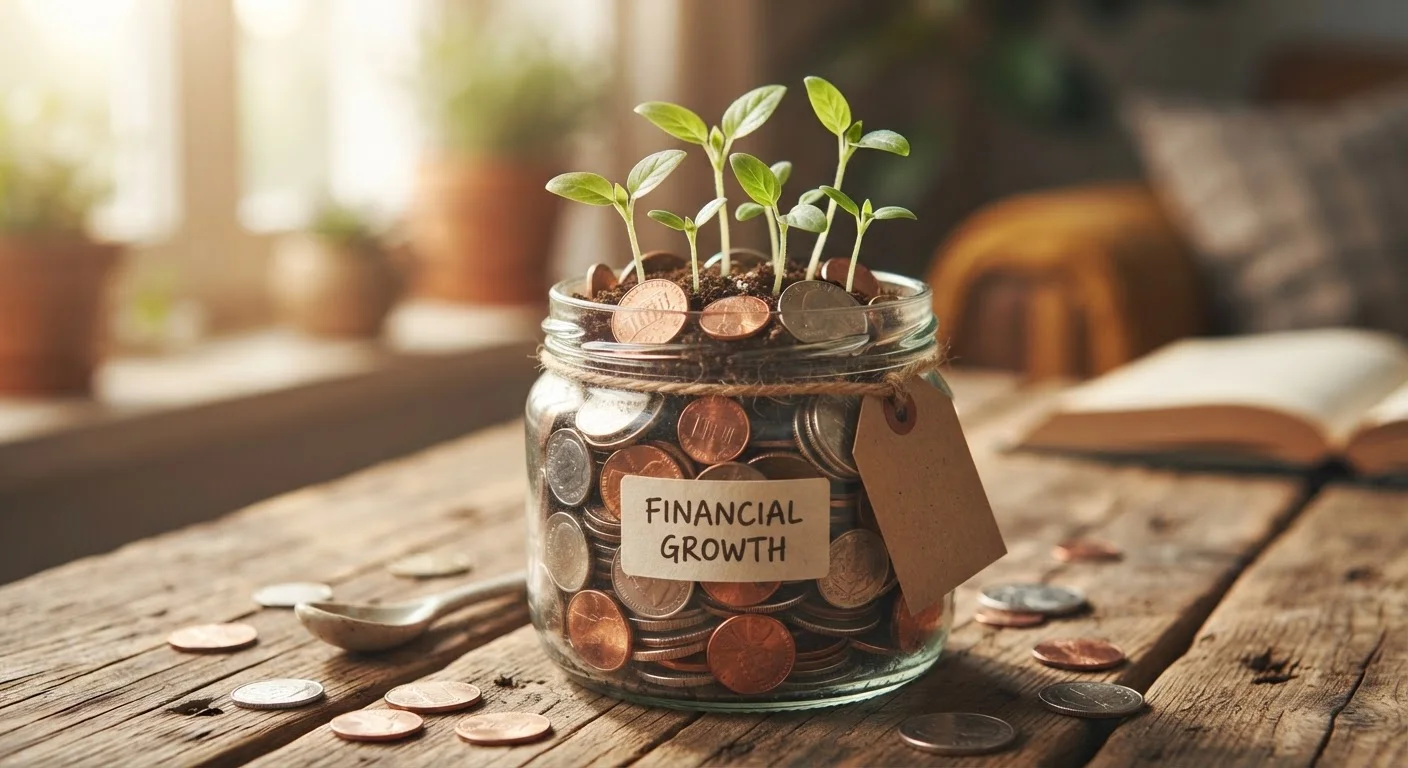
Photo: ArticleHood.com | Precision In Every Word editorial
Key Takeaways
- Compound interest grows your savings by calculating returns on both principal and accumulated interest.
- Starting earlier has a bigger impact on long-term savings than contributing larger amounts later.
- Compounding works against you when applied to debt, accelerating balances on credit cards and loans.
- Even modest, consistent contributions benefit significantly from compounding over a decade or more.
- Tax-advantaged accounts allow compounding to work without annual tax drag reducing your growth.
How Compounding Actually Works
Picture a deposit of $5,000 in a savings account earning 5% annually. In year one, you earn $250 in interest, bringing your balance to $5,250. In year two, you earn 5% on that $5,250 - not just the original $5,000 - so you earn $262.50. Each year, your interest payment grows slightly larger without you depositing another dollar.
That gap between what simple and compound interest produce starts small, but it widens dramatically. After 30 years, that same $5,000 at 5% compound interest would grow to roughly $21,600. At simple interest, it would reach only $12,500. The difference - over $9,000 - comes entirely from interest earning interest.
For a grounded primer on the vocabulary behind this concept, see key financial terms explained, which covers APY, principal, and related ideas in plain language.
$21,600+
Growth of $5,000 after 30 years at 5% compounded
Compared to $12,500 using simple interest - a difference of over $9,000 from compounding alone.
72
The Rule of 72: years to double your money
Divide 72 by your annual return rate to estimate doubling time - a widely used financial planning shortcut.
22%+
Average APR on credit card accounts carrying a balance
According to Federal Reserve data, average credit card rates for accounts assessed interest have frequently exceeded 20% in recent years.
Why Timing Matters More Than Most People Expect
The most counterintuitive truth about compounding is that when you start saving matters more than how much you contribute each month. Consider two savers: one starts at age 25 and contributes $200 monthly until age 35, then stops entirely. The other starts at age 35 and contributes $200 monthly all the way to age 65. Assuming a 7% annual return, the early starter often ends up with more - despite contributing for only 10 years versus 30.
This happens because compounding rewards time above all else. Money invested early has more years to multiply on itself. Money invested later joins the race too far behind to catch up through contributions alone.
The lesson isn't that starting late is hopeless - it never is - but that delaying gratification early in your financial life pays a measurable, mathematical dividend that is very hard to replicate later.
Start Small, But Start Now
When Compounding Works Against You: Debt
Compound interest is not exclusively your ally. On the debt side of your personal balance sheet, it functions the same way - only now it's the lender who benefits. Credit card balances that go unpaid accrue interest on the outstanding total, including previously charged interest. A $3,000 credit card balance at 22% APR can grow to over $5,000 within just a few years of minimum-only payments.
This is why deciding how to balance saving and debt repayment is not a simple answer. High-interest debt effectively acts as a guaranteed negative return on your net worth - often at a rate that outpaces what a savings account offers. Addressing it directly is one of the most powerful ways to improve your financial position.
APR vs. APY: Know the Difference
Making Compounding Work in Your Long-Term Plan
You don't need a large sum to benefit from compounding. Regular, consistent contributions to a savings vehicle - even modest ones - stack with your existing balance and multiply over time. Automating deposits removes the temptation to skip, and keeping money in accounts that offer competitive APYs ensures the mechanism is always working.
Tax-advantaged accounts like 401(k)s and IRAs add another layer of benefit: compounding occurs without the annual tax drag that would otherwise reduce your effective return year by year. This is part of why financial educators consistently emphasize contributing to these vehicles as early as possible.
For a broader framework on building stability through both saving and managing debt, the complete guide to saving and debt offers a structured look at how these two goals interact. And if you're watching for patterns that silently chip away at progress, habits that undermine long-term savings is worth a read.
This article is for general informational and educational purposes only and does not constitute personalised financial, investment, or tax advice. For decisions specific to your financial situation, consult a qualified financial professional.
Frequently Asked Questions
The content on this site is for informational purposes only and is not a substitute for professional advice. Always consult a qualified professional for guidance specific to your situation.