
Why Minimum Payments Keep You in Debt Far Longer Than You Realise

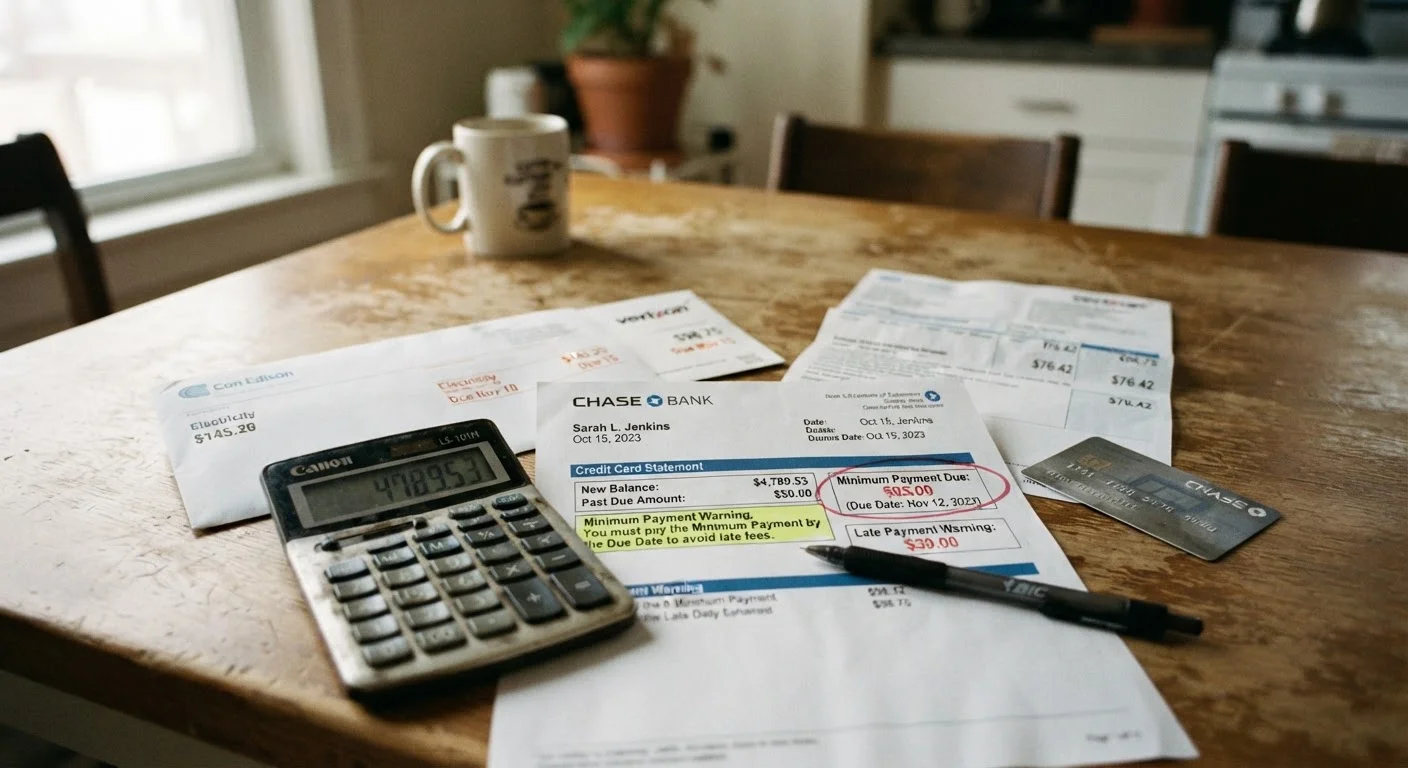
Photo: ArticleHood.com | Precision In Every Word editorial
Key Takeaways
- Minimum payments are designed to keep balances alive, maximising interest paid over time.
- A $3,000 balance at 20% APR can take over a decade to clear on minimum payments alone.
- Even small increases above the minimum can cut repayment time and interest significantly.
- Understanding how interest compounds is essential before choosing a repayment strategy.
How Minimum Payments Are Actually Calculated
Credit card issuers typically set minimum payments as either a flat dollar amount (often $25-$35) or a small percentage of your outstanding balance - usually 1% to 3% - whichever is greater. At first glance, this feels generous. You owe $3,000 and only need to pay $60 this month? That sounds manageable.
The problem is structural. Because your minimum is tied to your balance, it shrinks as your balance shrinks - but so does the portion going toward the principal. Most of each early payment is consumed by interest charges, the cost of borrowing calculated using your card's APR. For a plain-language explanation of APR and how it works, see our debt and savings glossary.
The result: your balance falls agonisingly slowly in the early months, and the lender collects the bulk of its profit before you've made a meaningful dent in what you actually borrowed.
1%-3%
Typical minimum payment as % of balance
Most major US credit card issuers set minimums at roughly 1%-3% of the outstanding balance or a flat floor, whichever is higher - figures commonly disclosed in cardholder agreements.
10+ years
Estimated payoff time on minimums only
Consumer financial education resources, including the Consumer Financial Protection Bureau, illustrate that a $3,000 balance at around 20% APR can take well over a decade to clear on minimum payments alone.
Common Mistakes That Deepen the Debt Trap
Minimum payments alone don't tell the whole story. The behaviours layered on top of them are often what turn a manageable balance into a years-long burden. Below are the most common errors readers make - and what to do instead.
Treating the minimum payment as the "correct" monthly amount to pay.
Continuing to spend on a card while trying to pay it down.
Ignoring the interest rate on each card when deciding which to pay first.
Making only the minimum payment because "something bigger will come in soon."
Patterns like these rarely happen in isolation. If you recognise them in your own habits, it may be worth reading about financial self-sabotage patterns - awareness is usually the first step toward change.
A Smarter Path Forward
Escaping the minimum payment cycle doesn't require a dramatic overhaul. It requires consistency and a clear strategy. The most widely recommended approaches are the debt avalanche (targeting the highest-interest balance first to minimise total interest paid) and the debt snowball (paying off the smallest balance first for motivational momentum). Neither is universally superior - the best plan is one you'll actually stick to.
Whatever method you choose, the foundational move is the same: pay more than the minimum, every month, even if only by $20 or $30. Over time, that additional amount reduces the principal faster, which in turn reduces the interest charged the following month - a compounding effect that works in your favour for once.
Variable Rates Can Make Things Worse
For a deeper look at how structured repayment plans are built, see effective debt repayment principles. And if you're also trying to build savings alongside paying down debt, budgeting basics can help you find the room to do both.
This article is for general informational purposes only and does not constitute personalised financial or legal advice. Consider speaking with a licensed financial adviser about your specific situation.
The content on this site is for informational purposes only and is not a substitute for professional advice. Always consult a qualified professional for guidance specific to your situation.