
Arriving in Tokyo Without a Plan: How to Build Your First Week Sensibly

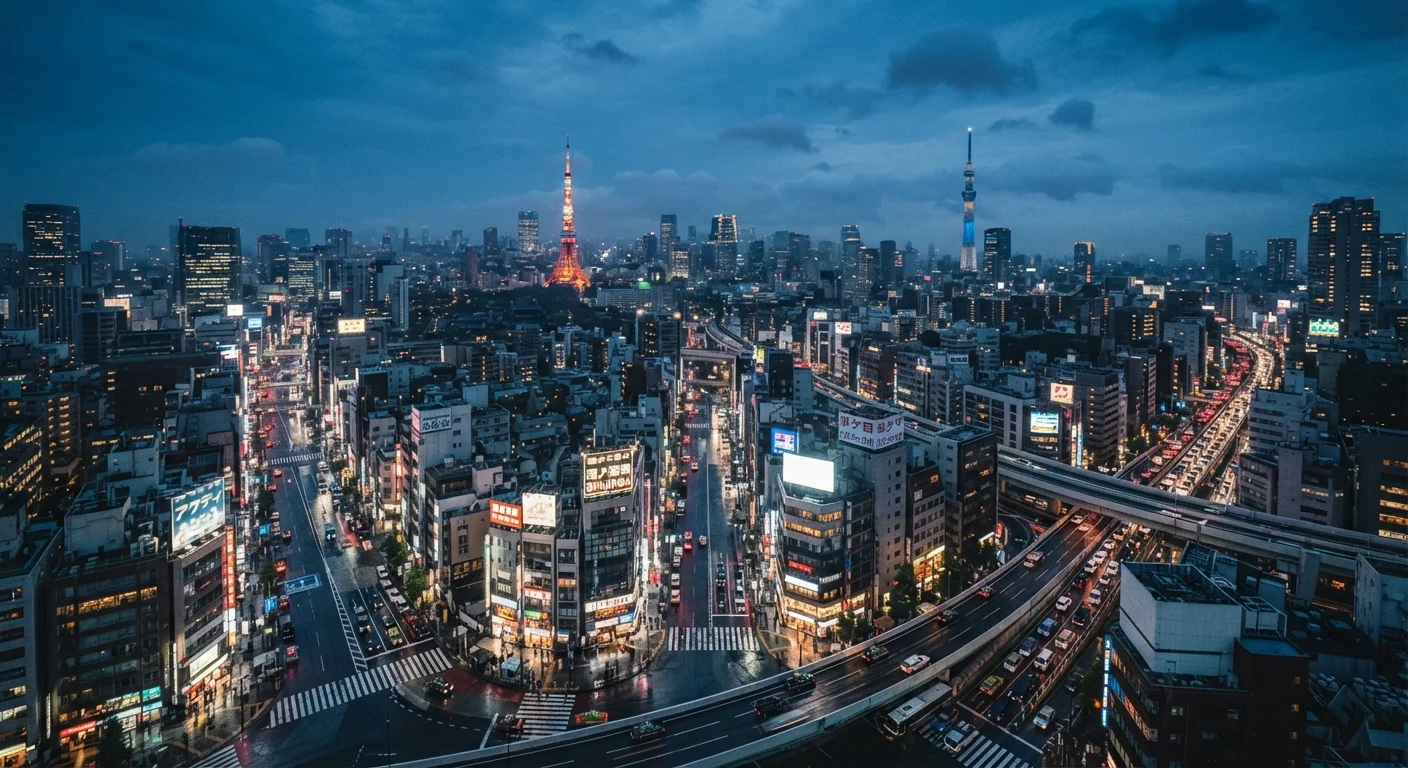
Photo: ArticleHood.com | Precision In Every Word editorial
Key Takeaways
- Tokyo rewards a loose structure over a packed itinerary - build in breathing room from day one.
- Arriving jet-lagged means your first day should be low-stakes and walkable, not destination-heavy.
- The city's train network is reliable and learnable; mastering one or two lines early builds confidence.
- Grouping neighborhoods by area saves travel time and mental energy across the week.
- Cultural awareness from the start makes every interaction smoother and more rewarding.
Why Tokyo Resists the Rigid Itinerary
Tokyo is the largest metropolitan area in the world by most measures - somewhere between 37 and 38 million people, depending on how the boundaries are drawn. It has more Michelin-starred restaurants than any other city on earth, a rail network that runs with near-perfect punctuality, and neighborhoods so distinct from one another that moving between them can feel like crossing between separate cities. For a first-time visitor arriving from the US, the scale is genuinely disorienting.
The instinct most travelers have is to compensate by planning everything in advance: temples at 9 a.m., markets by noon, a famous ramen shop for lunch, a museum in the afternoon. This approach tends to collapse by day two. Tokyo's density means distances that look short on a map often involve multiple train transfers, station navigation through labyrinthine underground corridors, and unexpected queues at popular spots.
A more durable approach is to build your week around neighborhoods rather than lists - to understand the city's rhythm and let that guide what you do each day. The trip planning principles that work for compact European cities simply don't scale to Tokyo, and adjusting that expectation before you land is half the preparation. For guidance on structuring any trip around limited time off, see our piece on planning a trip around a fixed number of days off.
What you will need
IC Transit Card (Suica or Pasmo)
Tap-to-pay card for trains, subways, and many convenience stores - eliminates the need to buy individual tickets.
Offline map app (e.g., Maps.me or Google Maps with offline areas saved)
Allows navigation without relying on a live data connection in stations or underground.
Pocket Wi-Fi or data SIM
Provides reliable internet for maps, translation, and restaurant research on the go.
Translation app with camera function
Reads Japanese menus, signs, and labels in real time - reduces friction at restaurants and shops.
Small day bag or backpack
Tokyo requires a lot of walking; a comfortable bag keeps essentials accessible without slowing you down.
Building Your First Week Step by Step
The steps below are designed to give you structure without rigidity. Think of them as orientating moves - actions that set up the rest of the week to go more smoothly - rather than a prescriptive daily schedule. Adjust the sequence and pace to match your own energy, interests, and travel style.
Give yourself a recovery day first
The flight from the US East Coast to Tokyo runs roughly 14 hours; from the West Coast, around 11. Either way, you will arrive fatigued and likely disoriented by the time difference. Resist the urge to immediately dive into a sightseeing list. Instead, plan your first full day around your immediate neighborhood - a slow walk, a convenience store meal, and an early night. Tokyo's 7-Eleven, Lawson, and FamilyMart locations stock genuinely good food at low prices and are open around the clock.
Load your IC card and learn two or three train lines
Tokyo's rail network looks intimidating on a full map, but in practice most visitors use a handful of lines repeatedly. Get a Suica or Pasmo card at any major station - they can be loaded with yen and used across JR lines, the Tokyo Metro, and even at vending machines. Identify the two or three lines most relevant to where you're staying and where you plan to go in the first few days. The Yamanote Line is a loop connecting most major districts; it's a reliable backbone to understand early.
Anchor each day to one neighborhood cluster
Tokyo is made up of distinct districts, each with its own character - Asakusa for older Tokyo atmosphere and the Senso-ji temple complex; Harajuku and Omotesando for fashion and architecture; Yanaka for quiet, maze-like streets that survived wartime bombing; Shimokitazawa for music venues and independent shops. Trying to zigzag across all of them in a single day is exhausting and wasteful. Instead, pick one area per day, leave room to linger, and treat anything extra as a bonus.
Build in at least one completely unscheduled afternoon
Some of the most memorable Tokyo experiences come from wandering without intent - following an interesting alley, stepping into a basement record shop, discovering a rooftop garden above a department store. Block out one afternoon midweek with no objective. The city is safe, the streets are clean, and getting a little lost rarely leads anywhere troubling. This unstructured time also provides recovery space if an earlier day was more tiring than expected.
Eat adventurously but manage logistics around meals
Food is one of Tokyo's greatest draws - the city has an extraordinary density of quality restaurants across every price point and cuisine type. That said, popular ramen shops and sushi counters sometimes involve queues, and dinner reservations at mid-range to upscale places are genuinely advisable. Use the visual menus outside most restaurants to navigate even without Japanese language skills. Budget for meals honestly - lunch sets at sit-down restaurants often deliver excellent value, while dinner can vary widely. See our trip budgeting walkthrough for a framework to map your daily spending before you go.
Consider a day trip toward the end of the week
Once you feel comfortable with the rail system and have absorbed a few Tokyo neighborhoods, a day trip can add useful contrast. Kamakura (about an hour south by train) offers coastal scenery and the famous Kotoku-in Buddha statue. Nikko (roughly two hours north) is home to an ornate shrine complex set in mountain forest. Both are manageable as independent day trips without a guide. If you're planning to continue on to Kyoto after Tokyo, our honest guide to visiting Kyoto covers what that city actually feels like - season by season - so you can calibrate expectations before you board the shinkansen.
Pace Matters More Than Coverage
Etiquette Missteps Are Easy to Make
Verify Entry Requirements Before You Travel
The content on this site is for informational purposes only and is not a substitute for professional advice. Always consult a qualified professional for guidance specific to your situation.