
Synthetic vs. Conventional Motor Oil: What the Difference Means for Your Engine

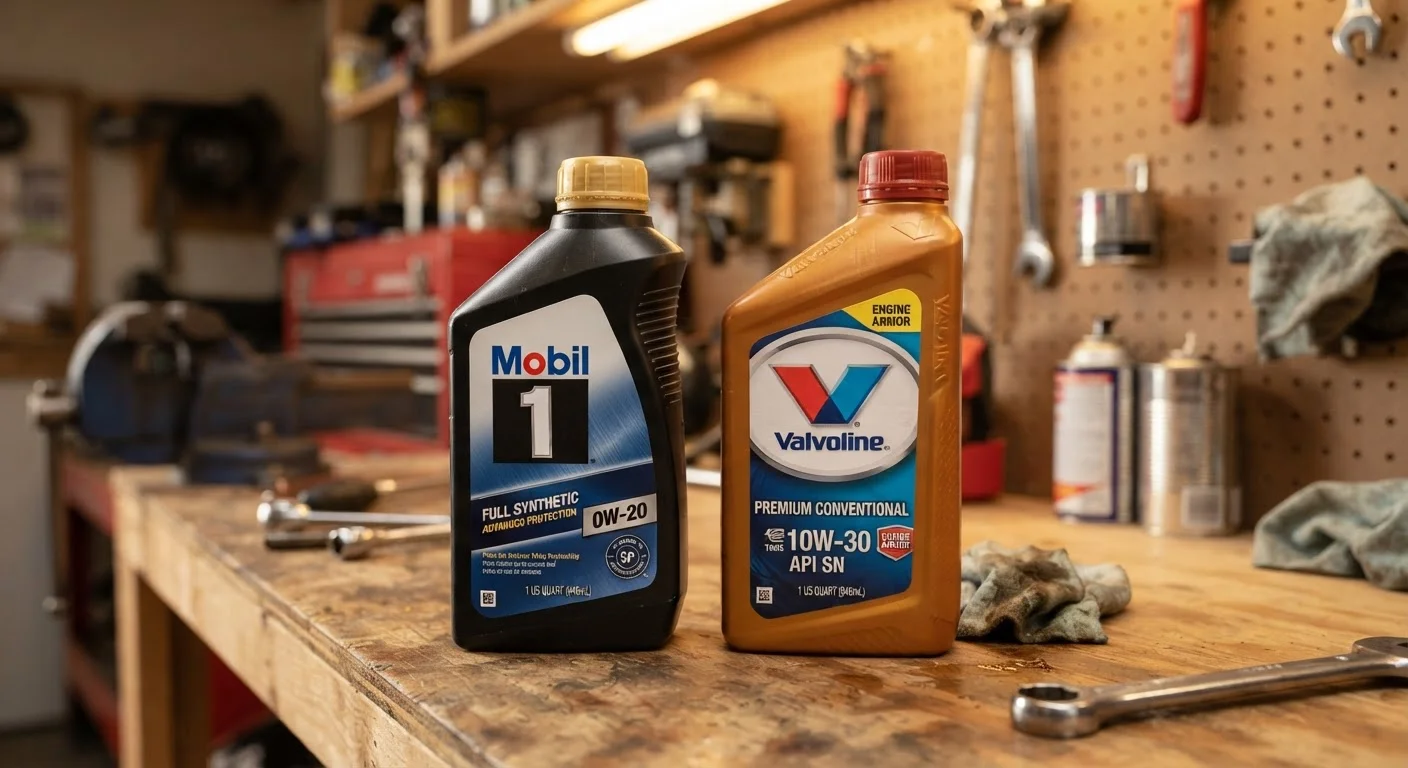
Photo: ArticleHood.com | Precision In Every Word editorial
Key Takeaways
- Synthetic oil is chemically engineered for more consistent molecular structure; conventional oil is refined from crude petroleum.
- Synthetics generally last longer between changes - often 7,500 to 15,000 miles - but cost more per quart.
- Your vehicle's owner's manual is the definitive guide to which oil type and viscosity your engine requires.
- Switching from conventional to synthetic is safe for most modern engines; consult a mechanic for high-mileage or older vehicles.
- Neither oil type is universally superior - the right choice depends on your engine, driving habits, and climate.
How Each Oil Is Made - and Why It Matters
Conventional motor oil starts as crude petroleum pumped from the ground. Refiners process it to remove impurities and adjust its properties, but the resulting molecules are still a mix of different shapes and sizes. That inconsistency affects how the oil behaves under stress.
Synthetic oil, by contrast, is built molecule by molecule in a lab - either from chemically modified petroleum base stocks or entirely synthetic compounds. The uniform molecular structure gives it more predictable performance across a wider range of conditions. There are also synthetic blend oils, which mix conventional base stock with synthetic, sitting roughly in the middle on both cost and performance.
Understanding this distinction helps explain nearly every other difference between the two. It isn't marketing - it's chemistry. For a deeper look at how these distinctions get misunderstood, see our breakdown of common engine oil myths.
| Criterion | Synthetic Motor Oil | Conventional Motor Oil |
|---|---|---|
| Base source | Chemically engineered molecules | Refined crude petroleum |
| Typical change interval | 7,500-15,000 miles | 3,000-5,000 miles |
| Cost per quart | Higher (roughly 2-4x more) | Lower |
| Cold-weather flow | Faster, more consistent | Slower at very low temps |
| Heat resistance | Stronger thermal stability | Breaks down faster under heat |
| Best engine match | Modern, turbocharged, or high-output engines | Older or simpler engine designs |
| Environmental disposal | Same - must be recycled properly | Same - must be recycled properly |
Performance, Longevity, and Cost: The Real Trade-Offs
Synthetic oil holds up better under high heat, flows more freely at cold temperatures, and resists breaking down over time. Those properties translate to less engine wear - particularly at cold startup, when a significant portion of engine wear occurs because oil hasn't yet circulated fully. Synthetics reach engine components faster in cold conditions than conventional oil does.
The trade-off is price. Synthetic oil typically costs two to four times more per quart than conventional. However, because synthetic oil lasts longer - many manufacturers specify 7,500 to 15,000 miles between changes depending on the oil and vehicle - the cost per mile over time can be closer than the sticker price suggests.
~40%
Engine wear occurring at cold startup
Industry engineers commonly cite cold startup as responsible for a disproportionate share of engine wear, where oil viscosity and flow speed matter most.
2-4x
Typical synthetic-to-conventional price ratio per quart
Retail pricing generally puts full synthetic oil at two to four times the cost of conventional, though longer change intervals reduce the per-mile cost gap.
15,000 mi
Maximum change interval some synthetics support
Some full synthetic formulations, when used in compatible vehicles with the manufacturer's approval, may support up to 15,000-mile oil change intervals.
Conventional oil generally needs changing every 3,000 to 5,000 miles under normal driving conditions, though the old universal "3,000-mile rule" has been largely outdated by modern engine design and oil formulations. Your owner's manual will specify the correct interval for your vehicle - that figure takes priority over any general guideline.
What Your Owner's Manual Actually Says
The single most reliable guide for oil selection is the owner's manual that came with your vehicle. It specifies both the oil type (conventional, synthetic blend, or full synthetic) and the viscosity rating - for example, 5W-30 or 0W-20. Using the wrong viscosity can affect fuel economy and engine protection, regardless of whether the oil is synthetic or conventional.
Some manufacturers - particularly those producing turbocharged, direct-injection, or high-performance engines - require full synthetic. Using conventional oil in an engine spec'd for synthetic may not provide adequate protection, especially under hard use or temperature extremes.
Viscosity Grade Is Non-Negotiable
If you're considering a DIY oil change, knowing your required oil type and viscosity before you buy supplies is the most important first step. Getting the type right matters more than brand.
Switching Oil Types: Is It Safe?
For most modern engines, switching from conventional to synthetic is straightforward and won't cause problems. The common belief that switching types will suddenly cause leaks in older engines has more myth than fact behind it - though for high-mileage vehicles with existing seal wear, it's worth discussing with a qualified mechanic before making the change.
If your vehicle has always run conventional oil and you're thinking of switching, check what the manufacturer permits. Some older engines or specific designs aren't optimized for synthetic and may not need it. Conversely, if your engine already requires synthetic, don't substitute conventional to save money - it isn't a safe shortcut.
Oil type is also just one piece of routine maintenance. How you buy and care for a vehicle over time - including whether it's new or used - shapes what maintenance demands look like. Our comparison of new vs. used car ownership touches on how maintenance considerations factor into the broader ownership picture.
The content on this site is for informational purposes only and is not a substitute for professional advice. Always consult a qualified professional for guidance specific to your situation.