
Roundabouts, Right of Way, and the Rules That Still Confuse Drivers

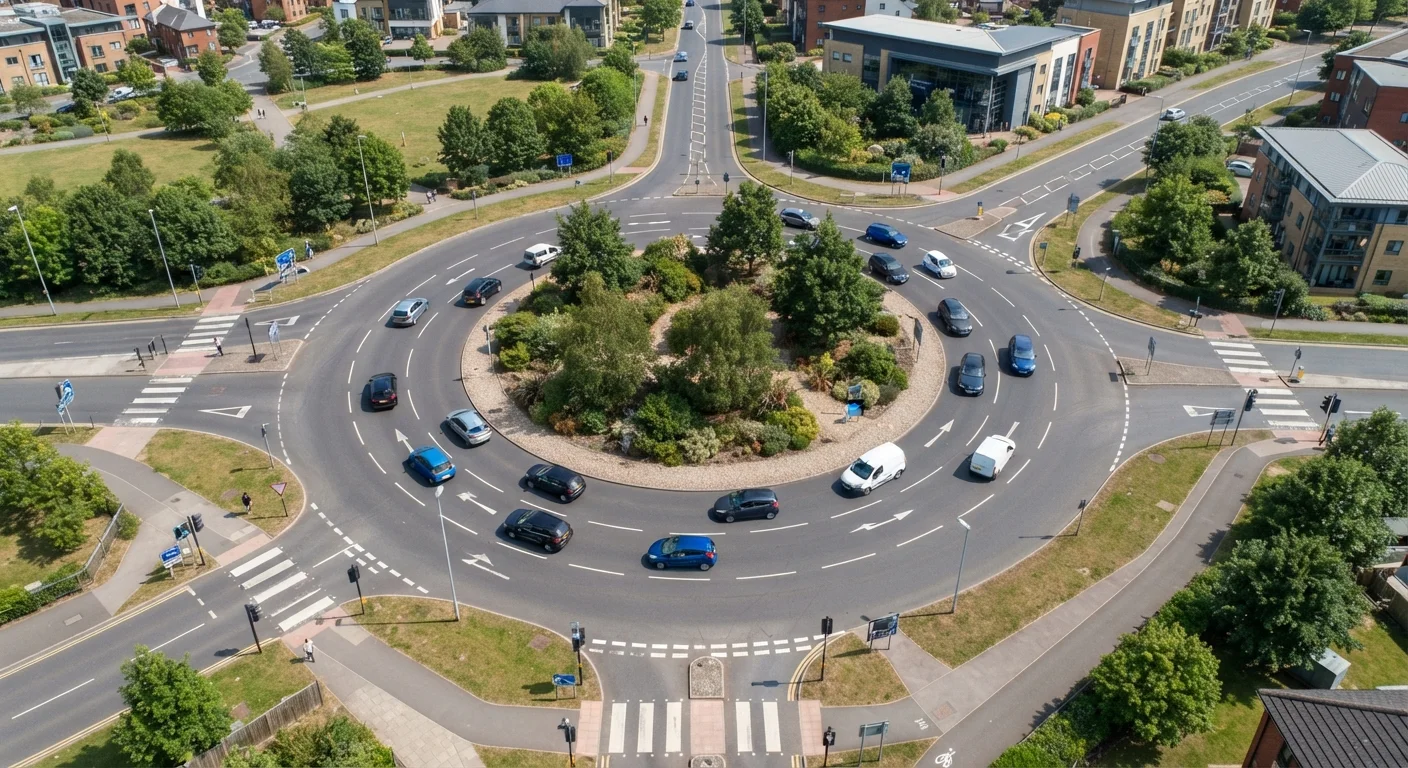
Photo: ArticleHood.com | Precision In Every Word editorial
Why Right-of-Way Rules Still Trip People Up
Right-of-way rules are among the most misunderstood in everyday driving - not because they're complicated in theory, but because real roads are messier than driver's ed diagrams. Ambiguous lane markings, unclear signage, and years of bad habits passed down through driving culture all contribute to the confusion.
This reference covers the situations that cause the most hesitation: roundabouts, uncontrolled intersections, four-way stops, and yield scenarios. If you're building safer habits from the ground up, the complete road safety guide offers broader context alongside this focused breakdown.
| Roundabout right-of-way rule | Yield to traffic already inside the roundabout (Federal Highway Administration guidance) |
| Four-way stop tie-breaker | Driver on the left yields to the driver on the right (Standard U.S. traffic law, varies by state) |
| Left-turn rule at intersections | Turning left yields to oncoming traffic going straight (Uniform Vehicle Code reference) |
| Pedestrians at roundabout crosswalks | Must be yielded to on approach and at exit (FHWA roundabout design guidelines) |
| Signaling inside a roundabout | Signal right as you approach your exit (Common state DMV recommendations) |
| Emergency vehicles in roundabout | Exit the roundabout first, then pull over (Standard traffic safety guidance) |
Roundabouts: Who Goes First and Why
The core rule at a roundabout is consistent across virtually every U.S. state: yield to traffic already in the circle. Drivers entering from an approach road must wait until there is a safe gap in the circulating flow before entering. Nobody inside the roundabout is required to slow down or make room for entering vehicles.
Where confusion typically sets in:
- Multi-lane roundabouts: Choose your lane before you enter based on your exit. Right lane for right-turn or straight-ahead exits; left lane for exits that require more than a half-turn. Lane changes inside the roundabout are dangerous and generally not permitted.
- Pedestrians: Yield to pedestrians at the crosswalk on your approach before entering, and again at the exit crosswalk when leaving. Neither action is optional.
- Emergency vehicles: Do not stop inside the roundabout. Exit first, then pull over safely on the adjacent road.
Signaling inside a roundabout is good practice even where not legally required - signal right as you approach your exit to communicate your intentions to other drivers and pedestrians.
Right of Way
The legal entitlement of a driver, cyclist, or pedestrian to proceed before others in a given traffic situation. It does not mean unconditional priority - it must still be exercised safely.
Yield
To slow down and allow other traffic or pedestrians to pass before you proceed. A yield does not always require a full stop, but it does require giving way when a conflict exists.
Roundabout
A circular intersection where traffic flows in one direction around a central island. Entering drivers yield to vehicles already circulating inside the roundabout.
Uncontrolled Intersection
A junction with no traffic signals, stop signs, or yield signs. The yield-to-the-right rule governs simultaneous arrivals; drivers should approach with caution.
Circulating Traffic
Vehicles already moving within a roundabout. These vehicles have the right of way over any vehicle entering from an approach road.
Intersections, Stops, and Yield Signs
At a standard four-way stop, the first vehicle to arrive has the right of way. When two vehicles arrive at the same time, the driver on the left yields to the driver on the right. When facing each other and both going straight, both may proceed. When one is turning left, that driver yields to the oncoming driver going straight.
At a yield sign, you are not required to stop if the way is clearly clear - but you must slow and stop if there is any traffic that would conflict with your path. Treating a yield like a stop is overly cautious and can disrupt traffic flow. Treating it like a suggestion is dangerous.
At uncontrolled intersections (no signs or signals), the yield-to-the-right rule applies: if two vehicles arrive simultaneously, the driver on the left yields. Approach these slowly regardless - the absence of signage doesn't reduce conflict risk.
State Laws Vary - Always Check Locally
For a deeper look at how road environments change the rules, see our guide on how safe driving shifts between motorway and urban roads.
Habits That Reinforce Safer Decision-Making
Understanding the rules is one layer. Executing them under time pressure on a busy road is another. A few practices help close that gap:
- Slow down on approach. Most right-of-way errors happen because drivers enter a junction too fast to properly assess the situation.
- Make eye contact. At uncontrolled intersections or where another driver's intent is unclear, a brief moment of eye contact confirms mutual awareness.
- Don't wave people through. Gesturing another driver to go when you have the right of way seems courteous, but it can create unpredictable situations - other drivers may not see what you're signaling.
- Assume others may be wrong. Defensive driving means yielding even when you legally don't have to if a collision seems likely. Being right doesn't undo damage.
These principles connect directly to the broader discipline of managing space and awareness - a topic covered in detail in our article on safe following distance and spacing myths.
~40%
Reduction in injury crashes at roundabouts vs. traditional intersections
According to Federal Highway Administration research comparing roundabouts to stop- and signal-controlled intersections.
~75%
Reduction in fatal and incapacitating crashes at converted intersections
FHWA studies indicate roundabouts significantly reduce the most severe collision types due to lower vehicle speeds and fewer conflict points.
The content on this site is for informational purposes only and is not a substitute for professional advice. Always consult a qualified professional for guidance specific to your situation.