
The Two-Second Rule and Other Spacing Myths Drivers Get Wrong

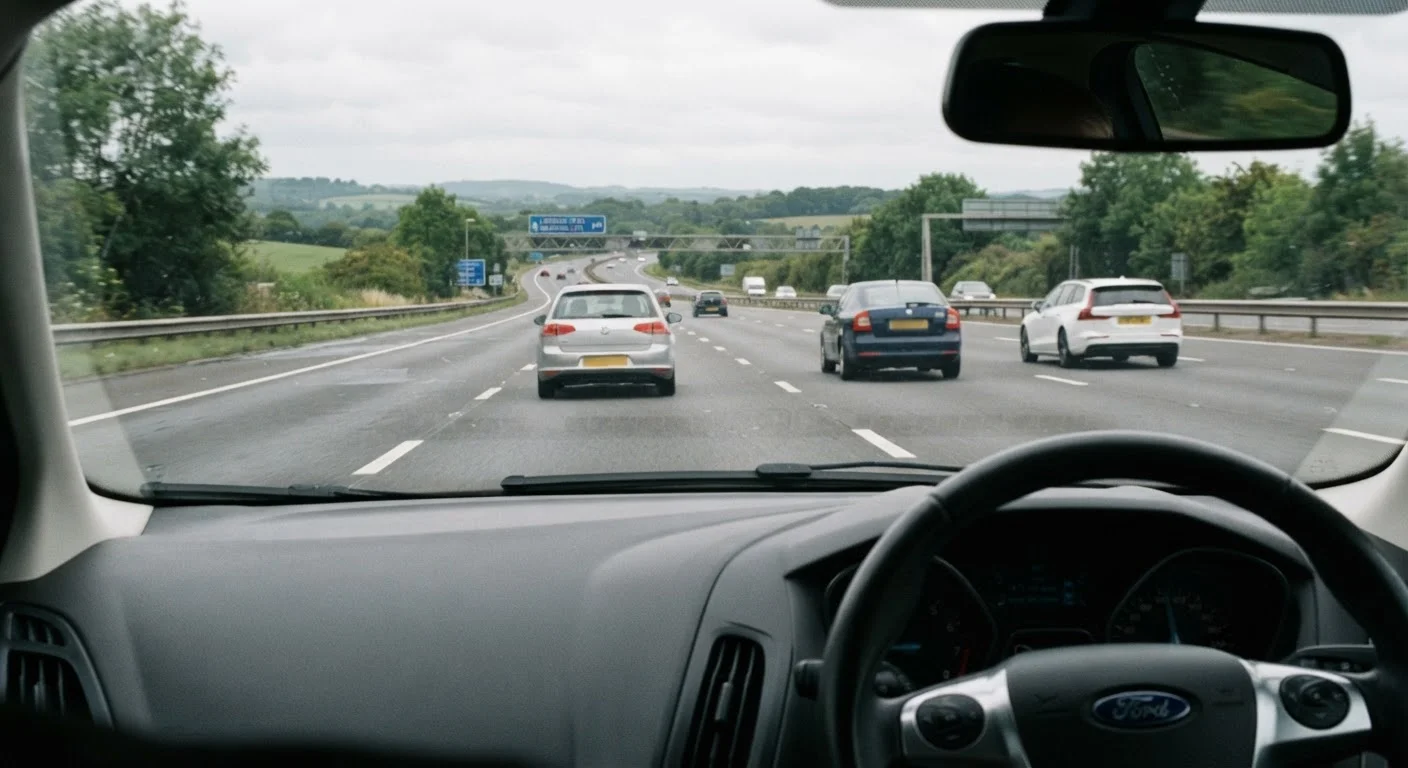
Photo: ArticleHood.com | Precision In Every Word editorial
Key Takeaways
- The two-second rule is a minimum baseline, not a universal safe standard for all conditions.
- Reaction time alone averages about 1.5 seconds before braking even begins.
- Wet roads, fatigue, and highway speeds all require significantly longer following distances.
- Bigger gaps rarely cause the traffic slowdowns most drivers fear.
- Tailgating is a leading contributor to rear-end collisions, which are largely preventable.
Where the Two-Second Rule Came From - and Where It Falls Short
The two-second rule entered mainstream driver education as a practical simplification: instead of memorizing stopping distances at various speeds, drivers could use a consistent time-based reference point. Pick a road sign or overpass, and when the car ahead passes it, start counting. If you pass the same point before reaching two seconds, you're too close.
That's a genuinely useful teaching tool - but it was calibrated for moderate speeds and good conditions. As a universal ceiling for safe following distance, it fails on several fronts.
Two Seconds Is a Floor, Not a Ceiling
The core issue is physics. At higher speeds, two seconds represents significantly more feet of road, but the braking forces needed to stop in time grow faster than speed does. And reaction time - that critical 1.5-second window before your foot finds the brake - eats into that gap before slowing even begins. Understanding what actually happens in a rear-end scenario makes this much clearer.
Five Spacing Myths That Put Drivers at Risk
Most following-distance mistakes don't come from recklessness - they come from widely shared assumptions that simply aren't accurate. Here's where common beliefs break down.
Myth
Two seconds of following distance is always enough to stop safely, no matter the conditions.
Fact
Two seconds is a minimum baseline under ideal conditions only. Speed, road surface, weather, and driver alertness all require that gap to grow.
The two-second rule - picking a fixed point and counting two seconds after the car ahead passes it - is a useful starting heuristic. But it was designed for moderate speeds on dry roads with an alert driver. At 65 mph, two seconds translates to about 190 feet. Research consistently shows that average human reaction time runs roughly 1.5 seconds before the foot even reaches the brake, which means braking barely begins before a collision in a tight scenario. Add a wet road, which can extend stopping distances by 50% or more, and two seconds evaporates fast.
For highway speeds or adverse conditions, a three-to-four-second gap is a much more realistic safety cushion. Some driver education frameworks now recommend four seconds as a default rather than an exception.
Myth
Leaving a big gap in traffic just invites other drivers to cut in and makes congestion worse.
Fact
Maintaining a proper gap has minimal impact on overall traffic flow and significantly reduces your crash risk.
This belief leads drivers to tailgate defensively, convinced they're being pragmatic. In reality, when a driver cuts into your gap, the correct response is simply to ease back and re-establish the distance - not accelerate to close it. Traffic modeling research has found that stop-and-go waves (the kind that make highways slow down for no apparent reason) are often caused by over-aggressive following, not generous spacing. Drivers who maintain steady gaps tend to brake less sharply and contribute to smoother overall flow.
Your following distance is not a lane you need to defend.
Myth
Experienced drivers can safely follow more closely because their reaction times are faster.
Fact
Experience does not meaningfully reduce physical reaction time, and overconfidence in one's own reflexes is itself a risk factor.
Human reaction time - the physiological delay between perceiving a hazard and initiating a motor response - averages around 1.5 seconds for most alert adults and doesn't compress dramatically with driving experience. What experienced drivers gain is hazard anticipation: recognizing developing risks earlier. But that anticipation only helps if there's enough space to act on it. An experienced driver following at one second has the same braking physics problem as a new driver doing the same thing.
Overconfidence in personal skill is a well-documented contributor to risky driving behavior. Tailgating carries real collision risk regardless of how many years someone has been behind the wheel.
Myth
Following distance rules only really matter on the freeway - in the city you're going slowly enough that it doesn't count.
Fact
Urban and low-speed driving present their own stopping-distance challenges, including pedestrians, cyclists, and sudden stops.
At 30 mph, a car still travels 44 feet per second. Reaction time plus braking at that speed can consume 60-90 feet of road - more than many city drivers leave. Urban driving also introduces unpredictable hazards: a pedestrian stepping off a curb, a cyclist swerving, or a car reversing from a driveway. A two-second gap in city traffic gives you workable reaction space; a one-car-length gap at 30 mph typically does not. Safe driving principles shift meaningfully between environments, but adequate spacing matters in both.
Myth
If your brakes are in good condition, you can stop fast enough regardless of following distance.
Fact
Brake quality affects stopping performance, but it cannot overcome the laws of physics - or the driver's reaction delay.
Modern disc brakes and anti-lock braking systems (ABS) are genuinely effective, but they only begin working after the driver has perceived a hazard and physically applied the pedal. During that 1.5-second reaction window, a car at 60 mph has already traveled 132 feet. No brake system eliminates that gap. Tire condition, road surface, and vehicle weight also affect total stopping distance in ways that no amount of brake quality can fully offset. Building sound spacing habits from the start is more reliable than trusting equipment alone.
Conditions that should prompt you to add extra distance include: rain, snow, or ice; reduced visibility from fog or glare; heavy loads in your vehicle; driving at night; and any level of fatigue or distraction. Night driving compounds reaction-time challenges in ways most people underestimate.
Don't Let Other Drivers Pressure Your Gap
Practical Ways to Build the Habit
Knowing the right answer and actually practicing it in traffic are different things. A few strategies help close that gap.
- Default to three seconds. On dry roads at normal speeds, three seconds gives you meaningful buffer over the textbook minimum without feeling excessive. In bad conditions, add more.
- Use fixed landmarks. The counting method works well - just make sure you're counting full seconds, not rushing through them.
- Watch for early brake lights ahead. Looking two or three cars forward gives you more time to react than focusing only on the vehicle directly in front of you.
- Account for load and vehicle type. If you're towing, driving an SUV, or carrying heavy cargo, your stopping distance increases. Add distance accordingly.
Distraction adds to reaction time in ways that make adequate spacing even more critical. A driver glancing at a phone for two seconds at 55 mph has effectively traveled the length of a football field without full attention on the road - and with no buffer ahead, that's a serious problem.
This article provides general road safety information for educational purposes. Always follow applicable traffic laws in your jurisdiction and consult official driver's guides or a certified driving instructor for personalized guidance.
The content on this site is for informational purposes only and is not a substitute for professional advice. Always consult a qualified professional for guidance specific to your situation.