
Why Tailgating Is Riskier Than Most Drivers Realise

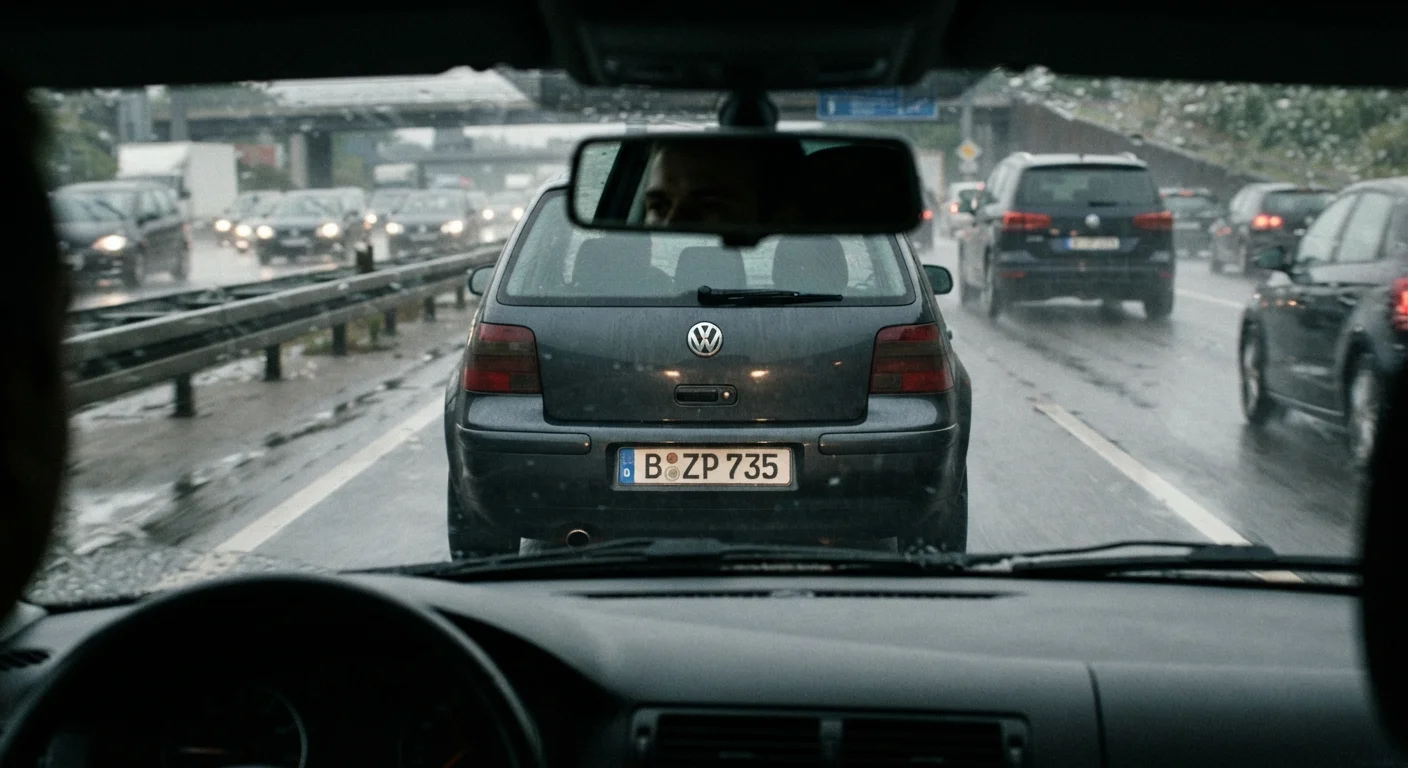
Photo: ArticleHood.com | Precision In Every Word editorial
Key Takeaways
- Rear-end collisions are among the most common crash types, and tailgating is a primary contributing factor.
- Human reaction time alone averages about 1.5 seconds - before your brakes even engage.
- The two-second rule is a minimum, not a target; higher speeds and bad weather demand more space.
- Tailgating is illegal in every U.S. state and can result in fines, points, or liability in a crash.
- Maintaining a proper gap costs you almost no travel time but significantly reduces your crash risk.
The Physics Behind Why Tailgating Is So Dangerous
Most drivers who tailgate don't think of themselves as reckless - they're simply impatient or operating on autopilot. But the physics of stopping a moving vehicle are unforgiving regardless of intent.
When the car ahead brakes hard, two things have to happen before your vehicle slows: your brain has to perceive the brake lights, and your foot has to reach the pedal. Research in traffic safety literature consistently places average driver reaction time at roughly 1.5 seconds. At 60 mph, that's 132 feet traveled before your brakes do anything at all. Add braking distance on top of that, and you're looking at well over 200 feet needed to stop - the length of two-thirds of a football field.
Now compress that gap to one car length. There's simply no physics-based scenario where that ends well if the car ahead stops quickly.
~1.5 sec
Average human reaction time before braking
Commonly cited in traffic engineering and road safety research as the baseline perception-reaction time for an alert driver.
132 ft
Distance traveled at 60 mph during reaction time alone
Calculated from average reaction time before the brake pedal is pressed - braking distance is additional on top of this figure.
~29%
Share of all U.S. crashes that are rear-end collisions
Based on long-running crash data collected by the National Highway Traffic Safety Administration (NHTSA).
For a deeper look at how speed and visibility interact, see our article on night driving and the visibility gap.
Why Drivers Underestimate the Risk
One reason tailgating persists is that it rarely seems dangerous in the moment. Most of the time, traffic flows smoothly and nothing bad happens - which reinforces the mistaken belief that the gap is fine. This is sometimes described in behavioral research as outcome bias: we judge the quality of a decision by its result rather than its actual risk level.
There's also a perceptual factor. At highway speeds, visual cues that would signal "too close" in a parking lot disappear. The relative motion of nearby vehicles can make a four-car-length gap feel comfortable even when it leaves almost no stopping margin.
Use a Fixed Reference Point to Check Your Gap
Another common misconception is that the two-second rule is always sufficient. It's a minimum guideline for ideal conditions - dry roads, good visibility, alert driver. Our companion piece on spacing myths drivers get wrong breaks down where that rule falls short.
What the Data Shows About Rear-End Crashes
Rear-end collisions are consistently one of the most frequent crash types on U.S. roads. According to the National Highway Traffic Safety Administration (NHTSA), rear-end crashes account for a substantial share of all police-reported crashes annually, with following-too-closely cited as a primary contributing factor in many of them.
These crashes aren't just fender-benders. Rear-end impacts at speed can cause significant whiplash injuries, airbag deployment, and - particularly in multi-vehicle chain reactions on highways - serious or fatal outcomes. The occupants of the vehicle that gets hit bear crash forces they had no control over and no warning of.
“The single most important factor in avoiding rear-end crashes is following distance. Drivers consistently underestimate how much space they actually need to stop safely.”
— NHTSA Traffic Safety Research Community, Reflected in National Highway Traffic Safety Administration crash causation research
Road safety is a shared responsibility, but following distance is one of the easiest variables any individual driver can control. For a broader look at habits that compound risk, our complete road safety guide covers the full picture.
How to Build a Safer Following Distance Habit
The practical fix is straightforward, even if the habit takes a little reinforcement to stick. Pick a fixed object on the road - a sign, a shadow line, a bridge - and note when the vehicle ahead passes it. Count off two to three seconds. If your vehicle reaches that same point before you finish counting, you're too close.
In rain, snow, or heavy traffic, add more time. If you're feeling fatigued - which itself impairs reaction time - add more still. See how tiredness compounds driving risk in our piece on fatigue behind the wheel.
The time cost of maintaining a proper gap is genuinely negligible over a typical commute. A three-second gap at 65 mph is about 285 feet - a distance the average car covers in under three seconds. Over a 30-minute drive, maintaining that space adds seconds to your arrival time, not minutes. The margin of safety it creates, however, is meaningful every single trip.
Frequently Asked Questions
The content on this site is for informational purposes only and is not a substitute for professional advice. Always consult a qualified professional for guidance specific to your situation.