
Night Driving and the Visibility Gap Most People Overlook

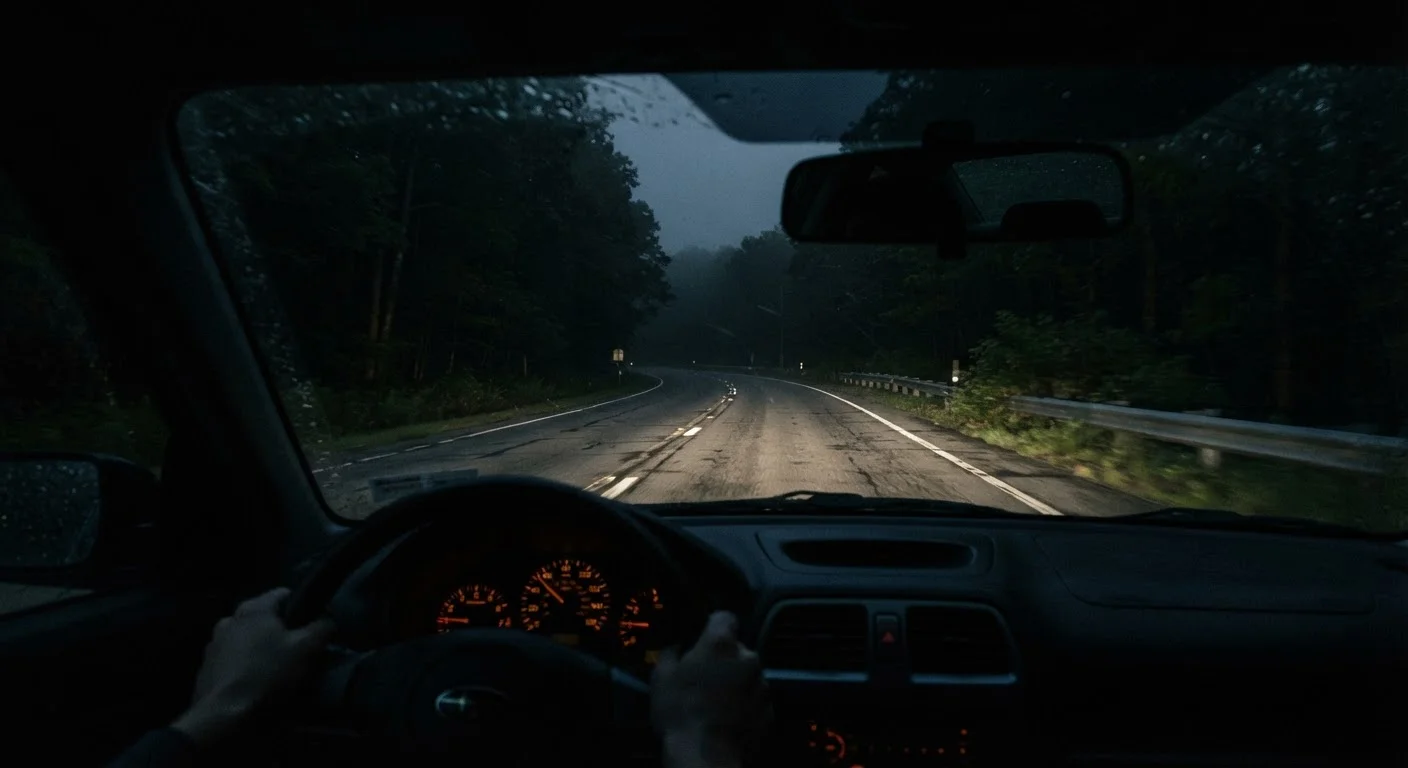
Photo: ArticleHood.com | Precision In Every Word editorial
Key Takeaways
- Standard low-beam headlights illuminate roughly 160 feet ahead, while highway speeds demand far more stopping distance.
- Human night vision degrades significantly with age, making older drivers particularly vulnerable after dark.
- Overdriving your headlights - moving faster than you can stop within the lit distance - is a common and dangerous habit.
- Adjusted following distances, clean headlights, and deliberate eye habits meaningfully reduce nighttime crash risk.
- Fatigue compounds night driving hazards sharply; recognising early warning signs is a core safety practice.
The Real Visibility Problem After Dark
Most drivers know night driving is more dangerous, but few understand exactly why. It's not just about darkness - it's about a specific mismatch between how far you can see and how far you need to see to stop safely.
Low-beam headlights typically illuminate about 160 feet ahead. At 60 mph, a vehicle travels roughly 88 feet per second. Factor in reaction time - around 1.5 seconds for an alert driver - and you've already used more than 130 feet before your brakes even engage. That leaves a razor-thin margin, and it assumes perfect conditions: clear lenses, dry pavement, full attention.
This phenomenon is sometimes called overdriving your headlights: moving at a speed where you cannot stop within the distance your lights reveal. It's surprisingly easy to do without realising it, especially on open roads where speed feels manageable.
“Darkness doesn't just reduce how far you see - it changes what your eyes are capable of detecting altogether. The road at night is a fundamentally different environment, and most drivers never fully account for that.”
— National Highway Traffic Safety Administration, U.S. federal road safety agency, traffic safety research and guidance
Beyond raw distance, human vision changes dramatically in low light. The eye's rod cells, which handle peripheral and low-light vision, take 20-30 minutes to fully adapt to darkness after bright light exposure. Checking your phone, glancing at a brightly lit dashboard cluster, or even a flash from an oncoming high beam can partially reset that adaptation. See how distraction compounds these effects in our piece on phone use behind the wheel.
Proven Practices for Safer Night Driving
These aren't theoretical tips - they're habits that directly address the specific ways night driving differs from daytime driving.
Use high beams on unlit roads whenever oncoming traffic allows
Reduce your speed to match your actual stopping distance at night
Keep headlight lenses clean and properly aimed
Avoid looking directly into oncoming headlights
Increase following distance to at least three to four seconds after dark
Night driving also intersects with several other hazard types. Fog, for instance, scatters headlight beams and drastically shortens effective visibility. Our guide on adjusting for rain, fog, and ice covers how to adapt your approach for each condition.
Quick Habits You Can Apply Tonight
Some changes to your night driving routine take seconds to implement and have immediate payoff. Start with these before anything else.
Following distance deserves special attention after dark. The same spacing that feels safe in daylight isn't enough when reaction time and visibility are reduced. For a thorough look at the evidence, see what the research says about safe following distances - and why tailgating is particularly dangerous in any light condition.
Night Driving and Prescription Eyewear
Fatigue and Night Driving: A Compounding Risk
Driving at night and driving while tired frequently overlap - and together they're significantly more dangerous than either alone. The body's circadian rhythm naturally promotes sleepiness in the late night and early morning hours, regardless of how much sleep you've had. This isn't willpower; it's biology.
~50%
Share of traffic deaths that occur at night
According to the National Safety Council, roughly half of all traffic fatalities in the U.S. occur during nighttime hours despite far fewer vehicles on the road.
3x
Higher fatality risk driving at night vs. daytime
The National Highway Traffic Safety Administration has noted that the fatality rate per mile driven is approximately three times higher at night than during daylight hours.
Fatigue slows reaction time, narrows attention, and impairs the ability to detect hazards in your peripheral field - exactly the capabilities that matter most when visibility is already limited. Our article on recognising fatigue warning signs outlines the early signals most drivers miss until it's too late.
If you feel your eyelids getting heavy, your thoughts drifting, or you can't recall the last few miles clearly, treat those as hard stops - not suggestions. Pull over somewhere safe and rest before continuing. No destination is worth the alternative.
This article is intended for general informational purposes only. Always apply your own judgment and adjust to current road, weather, and traffic conditions.
The content on this site is for informational purposes only and is not a substitute for professional advice. Always consult a qualified professional for guidance specific to your situation.