
Driving in Rain, Fog, and Ice: How to Adjust for Each Condition

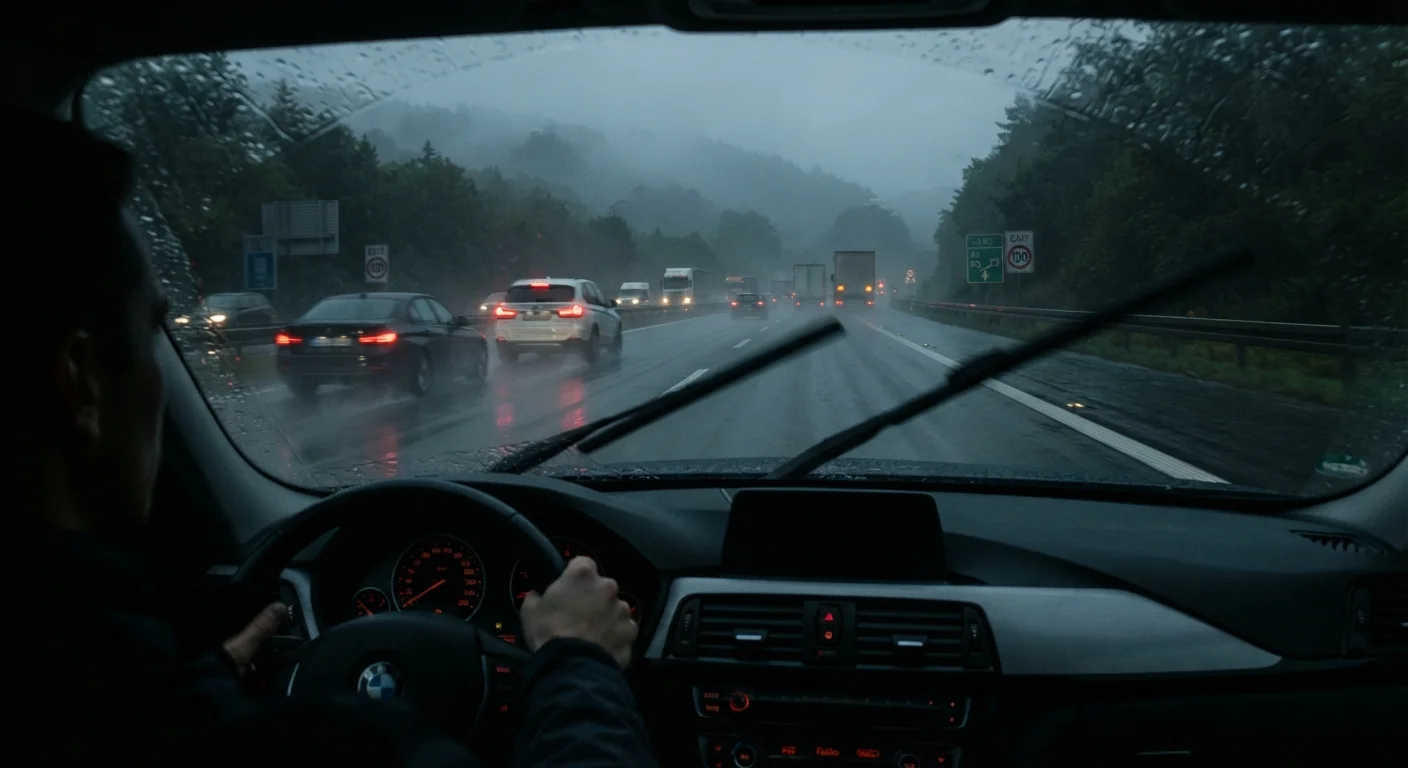
Photo: ArticleHood.com | Precision In Every Word editorial
Key Takeaways
- Rain reduces tire grip and extends stopping distances - slow down and increase following distance.
- Fog demands low-beam headlights, reduced speed, and relying on road markings rather than guessing distance.
- Ice is the most dangerous of the three - smooth, gentle inputs and much longer stopping distances are essential.
- Each condition affects visibility and vehicle control differently, so a one-size-fits-all approach doesn't work.
- Preparation before you drive - tires, lights, wipers - makes a measurable difference in all three conditions.
Why One Set of Habits Doesn't Cover All Weather
Most drivers learn the basics in fair weather and carry those habits into rain, fog, and ice without much adjustment. That mismatch is where crashes happen. Each condition changes your car's behavior in a different way - rain affects grip and visibility together, fog strips away distance cues almost entirely, and ice can reduce braking effectiveness by a factor of ten or more compared to dry pavement.
Part of building safer driving habits is recognizing that the road environment - not just other drivers - is a constant variable. Understanding what's actually happening under your tires and in front of your windshield in each condition helps you make faster, smarter decisions when conditions deteriorate.
| Rain | Fog | Ice | |
|---|---|---|---|
| Primary hazard | Reduced grip, hydroplaning | Loss of depth perception | Extreme loss of traction |
| Speed adjustment | 5-10+ mph below limit | Only as fast as you can stop | Significantly below limit |
| Following distance | 4-5 seconds minimum | More than visible range | 8-10 seconds minimum |
| Lighting | Low beams on | Low beams, fog lights if equipped | Low beams on |
| Biggest mistake to avoid | Braking hard suddenly | Driving at normal speed | Jerking wheel or stomping brakes |
| Warning sign | Spray from other vehicles | Reduced color contrast | Bridge or shaded road surface |
Driving in Rain: Managing Grip and Spray
Water on the road reduces the friction between your tires and the surface. The effect isn't uniform - it's worse at higher speeds, on painted road markings, and on older tires with worn tread. At highway speeds, a thin layer of water can get between your tires and the road entirely, a phenomenon known as hydroplaning. When that happens, steering and braking inputs have almost no effect until the tires regain contact.
The most effective adjustments in rain are straightforward: reduce your speed by at least 5-10 mph below the posted limit in moderate rain, and significantly more in heavy downpours. Increase your following distance from the standard 3-second gap to at least 4-5 seconds. Use your headlights - many states require them whenever wipers are in use. Avoid heavy braking; instead, ease off the accelerator earlier to slow naturally.
Tire condition is a factor you can control before you ever get in the car. Seasonal vehicle checks that include tire tread depth and wiper blade condition pay direct dividends when rain arrives unexpectedly.
Check Your Tires Before Rain Season
Driving in Fog: When You Can't Trust Distance
Fog is uniquely disorienting because it doesn't just reduce how far you can see - it removes the visual depth cues you rely on to judge speed and distance. Drivers routinely overestimate how much space they have ahead of them in foggy conditions, which contributes to rear-end collisions and pile-ups.
The key rule: never drive faster than a speed at which you could stop within your visible range. If you can see 100 feet ahead, you need to be able to stop in 100 feet - which, at most road speeds, means driving very slowly indeed. Use low-beam headlights, not high beams; high beams reflect off fog particles and actually reduce forward visibility. Fog lights, if your vehicle has them, are designed for exactly this situation.
Use road markings and the right-hand edge of the road as your guides rather than trying to follow the tail lights of the car ahead. If conditions become severe enough that you can't see beyond a few car lengths, it may be safer to pull completely off the road - beyond the shoulder if possible - and turn off your lights to avoid being mistaken for a moving vehicle. Visibility challenges after dark share some characteristics with fog, and the same principle applies: your eyes need more time and distance to process information.
Driving on Ice: When Physics Changes the Rules
Ice - whether black ice (a thin, nearly invisible glaze) or packed snow-ice - is the condition that most dramatically changes vehicle dynamics. Stopping distances on ice can be up to 10 times longer than on dry pavement. Steering inputs that would be routine on a dry road can trigger a slide on ice. The car doesn't telegraph trouble the way it does in rain; by the time you feel the skid, you're already in it.
The governing principle on ice is smoothness. Accelerate gently, brake gently, and steer gently. Sudden inputs of any kind break traction. Increase your following distance to at least 8-10 seconds. If your vehicle has ABS (anti-lock braking system), apply firm, steady brake pressure and let the system do its work - don't pump the pedal. If you feel a skid beginning, ease off all inputs rather than jerking the wheel or stamping the brakes.
It's also worth understanding that bridges, overpasses, and shaded stretches of road ice before surrounding pavement does, because they lose heat from both above and below. Treat these surfaces with extra caution even when the rest of the road seems fine.
Black Ice Often Looks Like Wet Pavement
Preparing Your Vehicle Before Bad Weather Arrives
Adjusting your driving behavior matters, but your vehicle's readiness sets the ceiling on what's possible. Tires with adequate tread depth are the single most important factor in wet and icy conditions - no driving technique compensates for bald tires on a wet road. Check tread depth regularly, and if you live in a region with regular winter weather, winter-rated tires make a significant difference in ice and snow grip compared to all-season tires.
Windshield wipers that streak or skip compromise your visibility in rain and fog. Headlights that are dim or aimed incorrectly reduce how much road you can see ahead. These are simple maintenance items, and addressing them before a storm is far easier than dealing with a compromised drive. See the broader guidance in car maintenance essentials for a fuller picture of what to check and when.
No weather condition should catch you completely off guard. A brief check of the forecast before a long drive, combined with a vehicle that's properly maintained, puts you in a much stronger position to handle whatever the road delivers.
The content on this site is for informational purposes only and is not a substitute for professional advice. Always consult a qualified professional for guidance specific to your situation.