
Phone at the Wheel: The Distraction Drivers Underestimate

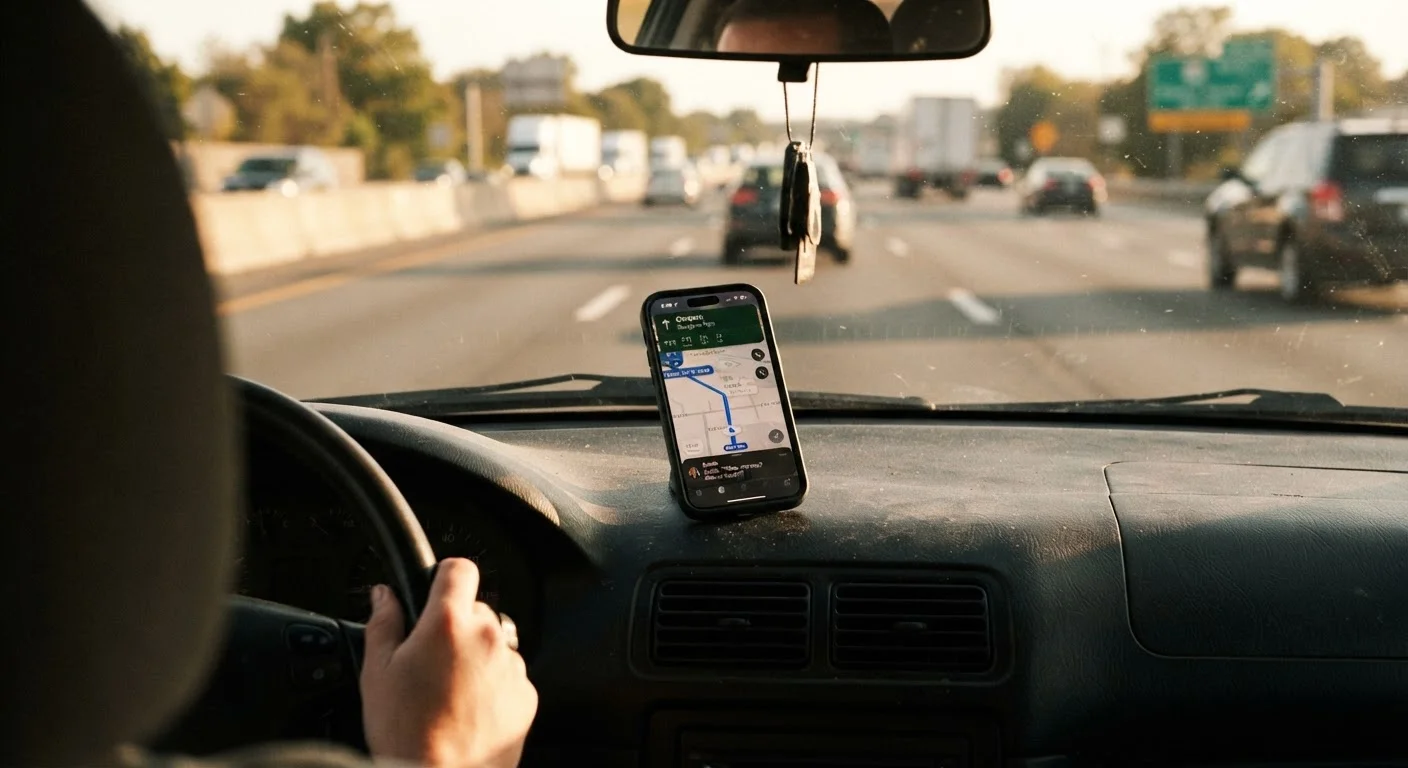
Photo: ArticleHood.com | Precision In Every Word editorial
Key Takeaways
- Hands-free phone use still significantly impairs driving performance - it is not as safe as most drivers assume.
- Texting at highway speed means traveling the length of a football field with eyes off the road.
- Cognitive distraction lingers for several seconds after you put the phone down, even if you're looking forward.
- Phone distraction impairs reaction time comparably to driving with a blood alcohol level at or above the legal limit.
- No message, notification, or call is worth the crash risk - even brief phone interactions raise collision odds sharply.
Why Phone Distraction Is Worse Than Drivers Think
Most drivers consider themselves reasonably careful with their phones behind the wheel. They might glance at a notification at a red light, use voice commands on the highway, or answer a call on speaker. Each of these feels manageable - a small, controlled risk. The research tells a different story.
The National Highway Traffic Safety Administration (NHTSA) consistently identifies distracted driving as a major contributor to traffic fatalities, with phone use among the most common forms of distraction. The danger isn't just about where your eyes are - it's about where your mind is. Understanding the gap between how risky phone use feels and how risky it actually is can be the difference between a close call and a collision.
Phone distraction has three distinct components: visual (eyes off the road), manual (hands off the wheel), and cognitive (mind off the task of driving). Most dangerous behaviors combine all three. But even activities that seem to address two of those - like hands-free calling - still carry real risk because of the cognitive load they impose. For a closer look at how other common habits quietly increase crash risk, see our piece on tailgating.
Myth
Hands-free calling is safe because my eyes stay on the road and both hands stay on the wheel.
Fact
Hands-free calling still creates significant cognitive distraction that impairs driving performance, even when your eyes and hands appear to be in the right place.
The brain cannot fully multitask. When you're having a phone conversation, your cognitive resources are split between the conversation and the road - and research consistently shows the road gets the smaller share. Studies have found that hands-free callers miss visual cues they appear to be looking at, a phenomenon researchers call inattention blindness. Talking to a passenger is different because passengers naturally pause conversation when traffic gets complex; a caller on the other end of the phone does not.
Myth
A quick glance at a text only takes a second - that's not really dangerous.
Fact
At 55 mph, a five-second glance at your phone means traveling approximately the length of a football field without processing the road ahead.
The NHTSA uses this figure - about 300 feet at highway speed - to illustrate why texting and driving is among the most dangerous driver behaviors documented. The brain also doesn't instantly refocus when your eyes return to the road; studies suggest a brief lag in situational awareness follows every phone interaction. That lag may be small in isolation, but at highway speeds and in changing traffic, it is more than enough for conditions to shift in a way you cannot react to in time.
Myth
Experienced, confident drivers can handle brief phone use without much added risk.
Fact
Driving experience does not significantly buffer against the cognitive impairment caused by phone distraction.
Confidence behind the wheel is built through experience with driving tasks - reading traffic, controlling the vehicle, anticipating hazards. But the impairment caused by phone distraction is neurological, not skill-based. Research has not found meaningful evidence that more experienced drivers can multitask with phones more safely than others. In fact, overconfidence may lead experienced drivers to underestimate how much their performance has actually degraded during a call or while composing a message.
Myth
Using voice commands to send a text is basically the same as talking to a passenger.
Fact
Voice-to-text interactions require active mental engagement with the message content and impose measurable cognitive load beyond normal conversation.
While voice commands reduce the manual and visual demands of texting, they don't eliminate the cognitive demand. Composing a message - even by voice - requires the driver to formulate language, listen to playback, and mentally review what was said. AAA Foundation research has found that voice-to-text tasks can be among the most mentally demanding in-vehicle activities measured. The hands-free label does not mean distraction-free.
Myth
It's fine to check the phone at a red light since the car isn't moving.
Fact
Phone use at red lights delays reaction when lights change and carries over into early moments of movement when attention is most critical.
When a light turns green, the driver using a phone is slower to respond than one who was watching traffic - and slower still to scan for cyclists, pedestrians, or vehicles running the opposing red. Beyond reaction time, the cognitive engagement from even a brief phone interaction doesn't clear the moment the car starts moving. That residual distraction - sometimes called the 'cognitive hangover' - persists for several seconds into resumed travel. In dense urban environments especially, those first seconds of movement are high-stakes.
What the Research Actually Shows
Studies from institutions including the University of Utah and the AAA Foundation for Traffic Safety have found that hands-free phone conversations can impair driving in ways that last well beyond the call itself. Researchers describe a phenomenon called inattention blindness - when the brain is engaged in a demanding conversation, it filters out visual information even when your eyes appear to be scanning the road. Drivers can miss stop signs, pedestrians, and other vehicles they are technically looking at.
~5 sec
Average time eyes leave the road during a text
According to NHTSA data, texting takes your eyes off the road for an average of five seconds - enough to travel a football field's length at highway speed.
4x
Crash risk increase while using a handheld phone
Research published in the British Medical Journal found that drivers using handheld mobile phones were approximately four times more likely to be involved in a crash.
27 sec
Cognitive distraction lingering after a voice task
AAA Foundation for Traffic Safety research found that mental distraction can persist for up to 27 seconds after completing a voice-activated in-car task.
The comparison to alcohol impairment is particularly striking. Research has suggested that driving while using a handheld phone can produce reaction-time deficits comparable to driving at or above the legal blood alcohol limit in many US states. That framing isn't meant to moralize - it's meant to give drivers an accurate sense of scale. Just as fatigue impairs judgment in ways drivers routinely underestimate, phone distraction degrades performance in ways that feel invisible in the moment.
Distraction Doesn't End When You Put the Phone Down
Building safer habits doesn't require a dramatic lifestyle change. Putting the phone in the glove compartment, enabling Do Not Disturb driving modes, and pre-setting navigation before departure are all low-friction steps that meaningfully reduce exposure. For those who genuinely need to be reachable, pulling over completely to handle a call or message is the only evidence-backed safe approach.
Distraction of any kind compresses the margin that safe driving depends on. If you're also curious how reduced visibility stacks on top of these risks, our overview of night driving challenges covers the compounding effects in detail.
The content on this site is for informational purposes only and is not a substitute for professional advice. Always consult a qualified professional for guidance specific to your situation.