
The Role of Fibre in Digestion and Long-Term Gut Health

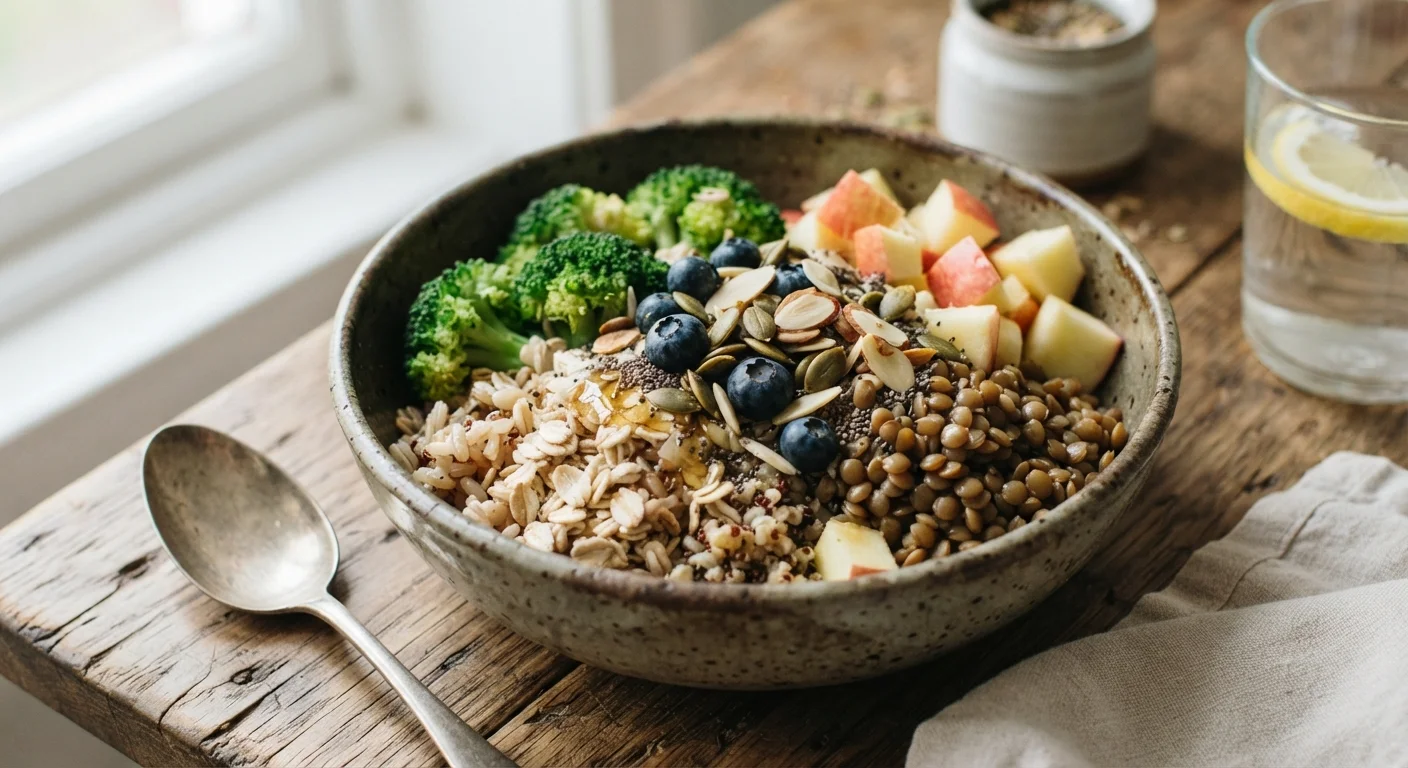
Photo: ArticleHood.com | Precision In Every Word editorial
Key Takeaways
- Fibre feeds beneficial gut bacteria, which in turn produce compounds linked to reduced inflammation.
- Soluble fibre slows glucose absorption, helping to moderate blood sugar spikes after meals.
- Higher fibre intake is consistently associated with lower risk of colorectal cancer and cardiovascular disease.
- Most Americans consume well below the generally recommended daily fibre intake.
- Increasing fibre gradually - with adequate water - helps avoid digestive discomfort.
What Fibre Actually Does in Your Body
Most people associate fibre with preventing constipation - and that's accurate, but it's only a small part of the picture. Dietary fibre performs a range of functions that ripple through digestion and into broader systemic health, making it one of the most consequential components of a plant-rich diet.
Insoluble fibre adds physical bulk to stool and speeds the passage of material through the intestines, reducing the time that potentially harmful compounds spend in contact with the gut lining. Soluble fibre, by contrast, dissolves in water to form a viscous gel that slows digestion - moderating how quickly glucose enters the bloodstream and binding to bile acids in ways that affect cholesterol metabolism. For a deeper look at these two fibre types, see our guide to soluble and insoluble fibre.
Beyond these mechanical effects, a significant share of dietary fibre reaches the colon undigested, where it becomes fuel for the trillions of microorganisms that make up the gut microbiome.
~5%
US adults meeting daily fibre recommendations
Research published in the American Journal of Lifestyle Medicine estimates that only about 5% of Americans meet recommended fibre intake levels.
25-38g
Recommended daily fibre intake for adults
The Dietary Guidelines for Americans suggest approximately 25g/day for women and 38g/day for men, with amounts adjusted for age and caloric intake.
~10%
Reduction in colorectal cancer risk per 10g fibre/day
A large meta-analysis published in the British Medical Journal found approximately a 10% reduction in colorectal cancer risk for every 10 grams of daily dietary fibre.
Fibre and the Gut Microbiome
The large intestine is home to a dense and diverse community of bacteria, and many of them thrive on fermentable fibres. When beneficial bacteria ferment these fibres, they produce short-chain fatty acids (SCFAs) - primarily butyrate, propionate, and acetate. These compounds are far from waste products: butyrate is the primary energy source for colonocytes (the cells lining the colon), and SCFAs more broadly help regulate immune responses, gut barrier integrity, and systemic inflammation.
Research consistently shows that diets higher in diverse plant fibres are linked to a richer, more varied microbiome - and a less diverse microbiome has been associated with conditions ranging from inflammatory bowel disease to metabolic disorders. While the science of the gut microbiome is still evolving rapidly, the connection between fibre intake and microbiome health represents one of the stronger diet-disease relationships identified to date.
“The gut microbiome is exquisitely sensitive to diet, and fibre is the single most important dietary determinant of microbial diversity. What we eat shapes the ecosystem in our gut - for better or for worse.”
— Tim Spector, Professor of Genetic Epidemiology, King's College London, and author on gut health and nutrition
Long-Term Health Associations
Epidemiological research has repeatedly found that higher habitual fibre intake is associated with meaningfully lower risk of several chronic conditions:
- Colorectal cancer: The World Health Organization's cancer research arm classifies high dietary fibre intake as a probable protection against colorectal cancer, based on consistent evidence across large cohort studies.
- Cardiovascular disease: Soluble fibre - particularly beta-glucan from oats and barley - has well-documented effects on LDL cholesterol levels, contributing to lower cardiovascular risk.
- Type 2 diabetes: Fibre's ability to blunt post-meal blood sugar spikes reduces the glycemic burden of meals, and higher fibre intake is consistently associated with reduced type 2 diabetes incidence in large population studies.
- All-cause mortality: Several large analyses have found an inverse association between dietary fibre intake and overall mortality risk, though causality is difficult to isolate from other dietary and lifestyle factors.
These associations make fibre a focus of long-term preventive health habits rather than a short-term fix.
Practical Ways to Increase Fibre Intake
The gap between typical fibre consumption and recommended targets is significant - most US adults consume roughly half the recommended daily amount. Closing that gap doesn't require dramatic dietary overhauls. Small, consistent shifts toward whole plant foods tend to be more sustainable than short-term dietary experiments.
Useful strategies include:
- Choosing whole grain bread, pasta, and cereals over refined versions
- Adding legumes (lentils, beans, chickpeas) to soups, salads, and grain bowls several times a week
- Leaving the skin on fruits and vegetables where edible, as it is often fibre-dense
- Including chia or ground flaxseed in smoothies, yogurt, or oatmeal
- Snacking on whole fruit, nuts, or raw vegetables rather than processed snacks
Increase Fibre Gradually to Avoid Discomfort
For a broader understanding of what fibre is and where to find it, our article on fibre as an underestimated nutrient covers the essentials. And for general context on food components, the Food Explained hub is a useful reference.
This article is for general informational purposes only and does not constitute medical or dietary advice. Consult a qualified healthcare professional or registered dietitian before making significant changes to your diet, especially if you have an existing health condition.
Frequently Asked Questions
The content on this site is for informational purposes only and is not a substitute for professional advice. Always consult a qualified professional for guidance specific to your situation.