
Dietary Fibre: Soluble, Insoluble, and Why the Distinction Matters

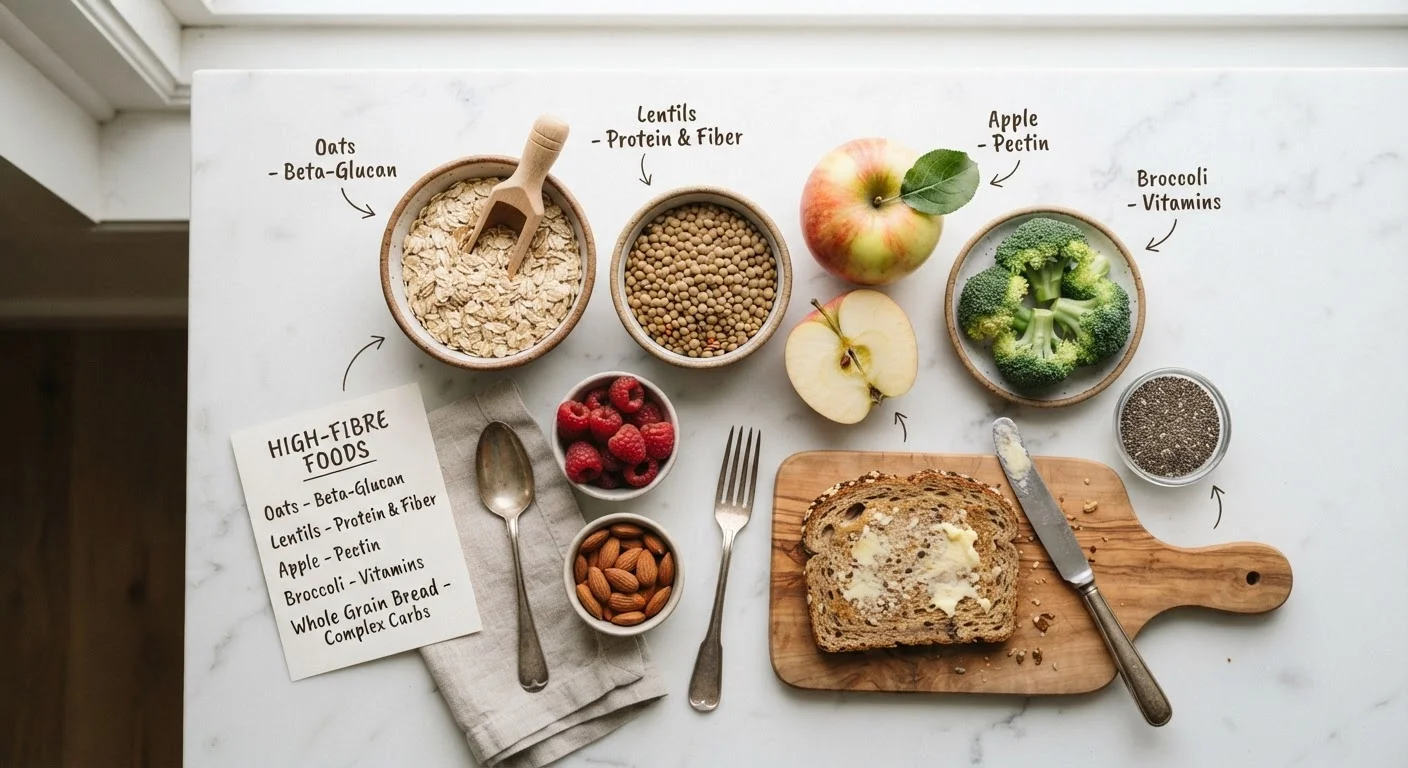
Photo: ArticleHood.com | Precision In Every Word editorial
Two Types of Fibre, Two Very Different Jobs
When most people hear the word "fibre," they picture one thing: roughage that keeps digestion moving. But dietary fibre is actually a family of compounds, and the two main categories - soluble and insoluble - work in distinct ways once they reach your digestive tract. Understanding that difference helps explain why eating a variety of plant foods matters more than simply hitting a fibre number.
| Two main fibre types | Soluble and insoluble |
| Soluble fibre behaviour | Dissolves in water; forms a gel in the gut |
| Insoluble fibre behaviour | Does not dissolve; adds bulk to stool |
| US daily fibre recommendation (adults) | 25-38 g, depending on age and sex (Dietary Guidelines for Americans) |
| Average US adult fibre intake | Around 15 g per day - well below recommendations (Dietary Guidelines for Americans Advisory Committee) |
| Key soluble fibre sources | Oats, legumes, apples, psyllium |
| Key insoluble fibre sources | Whole wheat, vegetable skins, nuts, seeds |
For a broader look at why fibre is one of the most under-consumed nutrients in the average US diet, see our overview on dietary fibre.
Soluble Fibre: What It Is and How It Works
Soluble fibre dissolves in water to form a thick, gel-like substance in the digestive tract. This gel slows the movement of food through the small intestine, which has several meaningful effects on the body.
- Blood sugar regulation: By slowing digestion, soluble fibre helps moderate the rate at which glucose enters the bloodstream, which can contribute to more stable blood sugar levels after meals.
- Cholesterol management: The gel binds to bile acids (which the liver makes from cholesterol) and carries them out of the body. The liver then draws on circulating cholesterol to make more bile, which may help lower LDL ("bad") cholesterol levels over time.
- Gut microbiome support: Many soluble fibres are fermentable - gut bacteria break them down in the colon, producing short-chain fatty acids that help nourish the intestinal lining.
Common food sources: oats, barley, dried beans and lentils, apples, citrus fruits, and psyllium husks.
Dietary fibre
A category of carbohydrates found in plant foods that the human body cannot digest or absorb. Unlike sugars and starches, fibre passes through most of the digestive system largely intact.
Soluble fibre
Fibre that dissolves in water and forms a gel-like material in the gut. It is associated with moderating blood sugar levels and supporting cholesterol management.
Insoluble fibre
Fibre that does not dissolve in water. It adds bulk to stool and speeds transit through the colon, supporting regular bowel movements.
Short-chain fatty acids
Compounds produced when gut bacteria ferment soluble fibre in the colon. They help nourish the cells lining the large intestine and may support immune function.
Bile acids
Compounds made in the liver from cholesterol and released into the small intestine to help digest fats. Soluble fibre can bind to bile acids, prompting the liver to use more cholesterol to produce them.
Fermentable fibre
A subset of dietary fibre that gut bacteria can break down in the colon. Most soluble fibres are fermentable; most insoluble fibres are not.
Insoluble Fibre: Structure and Motility
Insoluble fibre does not dissolve in water. Instead, it passes largely intact through the digestive system, adding bulk to stool and speeding transit time through the colon. This is the type of fibre most closely associated with preventing constipation.
- Bowel regularity: Increased stool bulk stimulates muscle contractions in the intestinal wall, helping move waste through more efficiently.
- Digestive comfort: Faster transit time means waste spends less time in the colon, which is one reason higher insoluble fibre intake is associated with a lower risk of certain digestive problems.
Common food sources: whole wheat flour, wheat bran, most vegetables (especially the skins), nuts, and seeds.
To understand more about how fibre of both types shapes long-term gut health, see The Role of Fibre in Digestion and Long-Term Gut Health.
Most Foods Contain Both Types
Getting Both Types from Real Food
Most plant foods contain a mix of both soluble and insoluble fibre, just in different proportions. An apple, for example, has soluble fibre (pectin) in its flesh and insoluble fibre in its skin. Eating the whole fruit delivers both. This is one of the practical reasons that whole, minimally processed plant foods tend to outperform isolated fibre supplements for overall digestive support - they deliver the full spectrum naturally.
~15 g
Average daily fibre intake for US adults
The Dietary Guidelines for Americans Advisory Committee has noted that most US adults consume roughly half the recommended amount of fibre.
25-38 g
Recommended daily fibre intake for adults
General recommendations from the Dietary Guidelines for Americans vary by age and sex; 25 g is the commonly cited target for adult women, 38 g for adult men under 50.
95%
Share of Americans falling short on fibre
Fibre has been identified as a 'nutrient of public health concern' by US dietary guidance bodies, reflecting how widespread the shortfall is across the population.
For a clear-eyed look at how food processing affects nutrient content, including fibre, see our article on whole foods vs. processed foods. More practical guidance on building a balanced, fibre-rich plate is available through the Eating Well hub.
This article is for general informational and educational purposes only and is not a substitute for professional medical or dietary advice. If you have specific digestive concerns or health conditions, consult a qualified healthcare provider or registered dietitian.
The content on this site is for informational purposes only and is not a substitute for professional advice. Always consult a qualified professional for guidance specific to your situation.