
Whole Foods vs. Processed Foods: What the Distinction Actually Means

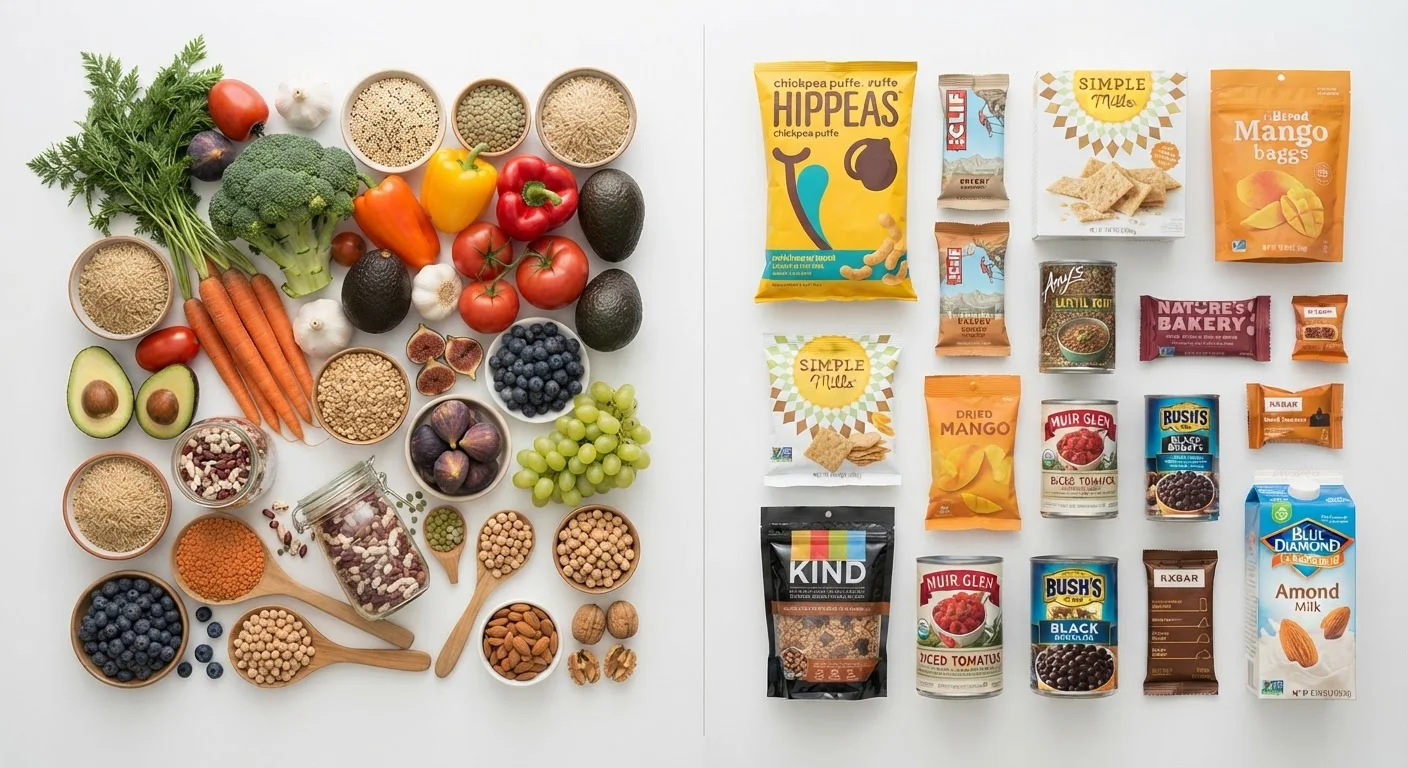
Photo: ArticleHood.com | Precision In Every Word editorial
Key Takeaways
- Processing exists on a spectrum - canned beans and packaged cookies are not nutritionally equivalent.
- Whole foods retain their original nutrient matrix, including fiber, vitamins, minerals, and phytonutrients.
- Ultra-processed foods, not all processed foods, are most consistently linked to adverse health outcomes in research.
- Some processing - freezing, fermenting, pasteurizing - preserves or even enhances nutritional value.
- Reading ingredient lists matters more than a whole vs. processed label alone.
- Consult a registered dietitian for personalized dietary guidance rather than relying solely on food category labels.
Defining the Terms Precisely
The word "whole" in nutrition refers to foods that remain close to their natural form - an apple, a raw walnut, a dried lentil. Processing, by contrast, describes any deliberate change made to food after harvest: washing, cutting, fermenting, freezing, canning, or the extensive industrial transformation that produces snack chips or ready-made meals.
The NOVA classification system, developed by researchers at the University of São Paulo, groups foods into four categories based on the extent and purpose of processing - not simply whether processing occurred. This framework has gained traction in nutrition research because it separates minimally processed foods (like plain frozen spinach) from ultra-processed formulations (like flavored corn puffs engineered for maximum palatability). Understanding that distinction is the foundation of this entire conversation. For a deeper look at how that spectrum maps onto everyday choices, see the spectrum between whole and processed foods.
| Criterion | Whole Foods | Processed Foods |
|---|---|---|
| Definition | Unaltered or minimally altered from natural state | Any food changed after harvest; ranges widely |
| Nutrient matrix | Intact fiber, vitamins, phytonutrients | Often reduced; varies by processing level |
| Added ingredients | None | May include sugar, sodium, additives, or preservatives |
| Shelf life | Shorter; requires refrigeration or prompt use | Longer; engineered for stability |
| Cost and accessibility | Variable; fresh produce can be expensive | Often more affordable and widely available |
| Preparation time | Usually requires more preparation | Often ready-to-eat or quick to prepare |
| Research associations | Linked to lower chronic disease risk | Ultra-processed linked to risk; minimally processed less so |
What Happens Nutritionally During Processing
Whole foods carry what researchers call a nutrient matrix - the full constellation of fiber, vitamins, minerals, antioxidants, and phytonutrients that exist together as they were grown. This matrix appears to influence how nutrients are absorbed and metabolized, meaning isolated nutrients don't always behave the same way as nutrients inside intact food structures.
Processing can disrupt this matrix in meaningful ways. Refining whole wheat into white flour removes the bran and germ, stripping away significant fiber, B vitamins, and iron. Heavy heat treatment can degrade heat-sensitive vitamins like vitamin C. Some manufacturers then add nutrients back - a practice worth understanding through our article on fortified versus enriched foods.
However, processing is not universally destructive. Freezing vegetables shortly after harvest preserves micronutrients effectively - sometimes better than fresh produce that has traveled thousands of miles. Fermentation increases bioavailability of certain minerals and introduces beneficial microorganisms. Cooking itself is a form of processing that makes many nutrients more accessible to the body.
57%
Share of US calories from ultra-processed foods
Research published in BMJ Open estimated that ultra-processed foods accounted for approximately 57% of daily caloric intake among US adults.
4 groups
NOVA classification processing categories
The NOVA system, developed by researchers at the University of São Paulo, categorizes all foods into four groups based on extent and purpose of processing.
~30%
Fiber loss in wheat refining
Milling whole wheat into refined white flour removes the bran and germ, eliminating a substantial portion of the grain's natural fiber content.
Where the Research Actually Points
Observational studies and meta-analyses have consistently linked high consumption of ultra-processed foods - ready-to-eat meals, sugary beverages, reconstituted meat products - with higher rates of obesity, cardiovascular disease, type 2 diabetes, and certain cancers. The mechanisms under investigation include excess added sugar and sodium, displacement of whole foods, disrupted satiety signaling, and possible effects of certain additives on gut microbiota.
Critically, the evidence targets ultra-processed foods specifically, not all processed foods. Plain canned tomatoes, pasteurized milk, and rolled oats are processed by definition but carry no such associations. This distinction is frequently collapsed in popular media, creating unnecessary anxiety around the entire processed food category.
For readers curious about how food manufacturers engineer palatability in ultra-processed products, the science behind why ultra-processed foods taste so good unpacks those mechanisms in detail.
A Note on Study Design Limitations
Making Practical Sense of Labels and Choices
Ingredient lists are more informative than front-of-pack claims. A short list of recognizable ingredients generally signals lighter processing, regardless of what marketing language appears on the front. For guidance on interpreting those labels accurately, what food labels are actually telling you is a useful companion read.
Terms like "natural" and "organic" on packaging are separately regulated - and often confused with "whole." They describe production methods, not processing levels. Natural, organic, and non-GMO labels carry different legal meanings and none automatically guarantees minimal processing.
A practical strategy many registered dietitians recommend is building meals around whole or minimally processed foods as a base, then filling gaps with convenient minimally processed options - frozen vegetables, plain legumes in cans, plain yogurt - rather than treating all packaged food as categorically off-limits. Understanding dietary fiber types can also help prioritize which whole foods deliver the most functional benefit for digestive health.
This article is for general informational and educational purposes only and is not a substitute for professional medical or dietary advice. Consult a registered dietitian or qualified healthcare professional before making significant changes to your diet.
The content on this site is for informational purposes only and is not a substitute for professional advice. Always consult a qualified professional for guidance specific to your situation.