
Fortified vs. Enriched Foods: A Quiet but Important Distinction

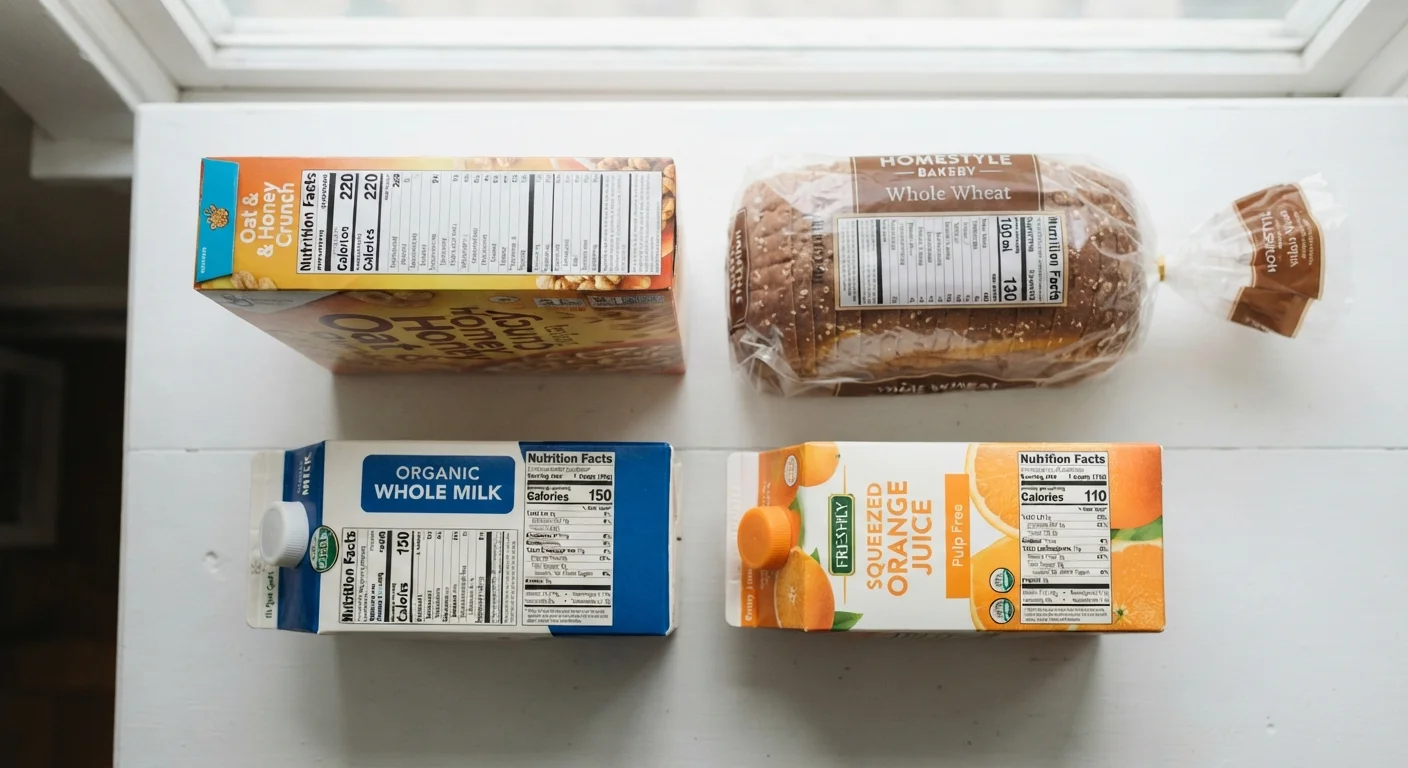
Photo: ArticleHood.com | Precision In Every Word editorial
Key Takeaways
- Enriched means nutrients lost during food processing have been put back in - typically B vitamins and iron in refined grains.
- Fortified means nutrients were added that the food didn't originally contain, such as vitamin D in orange juice.
- Both terms are regulated by the FDA, but they describe fundamentally different intentions behind the nutrient addition.
- Neither term makes a food inherently healthy or unhealthy - context and overall diet still matter most.
- Whole foods generally retain more naturally occurring nutrients than either enriched or fortified processed options.
Two Labels, Two Very Different Stories
Scan the ingredient list on a loaf of sandwich bread or a carton of milk and you'll almost certainly encounter one of two words: enriched or fortified. Many shoppers treat them as interchangeable - both mean nutrients were added, right? Technically yes, but the reason for adding them is quite different, and that distinction tells you something real about what's in your food.
As part of understanding what food labels are actually telling you, these two terms are worth knowing precisely. The FDA recognizes both, but regulates them separately, and their implications for nutrition aren't the same.
| Criterion | Fortified | Enriched |
|---|---|---|
| Core definition | Adds nutrients not originally in the food | Restores nutrients lost in processing |
| Typical foods | Milk, OJ, plant-based milks, salt | White bread, pasta, white rice, flour |
| Common nutrients added | Vitamin D, calcium, iodine, folic acid | Thiamine, riboflavin, niacin, iron, folic acid |
| Restores original profile? | No - adds beyond original | Partially - not all nutrients restored |
| FDA regulated? | Yes | Yes |
| Primary purpose | Address population-wide nutrient gaps | Compensate for processing losses |
Enrichment: Putting Back What Processing Took Away
When grains are refined - think white flour or white rice - the milling process strips away the outer bran and germ layers. Those layers happen to contain most of the grain's naturally occurring B vitamins (thiamine, riboflavin, niacin, and folic acid) and iron. What's left is mostly starch.
Enrichment is the practice of adding some of those lost nutrients back in after processing. The word "some" matters: enrichment doesn't fully restore every nutrient removed. Fiber, magnesium, zinc, and various phytonutrients (beneficial plant compounds) that were present in the whole grain are generally not replaced. This is why whole grains and enriched refined grains are not nutritionally equivalent, even when the label says "enriched."
Common enriched foods include white bread, pasta, white rice, and many breakfast cereals. The FDA sets specific standards for which nutrients must be added and at what levels for a product to carry the "enriched" label on grain products.
~25%
Nutrients lost in white flour milling
Refining whole wheat into white flour removes roughly 25 or more nutrients, according to general nutrition science literature; enrichment typically replaces only a handful of them.
1998
Year folic acid fortification became mandatory in US grain products
The FDA mandated folic acid fortification of enriched grain products in 1998, a policy credited in public health literature with reducing neural tube defect rates.
~40%
US adults with insufficient vitamin D intake
Research consistently shows a substantial share of American adults do not get adequate vitamin D from diet alone, underscoring why fortification of staple foods is considered a practical public health tool.
Fortification: Adding What Was Never There
Fortification is a different intervention. Here, nutrients are added to a food that never naturally contained them - or contained them only in trace amounts - specifically to address a public health need or nutritional gap in the broader population.
Classic examples include vitamin D added to milk, iodine added to table salt, and folic acid added to enriched grain products (yes, a food can be both enriched and fortified). Orange juice is often fortified with calcium and vitamin D. Plant-based milks are frequently fortified with calcium, vitamin B12, and vitamin D to bring them closer to the nutrient profile of dairy milk.
Fortification has had measurable public health successes. The addition of iodine to salt helped dramatically reduce iodine deficiency in the United States. The mandatory fortification of enriched grain products with folic acid, introduced in 1998, is credited with a significant reduction in neural tube defects. Consult a qualified healthcare professional if you have specific concerns about your own nutrient intake.
For a broader look at how regulated claims work on packaging, see how terms like "natural" and "organic" differ from fortified and enriched.
Can a Food Be Both Enriched and Fortified?
What This Means When You're Reading Labels
Neither term is a red flag, but neither is a nutritional endorsement either. Here's a practical way to think about it:
- "Enriched" on a grain product signals that the food has been refined - and that some, but not all, nutrients have been restored. If whole grain nutrition matters to you, look for "100% whole wheat" or "whole grain" listed as the first ingredient instead.
- "Fortified" on any food tells you nutrients were deliberately added, often for a specific public health reason. This can be genuinely useful - particularly for nutrients many Americans fall short on, such as vitamin D.
- Check the Nutrition Facts panel to see what percentage of your Daily Value (DV) each nutrient provides. The label won't tell you whether a nutrient was added through enrichment or fortification, but it will tell you how much is there. Our guide on reading a nutrition label without getting lost in the numbers walks through this in detail.
The overall pattern of what you eat matters more than any single label term. Whole, minimally processed foods generally provide a wider range of nutrients in their natural proportions - but enriched and fortified foods can play a legitimate supporting role in a balanced diet.
This article is for general informational and educational purposes only and is not a substitute for advice from a qualified healthcare or nutrition professional.
The content on this site is for informational purposes only and is not a substitute for professional advice. Always consult a qualified professional for guidance specific to your situation.