
Whole Foods vs. Processed Foods: Understanding the Spectrum in Between

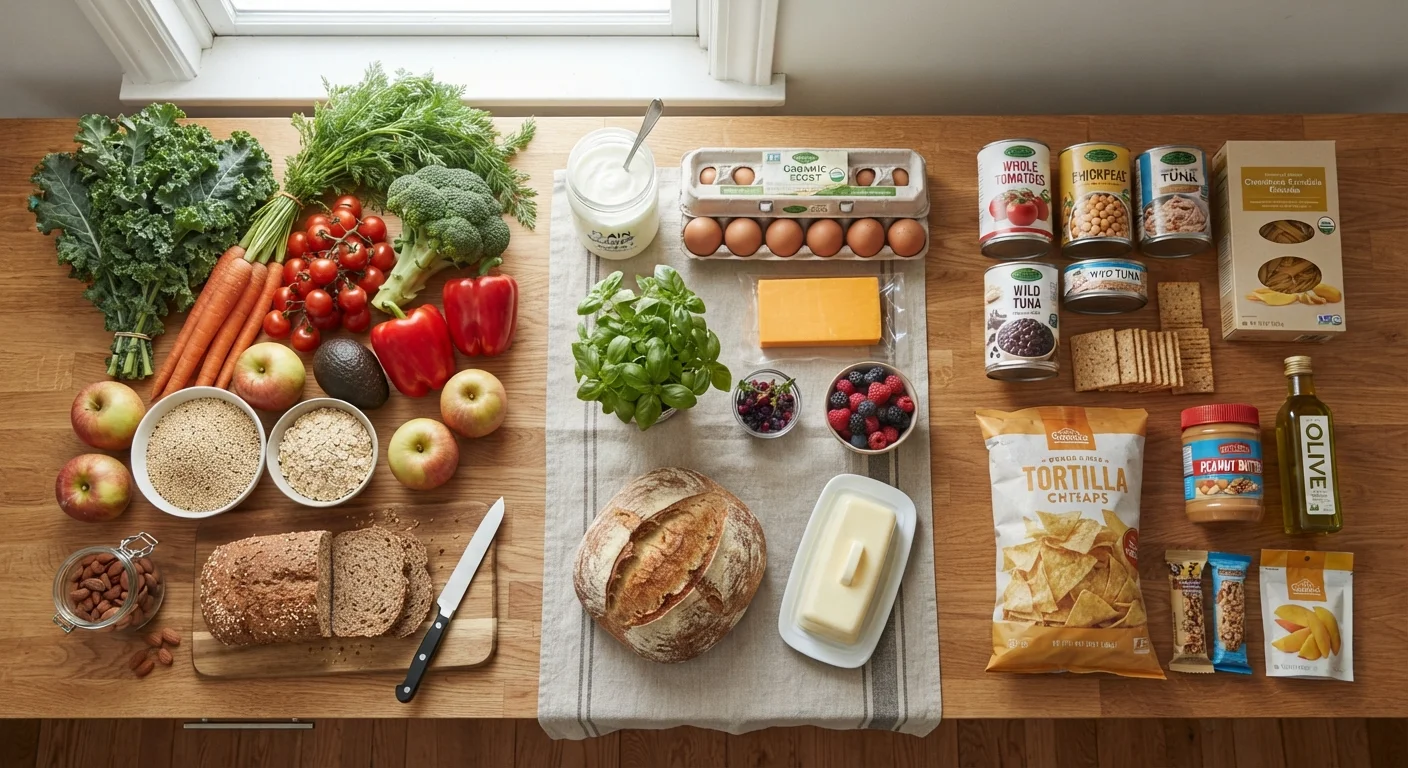
Photo: ArticleHood.com | Precision In Every Word editorial
Key Takeaways
- Processing exists on a spectrum - frozen vegetables and canned beans are processed but still nutritious.
- Ultra-processed foods, not all processed foods, are most consistently linked to poor health outcomes.
- Whole foods retain their natural fiber, vitamins, and phytonutrients with little or no alteration.
- The NOVA classification system provides a practical four-tier framework for understanding food processing levels.
- Reading ingredient lists helps you identify where a packaged food actually falls on the spectrum.
What 'Whole' and 'Processed' Actually Mean
The terms whole foods and processed foods get thrown around constantly, but their definitions are murkier than most people realize. A whole food is generally one that hasn't been significantly altered from its natural state - think an apple, a raw walnut, or a dried lentil. It contains the full complement of nutrients nature packaged together: fiber, vitamins, minerals, and various plant compounds.
Processing, by contrast, is any deliberate change made to a food before it reaches your plate - washing, cutting, fermenting, canning, cooking, or adding ingredients. By this definition, almost everything you eat has been processed to some degree. The question is how much, and what was added or removed in the process.
For a more structured way to think about this, researchers developed the NOVA classification system, which groups foods into four tiers based on the extent and purpose of processing - not on nutrient content alone. Understanding that framework is far more useful than a simple whole/processed binary. You can explore what these labels really mean in detail for a deeper look at the distinction.
| Criterion | Whole Foods | Processed Foods |
|---|---|---|
| Definition | Unaltered or minimally altered from natural state | Any food changed before reaching the consumer |
| Nutrient retention | High - fiber, vitamins, phytonutrients intact | Varies widely by processing degree |
| Added ingredients | None | Ranges from salt only to dozens of additives |
| Shelf life | Often short without refrigeration | Generally extended via preservation methods |
| Convenience | Usually requires preparation | Often ready-to-eat or quick to prepare |
| Health risk | Lowest at the unprocessed tier | Highest at the ultra-processed tier |
| Cost | Varies; seasonal produce can be affordable | Ranges from budget staples to premium products |
The Spectrum: From Minimally Altered to Ultra-Processed
Rather than two poles, think of food processing as a continuous scale with four recognizable zones.
- Unprocessed or minimally processed: Fresh fruit, raw vegetables, plain meat, eggs, plain dried legumes. These retain virtually all their original nutrients.
- Processed culinary ingredients: Olive oil, flour, butter, salt, sugar - substances extracted from whole foods and used in cooking. Nutritious when used in proportion; problematic when they dominate the diet.
- Processed foods: Canned tomatoes, frozen spinach, plain yogurt, smoked fish, artisan bread. These have been altered for preservation or palatability but usually contain recognizable ingredients and retain meaningful nutrition.
- Ultra-processed foods (UPF): Packaged snacks, sweetened cereals, carbonated soft drinks, fast food - products formulated primarily from industrial substances (refined starches, added sugars, hydrogenated fats, artificial flavors, emulsifiers) with little or no whole food character remaining.
The nutritional concern isn't processing per se - it's the ultra-processed tier. A growing body of research associates high UPF consumption with increased risk of obesity, type 2 diabetes, cardiovascular disease, and other chronic conditions, though establishing direct causation remains an active area of scientific inquiry. To understand exactly how those products are engineered to keep you coming back, see the science behind why ultra-processed foods taste so good.
57%
Share of US calories from ultra-processed foods
Research published in the BMJ estimated that ultra-processed foods account for more than half of daily caloric intake among US adults.
4x
NOVA processing tiers in the classification system
The NOVA framework, developed by researchers at the University of São Paulo, categorizes all foods into four groups based on the nature and extent of industrial processing.
~10%
Higher all-cause mortality association per 10% UPF intake increase
A large observational study published in JAMA Internal Medicine found associations between higher ultra-processed food consumption and increased mortality, though causation has not been firmly established.
How to Navigate the Middle Ground
Most practical eating happens in the middle of the spectrum - and that's perfectly fine. A can of chickpeas, a bag of frozen edamame, or a tub of plain Greek yogurt are all processed, yet all deliver solid nutrition. The goal isn't to reject processing wholesale; it's to develop a working instinct for where products land.
A few reliable habits help:
- Read the ingredient list, not just the front of the package. Short ingredient lists featuring recognizable whole-food components generally indicate lighter processing. Long lists with emulsifiers, flavor enhancers, and multiple forms of added sugar are hallmarks of the ultra-processed tier. See what food labels are actually telling you for a practical primer.
- Look at fiber and sodium together. Heavily processed foods often strip fiber while adding sodium. A food that's low in fiber and high in sodium has probably been significantly refined. Reading a nutrition label without getting lost can help you interpret those figures quickly.
- Don't treat convenience as the enemy. Frozen vegetables, canned fish, and pre-washed greens are processed - and they're also among the most practical tools for eating well on a real schedule.
Processing Isn't Always a Nutritional Loss
This article is for general educational purposes and does not constitute medical or dietary advice. Consult a registered dietitian or qualified healthcare professional for guidance tailored to your individual health needs.
The content on this site is for informational purposes only and is not a substitute for professional advice. Always consult a qualified professional for guidance specific to your situation.