
Why Crash Diets Keep Failing - And the Physiology Behind It

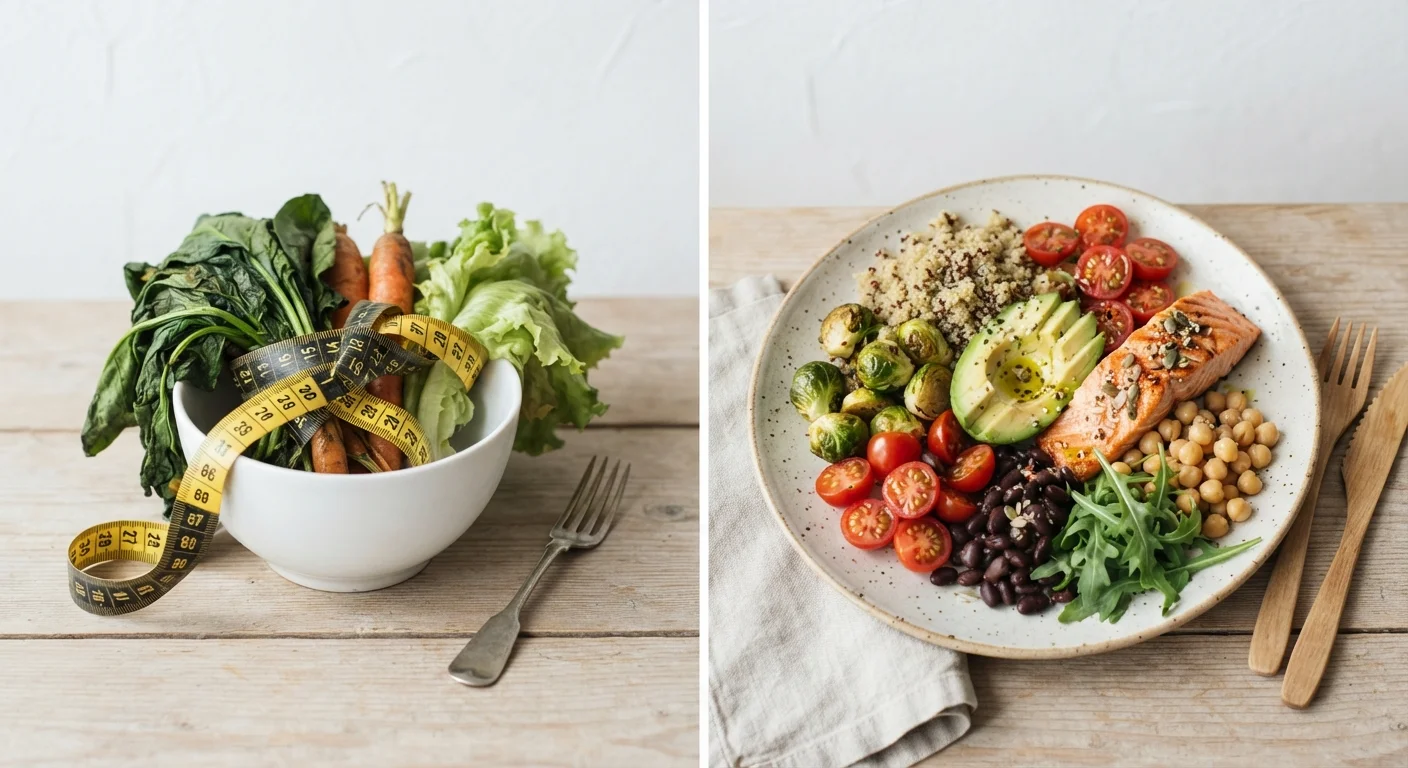
Photo: ArticleHood.com | Precision In Every Word editorial
Key Takeaways
- Crash diets trigger hormonal and metabolic adaptations that actively resist weight loss.
- Rapid calorie restriction causes significant muscle loss alongside fat loss, slowing metabolism.
- Hunger hormones like ghrelin rise after dieting, making sustained restriction biologically harder.
- Gradual, moderate calorie reduction preserves lean mass and is more sustainable long-term.
- Consulting a healthcare professional is recommended before making significant dietary changes.
What Happens in Your Body During a Crash Diet
When calorie intake drops sharply, the body interprets this as a resource emergency and responds with a cascade of biological adaptations. Energy expenditure decreases - the body becomes more efficient, burning fewer calories to perform the same tasks. This phenomenon, sometimes called metabolic adaptation, is well-documented in research and is one reason weight loss tends to slow even when restriction continues.
Simultaneously, the body breaks down muscle tissue alongside fat stores for fuel. Lean muscle mass is metabolically expensive to maintain, so during severe restriction, the body sacrifices it. Less muscle means a lower resting metabolic rate - the number of calories the body burns at rest - making future weight management harder, not easier. For a deeper look at what metabolism actually is, see our science-based explainer on metabolism.
~25-30%
Weight lost as lean mass on very-low-calorie diets
Research published in obesity and nutrition journals consistently finds that a significant portion of rapid weight loss comes from muscle, not just fat.
Up to 40%
Rise in ghrelin (hunger hormone) after caloric restriction
Studies have observed marked increases in circulating ghrelin following sustained calorie deficits, contributing to heightened appetite after dieting.
Hormonal shifts compound the problem. Ghrelin, a hormone that signals hunger, rises with caloric restriction. Leptin, which signals satiety, falls. Research has shown these hormonal changes can persist well beyond the active dieting period - meaning the body continues pushing back against weight loss long after the diet ends. This is biology, not a failure of willpower.
Common Mistakes That Make Crash Dieting Worse
Understanding where crash dieting goes wrong - not just physically but behaviorally - helps explain why so many people cycle through the same patterns repeatedly. The mistakes below are rooted in physiology and psychology, and recognizing them is the first step toward breaking the cycle.
Cutting calories too drastically, too fast - often to 800 calories or fewer per day.
Ignoring protein intake during calorie restriction, leading to disproportionate muscle loss.
Treating the diet as a temporary event rather than a pathway toward lasting eating habits.
Disregarding hunger and satiety signals, white-knuckling through severe restriction.
Relying on the scale as the only measure of progress, leading to discouragement and abandonment.
This Is Education, Not Medical Advice
What the Evidence Supports Instead
The research on sustainable weight management consistently points away from dramatic restriction and toward moderate, consistent changes. A calorie deficit that is smaller but maintained over a longer period tends to preserve muscle mass, keep hormonal disruption manageable, and allow new eating behaviors to become habitual rather than forced.
Dietary patterns - how foods are combined, when meals are eaten, and how satisfying they feel - matter alongside total calories. Common nutrition myths, such as the idea that entire food groups must be eliminated, often push people toward unnecessary restriction that isn't supported by evidence.
Very Low Calorie Diets Carry Real Risks
Physical activity, particularly resistance training, helps counteract muscle loss during a deficit and supports metabolic health over time. None of this requires a perfect regimen - small, consistent steps compound meaningfully. The goal is a way of eating that could be maintained for years, not days.
This article is for general informational and educational purposes only and does not constitute medical or nutritional advice. Always consult a qualified healthcare professional before making significant changes to your diet or health routine.
The content on this site is for informational purposes only and is not a substitute for professional advice. Always consult a qualified professional for guidance specific to your situation.