
Mental Health Through the Lifespan: How Well-Being Needs Shift from Adolescence to Later Life

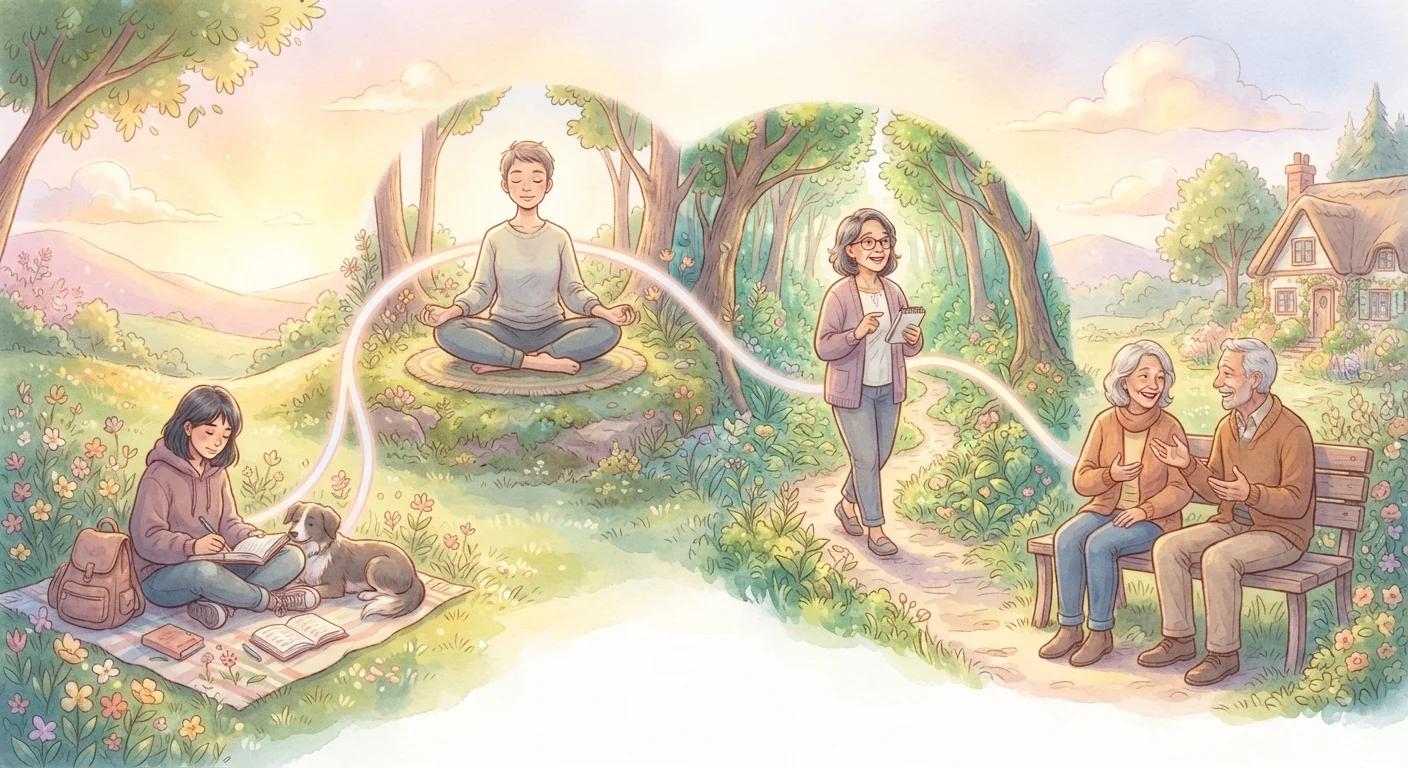
Photo: ArticleHood.com | Precision In Every Word editorial
Key Takeaways
- Mental health challenges and the supports that address them look meaningfully different at each life stage.
- Adolescence brings identity formation and heightened emotional sensitivity; early intervention matters most here.
- Young adulthood involves high transition-related stress that is often under-recognized and under-treated.
- Midlife can surface suppressed mental health concerns alongside hormonal and role changes.
- Older adults face unique risks like grief and social isolation, but also demonstrate notable emotional resilience.
- Routine mental health check-ins are valuable across every age - not only during crisis periods.
Why Mental Health Is a Lifelong, Shifting Experience
Mental health is not a fixed state you either have or don't. It shifts in response to biology, relationships, roles, and circumstances - and what supports well-being at 16 looks very different from what works at 60. Understanding those shifts is itself a form of preventive care.
The World Health Organization defines mental health as a state of well-being in which a person can cope with normal stresses, work productively, and contribute to their community. That definition intentionally leaves room for the reality that "normal stresses" are age-dependent. Developmental psychology and decades of longitudinal research confirm that the brain, emotional regulation capacity, and social context all change substantially across the lifespan - and mental health needs follow.
This guide walks through four broad life stages - adolescence, young adulthood, midlife, and later life - describing the characteristic mental health challenges of each and the kinds of support most likely to help. It is intended as general health education, not personal medical advice. For concerns about your own mental health or that of someone you care for, please consult a qualified healthcare professional.
50%
Mental health conditions beginning by age 14
According to the World Health Organization, half of all lifetime mental health conditions begin by age 14, with 75% emerging before age 24.
1 in 5
U.S. adults experiencing mental illness annually
The National Alliance on Mental Illness (NAMI) reports that approximately 1 in 5 U.S. adults experiences a mental illness in any given year.
11 years
Average delay between symptom onset and treatment
Research published in the journal Psychiatric Services suggests the average delay between onset of mental illness symptoms and receiving treatment is about 11 years.
Adolescence: Identity, Stress, and Emotional Development
The adolescent brain is genuinely different from an adult brain. The prefrontal cortex - responsible for impulse control, long-term planning, and emotional regulation - continues developing well into the mid-twenties. This means teenagers are not simply young adults; they are navigating intense emotions with cognitive tools still being built.
Key mental health concerns in this stage include anxiety disorders (one of the most prevalent categories in adolescents), depression, eating disorders, and the early emergence of conditions like ADHD and OCD. Social comparison, academic pressure, and - increasingly - the effects of heavy social media use all act as stressors that interact with this biological vulnerability.
When supporting a teenager, focus on validating the emotion first before problem-solving - this approach, often called emotion coaching, builds trust and helps adolescents learn emotional regulation more effectively than immediate advice.
At any life stage, track mood patterns over weeks rather than judging well-being by single bad days - a simple journal or app note noting sleep, stress, and mood each day can reveal trends worth discussing with a provider.
Early identification matters enormously here. Research consistently shows that many adult mental health conditions first appear before age 24, making adolescence a critical window for intervention. School-based counseling, family communication patterns, and access to mental health professionals all serve as protective factors. Understanding how emotions and moods differ can help teenagers and parents develop a shared language for mental states - a practical first step toward getting appropriate support.
Parents and caregivers seeking guidance on a specific young person's mental health should consult a pediatric mental health specialist or primary care provider.
Young Adulthood: Pressure, Transitions, and Building Resilience
The years roughly between 18 and 40 are often described culturally as a time of freedom and possibility - but clinically, they carry some of the highest rates of new mental health diagnoses of any life stage. Major transitions cluster here: leaving home, entering the workforce, forming serious relationships, and - for many - managing finances independently for the first time.
Anxiety and depression remain the most common concerns, but young adulthood also sees elevated rates of substance use disorders, often driven by stress and social norms. The pressure to "have it together" can delay help-seeking, particularly among men. Studies suggest young adults are more likely to experience mental health symptoms than older adults yet less likely to access treatment.
Don't Dismiss Stress as Just 'Life at This Age'
Financial stress is a documented contributor to poor mental health in this group. Developing a stable money mindset - understanding spending patterns and building financial habits - can reduce one chronic stressor. The money mindset hub offers a starting point for thinking through those habits constructively.
Building resilience during this stage - through social connection, sleep, physical activity, and developing stress-management skills - creates a foundation that pays dividends across later life stages. Routine mental health check-ins are a low-barrier way to monitor well-being before problems escalate.
Midlife: Hidden Stressors and the Value of Reassessment
Midlife - broadly the 40s and 50s - is sometimes caricatured as a crisis-prone period, but the clinical picture is more nuanced. Many people report increased emotional stability and clearer values at this stage. However, genuine stressors can accumulate: caring for aging parents while raising children (the "sandwich generation" dynamic), career transitions, hormonal changes including perimenopause and andropause, and the first serious encounters with personal mortality or chronic illness.
Depression in midlife is often under-diagnosed because its symptoms - fatigue, sleep disruption, reduced motivation - overlap with other conditions and with the cultural expectation of being "tired and busy." Hormonal shifts can also affect mood regulation in ways that are sometimes mistaken for purely situational stress.
This stage benefits from deliberate reassessment. Preventive care priorities shift meaningfully in midlife, and mental health screening should be part of that updated picture. Therapy modalities like cognitive behavioral therapy (CBT) have strong evidence bases for midlife depression and anxiety and can be accessed through primary care referrals or directly.
Midlife Depression Is Often Missed
Later Life: Connection, Purpose, and Managing Loss
Mental health in older adulthood is shaped by a paradox: research consistently finds that emotional well-being often improves with age - older adults report fewer negative emotions and greater equanimity than younger cohorts - yet they also face objective stressors that accumulate. Bereavement, reduced mobility, retirement-related identity shifts, and social isolation all carry real mental health implications.
Depression is not a normal part of aging, but it is frequently under-recognized in older adults. Symptoms may present differently - more as physical complaints, memory concerns, or withdrawal than as stated sadness. Social isolation is an independent risk factor for cognitive decline and depression, making connection a genuine health priority, not merely a social nicety.
Sense of purpose is a documented protective factor in later life. Volunteering, mentorship, creative pursuits, and maintained social networks all support well-being. Physical health and mental health become increasingly intertwined: nutrition, adequate protein intake, and manageable physical activity all support brain function and mood. Caregivers of older adults should also monitor their own mental health, as caregiver burnout is a recognized clinical concern.
Older adults with cognitive concerns, persistent low mood, or significant grief should be evaluated by a healthcare provider, as multiple treatable conditions can present similarly.
Grief Is Not the Same as Depression
Cross-Lifespan Principles That Always Apply
Across every stage, several principles consistently support mental health regardless of age:
- Early help-seeking: Reaching out before a concern becomes a crisis is almost always more effective than waiting.
- Social connection: Loneliness is a risk factor at every age; meaningful relationships are consistently protective.
- Sleep: Sleep disruption both causes and worsens most mental health conditions across the entire lifespan.
- Physical activity: Moderate, regular movement has well-established benefits for mood and anxiety at every life stage.
- Routine check-ins: Treating mental health like physical health - with periodic self-assessment and professional input when needed - normalizes care-seeking and catches problems early.
Start With a Simple Weekly Check-In
Understanding the difference between a mood and a mental state helps at any age, giving people more precise language to describe what they're experiencing when they do seek support. Mental health literacy - knowing the vocabulary and warning signs - is itself a protective resource.
This article provides general health education and is not a substitute for professional mental health advice, diagnosis, or treatment. If you or someone you know is experiencing a mental health crisis, contact a qualified healthcare provider or a crisis support line.
NAMI HelpLine
The National Alliance on Mental Illness (NAMI) HelpLine provides free, peer-led mental health information and referrals for individuals and families across all age groups in the U.S.
988 Suicide & Crisis Lifeline
The 988 Lifeline provides free, confidential crisis support by call or text 24/7 in the U.S. - appropriate for mental health crises at any life stage.
MedlinePlus Mental Health
A comprehensive, plain-language mental health resource from the U.S. National Library of Medicine covering conditions, treatments, and lifespan considerations.
The content on this site is for informational purposes only and is not a substitute for professional advice. Always consult a qualified professional for guidance specific to your situation.