
Preventive Care Across the Lifespan: How Priorities Shift With Age

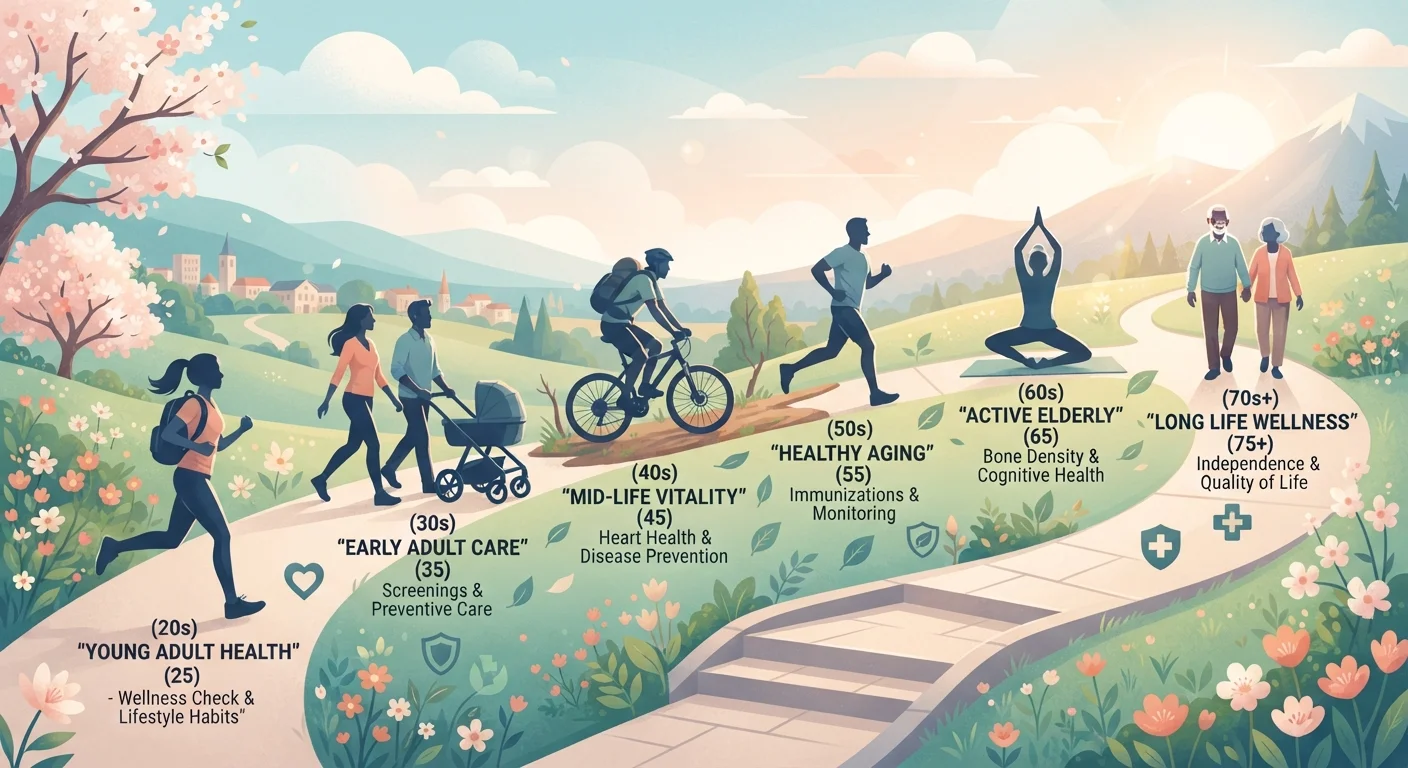
Photo: ArticleHood.com | Precision In Every Word editorial
Why Preventive Care Isn't One-Size-Fits-All
Preventive care is most effective when it's tailored to where you are in life. The screenings, vaccines, and lifestyle habits that matter most at 25 look quite different from those recommended at 55 or 70. Age shapes your risk profile, and clinical guidelines reflect that reality.
Think of preventive care as a shifting checklist rather than a fixed routine. As you move through different decades, your healthcare provider's focus shifts from establishing healthy baselines to monitoring for age-related conditions. Understanding this arc helps you stay proactive rather than reactive. For a broader foundation, see our complete overview of preventive care.
| Age to start colorectal cancer screening | 45 (average risk) (U.S. Preventive Services Task Force (USPSTF)) |
| Age to start bone density screening (women) | 65, or earlier with risk factors (USPSTF) |
| Cervical cancer screening start age | 21 (USPSTF and American Cancer Society) |
| Lung cancer screening eligibility (general) | Ages 50-80 with significant smoking history (USPSTF) |
| Annual flu vaccine recommended for | All adults, every year (CDC Advisory Committee on Immunization Practices) |
| Diabetes screening start age (overweight adults) | 35 (USPSTF) |
In Your 20s and 30s: Building a Baseline
These decades are largely about establishing healthy patterns and catching anything unusual early. Risk for serious chronic disease is generally lower, but this is precisely when habits form that shape long-term health outcomes.
- Blood pressure and cholesterol: A baseline reading in your 20s helps detect any early signs of cardiovascular risk. Frequency of follow-up depends on results and family history.
- Cervical cancer screening (Pap smear): Current guidelines generally recommend starting at age 21, with frequency varying by results and provider guidance.
- Sexually transmitted infection (STI) testing: Recommended for sexually active adults, with screening intervals based on individual risk factors.
- Mental health: Anxiety and depression commonly emerge in early adulthood. Routine screening is increasingly part of primary care visits. See also how mental well-being needs shift across life stages.
- Dental and vision care: Regular checkups establish a baseline and catch issues before they escalate.
Nutrition and physical activity habits set during this window meaningfully influence health trajectories in later decades. Explore how food and movement shape everyday health for practical context.
Preventive care
Health services that aim to prevent illness or detect it early, before symptoms develop. Includes screenings, vaccinations, and counseling on lifestyle factors.
Screening
A test or exam performed on people without symptoms to detect a condition at an early, more treatable stage. Screening recommendations are typically based on age, sex, and risk factors.
Risk factor
Any characteristic, behavior, or exposure that increases the likelihood of developing a specific health condition. Examples include family history, smoking, and elevated blood pressure.
HbA1c
A blood test that measures average blood sugar levels over approximately three months. It is commonly used to screen for and monitor type 2 diabetes.
DEXA scan
Dual-energy X-ray absorptiometry - a low-radiation imaging test used to measure bone density and assess risk of fractures from osteoporosis.
In Your 40s and 50s: Screening for Chronic Disease
Risk for several major conditions rises during midlife, making this the decade when screening schedules expand notably.
- Colorectal cancer screening: Major guidelines recommend beginning at age 45 for average-risk adults. Options include colonoscopy, stool-based tests, and others - a conversation with your provider helps determine the right fit.
- Diabetes screening: Recommended for overweight or obese adults starting at 35, or earlier if risk factors are present. Blood glucose or HbA1c tests are standard.
- Mammography: Guidelines vary by organization, but most recommend discussions about breast cancer screening beginning around age 40-50, with individual risk factoring heavily into timing.
- Blood pressure and lipids: More frequent monitoring is typically advised as cardiovascular risk accumulates.
- Lung cancer screening: Adults aged 50-80 with a significant smoking history may be candidates for annual low-dose CT scans - eligibility criteria vary by guideline.
Protein needs also shift during this period, which can affect muscle maintenance and metabolic health. Learn how protein requirements change across life stages for a factual overview.
Guidelines Vary - Always Check With Your Provider
In Your 60s and Beyond: Protecting Functional Health
Later life preventive care focuses on preserving independence, managing cumulative risks, and detecting conditions that become more prevalent with age.
- Bone density (DEXA scan): Recommended for women at 65 and earlier for those with risk factors. Osteoporosis is often asymptomatic until a fracture occurs.
- Vision and hearing: Both decline gradually; regular professional assessments help catch changes before they affect quality of life.
- Cognitive health: Screening discussions for cognitive decline are increasingly common in primary care visits for adults over 65.
- Vaccinations: Shingles, pneumococcal, and annual influenza vaccines are particularly important in this age group. RSV vaccination is now also recommended for older adults.
- Fall prevention: Exercise, medication reviews, and vision corrections all play a documented role in reducing fall risk - a leading cause of injury in older adults.
Understanding which screenings apply to you is easier when you know both the evidence and the limitations involved. Read a balanced look at what preventive care can and can't guarantee. For a practical year-by-year reference, review the annual preventive care checklist.
This article provides general health information for educational purposes only and is not a substitute for professional medical advice, diagnosis, or treatment. Always consult a qualified healthcare provider about the screenings and preventive measures appropriate for your individual health history and risk profile.
The content on this site is for informational purposes only and is not a substitute for professional advice. Always consult a qualified professional for guidance specific to your situation.