
Fixed vs. Variable Rate Debt: What Changes and What Doesn't

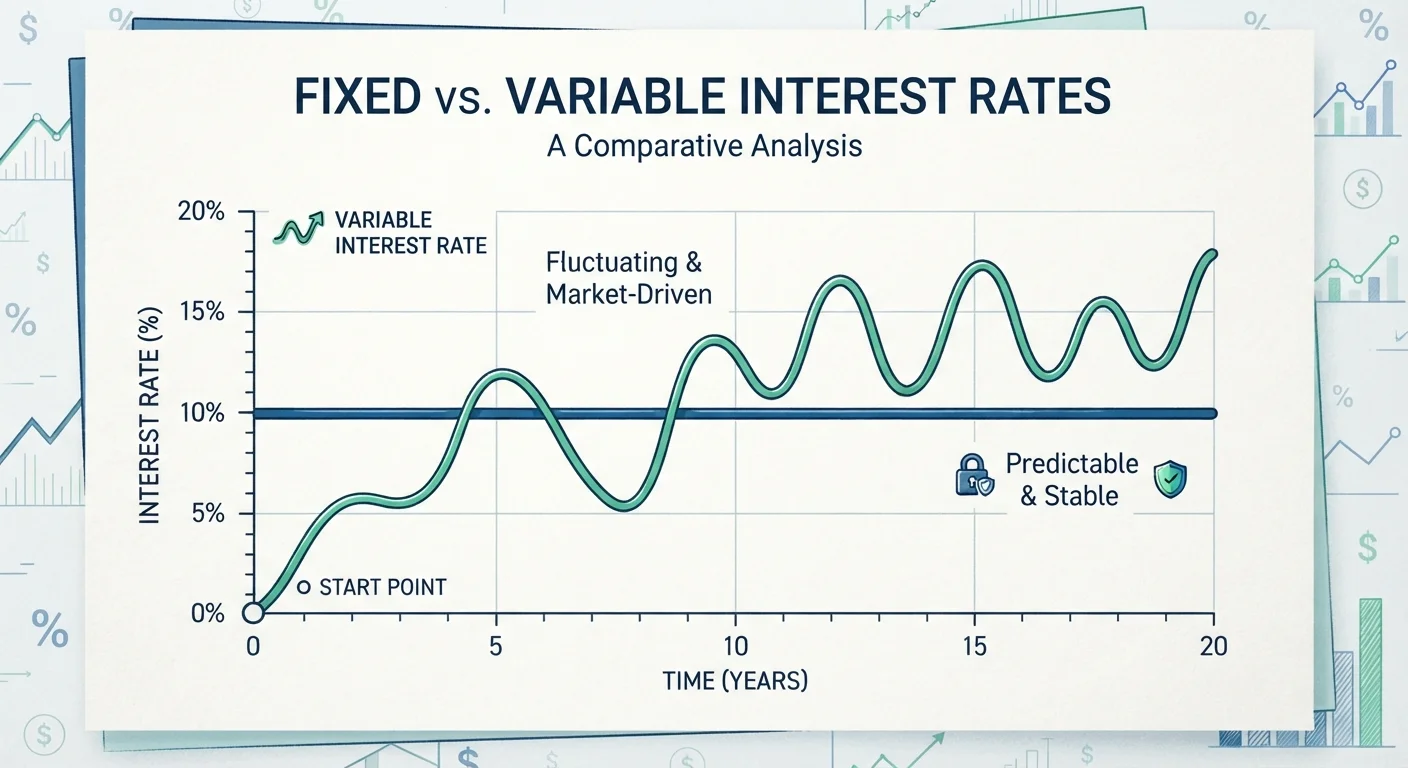
Photo: ArticleHood.com | Precision In Every Word editorial
Key Takeaways
- Fixed rate debt locks in your interest rate for the loan's lifetime, so monthly payments never change.
- Variable rate debt is tied to a benchmark rate index and can rise or fall, changing what you owe each period.
- Fixed rates offer budgeting certainty; variable rates carry more risk but sometimes start lower.
- The right choice depends on your loan term, income stability, and tolerance for payment unpredictability.
- Understanding both rate structures helps you evaluate any new debt - from mortgages to personal loans.
The Core Difference: What Locks In and What Moves
Every loan comes with an interest rate - but the type of rate determines how stable or changeable that cost is over time. Understanding this distinction is foundational to evaluating any debt you carry or consider taking on.
Fixed rate debt means the interest rate is set at the time of borrowing and does not change, regardless of what happens in financial markets. Your rate on day one is your rate on the final payment. Common examples include most fixed-rate mortgages and many personal installment loans.
Variable rate debt - sometimes called adjustable-rate debt - is tied to an external benchmark, such as the federal funds rate or the prime rate. When that benchmark moves, your interest rate typically moves with it, usually after a set adjustment period. Credit cards, many private student loans, and adjustable-rate mortgages (ARMs) are frequent examples.
For a deeper look at the terminology involved, our debt and savings glossary explains benchmark rates, APR, and amortization in plain language.
| Criterion | Fixed Rate Debt | Variable Rate Debt |
|---|---|---|
| Interest rate over time | Stays the same throughout loan | Moves with a benchmark index |
| Monthly payment stability | Consistent, predictable | Can rise or fall each period |
| Starting rate (typical) | Often slightly higher | Often slightly lower initially |
| Budgeting ease | High - no surprises | Lower - requires flexibility |
| Best loan term fit | Long-term loans | Short-term or rapidly repaid loans |
| Risk of payment increase | None | Present - tied to market rates |
| Common examples | Fixed mortgages, installment loans | Credit cards, ARMs, some student loans |
How Each Rate Type Affects Your Monthly Payment
With a fixed rate loan, your principal-and-interest payment is calculated once at origination and stays constant. This makes budgeting straightforward - you know exactly what to set aside each month for the life of the loan.
With a variable rate loan, your payment recalculates based on the current rate at each adjustment interval. If rates rise sharply, your required payment rises too. If rates fall, you may pay less - but that outcome is not guaranteed and depends entirely on market conditions outside your control.
~2%
Typical initial spread between variable and fixed mortgage rates
Variable (adjustable) rate mortgages have historically started around 1-2 percentage points below comparable fixed-rate products, though this gap shifts with market conditions.
6-12 months
Common variable rate adjustment intervals
Many adjustable-rate loan products reset the interest rate every six to twelve months based on changes to the underlying benchmark index.
One important nuance: some variable rate products have rate caps - limits on how high (or how quickly) the rate can increase. These caps provide a degree of protection, but they don't eliminate variability. Always check whether a cap exists and what it covers before signing.
This dynamic interacts directly with minimum payment traps. When a variable rate rises, the minimum payment on revolving debt like a credit card increases - and if you were already only paying the minimum, the extra interest compounds faster. Our article on why minimum payments extend debt shows how these costs accumulate over time.
Matching Rate Type to Your Financial Situation
Neither rate structure is objectively better - the right fit depends on your circumstances. A few key factors to weigh:
- Loan term: The longer the term, the more exposure you have to rate swings on a variable loan. A 30-year mortgage with a variable rate carries far more uncertainty than a 12-month personal loan.
- Income stability: If your income is steady and predictable, you may be better placed to absorb a rising variable payment. If your earnings fluctuate, payment certainty has real value.
- Current rate environment: Variable rates often start lower than fixed rates. But if market rates are already low, the gap may be small, reducing the case for accepting variability.
- Repayment speed: Planning to pay off debt aggressively? A shorter time horizon reduces your exposure to upward rate movement on a variable loan.
If you're weighing whether to consolidate existing debt - which often involves choosing between fixed and variable rate options - see our overview of how debt consolidation works.
Rate Caps: A Variable Rate's Safety Net
It's also worth connecting rate type to your broader savings strategy. The interest rate on your debt directly informs whether aggressive repayment or parallel saving makes more sense. Our piece on saving while carrying debt explores that balance in detail.
This article is for general informational and educational purposes only and does not constitute personalised financial advice. Consult a qualified financial professional before making decisions about borrowing or debt management.
The content on this site is for informational purposes only and is not a substitute for professional advice. Always consult a qualified professional for guidance specific to your situation.