
First Time in Morocco: A Ground-Up Guide to Getting Your Bearings

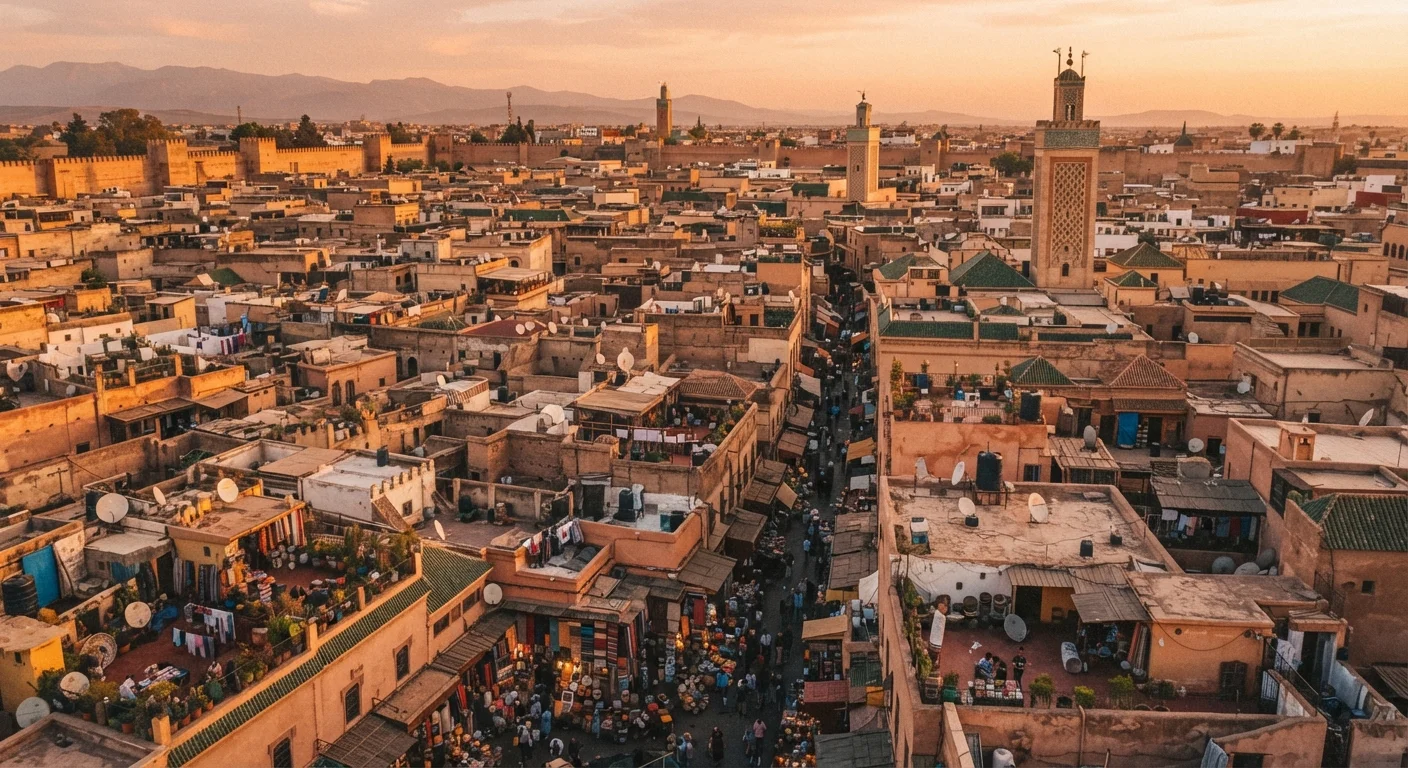
Photo: ArticleHood.com | Precision In Every Word editorial
Key Takeaways
- Morocco is geographically diverse - coast, desert, mountains, and imperial cities are all reachable on one trip.
- Getting lost in a medina is normal; offline maps and landmark anchoring help you reorient quickly.
- The Moroccan dirham is a closed currency - you'll exchange money on arrival, not before.
- Tipping is customary and meaningful, typically 10% in restaurants and small amounts for guides.
- Dress modestly outside of beach resorts - it's practical respect, not optional etiquette.
- Trains and CTM buses are reliable for intercity travel; shared taxis fill the gaps.
Why Morocco Rewards First-Timers Who Come Prepared
Morocco sits at a crossroads - geographically between Europe and sub-Saharan Africa, culturally between Arab, Amazigh (Berber), and French influences - and that layering is exactly what makes it so compelling. For a first visit, that richness can also feel like a lot to absorb at once. The traveler who arrives with some context will move through this country with far more ease and genuine connection than one who lands cold.
Before any trip abroad, it helps to have the fundamentals in place. What every first-time international traveler should know before leaving covers the groundwork - passports, travel insurance, currency basics - that applies to Morocco as much as anywhere.
Medina
The historic walled center of a Moroccan city, often containing the oldest souks, mosques, and residential neighborhoods. Navigating it requires patience and a sense of adventure.
Riad
A traditional Moroccan house or guesthouse built around a central courtyard. Riads are a popular accommodation style in medinas, often quiet and beautifully decorated despite their plain exterior walls.
Souk
A market or bazaar, typically organized loosely by trade - spices in one lane, leatherwork in another. Souks are the commercial heart of most medinas.
Amazigh (Berber)
The indigenous peoples of North Africa, with a distinct language and culture predating Arab settlement. Their influence is especially strong in the Atlas Mountains and southern Morocco.
Bab
The Arabic word for gate. In Moroccan cities, babs are the large archway entrances to the medina and serve as key landmarks for navigation.
Dirham (MAD)
The official currency of Morocco. It cannot be purchased outside the country, so travelers exchange money upon arrival at the airport, banks, or official exchange offices.
The Regions Worth Knowing Before You Arrive
Morocco is larger than many visitors expect, and its regions have distinct characters. Most first-timers anchor their trip in one or two of the country's four imperial cities: Fez, Marrakech, Meknes, and Rabat (the capital). Fez holds one of the world's oldest continuously inhabited medinas and tends to feel more traditional; Marrakech is more polished for tourism but remains viscerally alive.
Beyond the cities, the Sahara Desert edge near Merzouga draws travelers for dune camps and stargazing. The High Atlas Mountains offer trekking and Amazigh village culture. The Atlantic coast - including Essaouira and Agadir - brings a mellower, windswept energy quite different from the inland cities. Even a ten-day trip can hold two or three of these environments if you plan connections in advance.
Plan Your Route Around Train Connections
Medina Navigation: The Skill Nobody Warns You About
Every first-timer gets lost in a medina. This is not a failure - it's a rite of passage and, eventually, a pleasure. The medinas of Fez and Marrakech are dense, walled old cities of narrow lanes, dead ends, and sensory overload. Streets don't follow grids, signs are minimal, and maps sometimes bear little resemblance to what's underfoot.
A few orientating habits help enormously. Download an offline map (apps like Maps.me or Google Maps with offline areas saved work well in areas with patchy connectivity). Identify one or two visible landmarks - a specific mosque minaret, a city gate - that you can use to reorient. When you feel turned around, find a main souk lane and follow the foot traffic toward a gate (bab). Hiring a licensed guide for your first full day in a medina is genuinely worthwhile; it shortens the disorientation curve significantly and often opens doors - literal and figurative - that solo wanderers miss.
Unofficial Guides: A Common Pressure Point
Money, Tipping, and the Haggling Question
The Moroccan dirham (MAD) cannot be purchased outside Morocco, so plan to exchange currency on arrival - at the airport, a bank, or an official bureau de change. Credit cards are accepted at larger riads, restaurants, and tourist shops, but cash remains essential for souks, street food, petit taxis, and smaller guesthouses.
Tipping is woven into daily service culture. Around 10% at restaurants is a widely understood norm; small amounts for hammam attendants, parking attendants, and informal helpers are standard rather than optional. In souks, prices for handcrafted goods are almost always negotiable - but approach haggling as a good-natured exchange rather than a sport. Starting very low or walking away aggressively can feel disrespectful; a calm, friendly negotiation to a mutually acceptable price is the cultural norm.
Cultural Norms That Make a Real Difference
Morocco is a Muslim-majority country and public life reflects that. Dressing modestly - covering shoulders and knees - is genuinely appreciated outside of beach resorts, and it reduces unwanted attention considerably. During Ramadan (dates shift annually by the Islamic lunar calendar), eating, drinking, or smoking in public during daylight hours is considered disrespectful; many restaurants close during the day. Travelers visiting during Ramadan often find evenings particularly vibrant and communal.
Photography is another area worth thinking through. Photographing people - particularly women, vendors, or anyone in a private-feeling moment - without asking permission first can cause real offense. A simple gesture and a smile, or a few words of Arabic (mumkin sura? - "may I take a photo?"), goes a long way.
Morocco's cultural texture is different from - though not more challenging than - other complex destinations. Navigating India as a first-time visitor offers a useful parallel for travelers who want to think through how to approach culturally layered countries with curiosity rather than assumptions.
Ramadan Travel: What to Know
Practical Logistics: Getting Around and Staying Safe
Morocco's national rail network (ONCF) is reliable and reasonably priced, connecting Casablanca, Rabat, Marrakech, Fez, and Tangier. For routes not covered by train, CTM buses are the preferred intercity option - air-conditioned and scheduled. Grand taxis (shared long-distance taxis, typically large Mercedes sedans) fill gaps to smaller towns and depart when full rather than on a fixed schedule.
Within cities, petit taxis (small metered cabs) are inexpensive and widely used; insist politely on the meter being turned on. Ride-hailing apps have grown in use in larger cities and can simplify pricing transparency.
On safety: Morocco sees significant tourism and infrastructure has adapted accordingly. Petty harassment near tourist hotspots exists but tends to respond well to confident, direct, but polite deflection. Before and during travel, check your government's official travel advisory for current guidance - the US State Department publishes regularly updated country-specific advisories. Entry requirements including visa rules should always be confirmed with official sources close to your travel date.
This article provides general travel information only. Conditions, regulations, and entry requirements can change. Always verify visa rules, safety advisories, and local laws with official government and embassy sources before traveling.
Frequently Asked Questions
The content on this site is for informational purposes only and is not a substitute for professional advice. Always consult a qualified professional for guidance specific to your situation.