
Trip Planning

Packing Approaches That Frequent Travelers Swear By

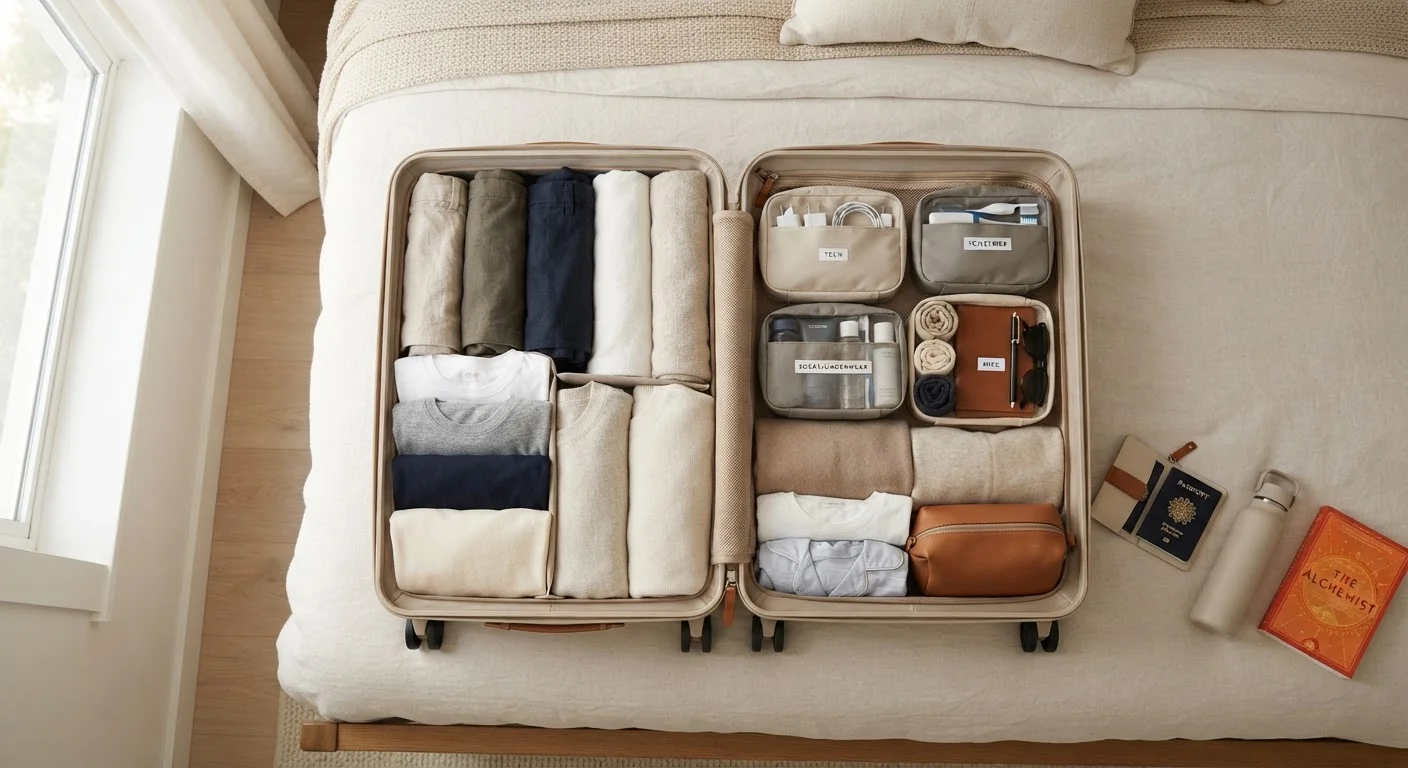
Packing Approaches That Frequent Travelers Swear By

Photo: ArticleHood.com | Precision In Every Word editorial

Practical packing strategies — from the capsule wardrobe method to the lay-flat roll technique — and the logic behind why each one works.

Key Takeaways

  • Rolling clothes instead of folding reduces wrinkles and creates more usable space in any bag.
  • A capsule wardrobe built around two or three base colors eliminates the 'nothing to wear' problem.
  • Packing cubes dramatically reduce repacking time throughout a multi-stop trip.
  • Experienced travelers consistently pack fewer shoes — usually two or three pairs maximum.
  • Checking airline size and weight rules before packing prevents costly gate surprises.

Why Your Packing Strategy Shapes the Whole Trip

There's a version of every trip where you spend twenty minutes at baggage claim, haul an overloaded bag up narrow hostel stairs, and realize on day two that you brought four items you'll never touch. Most frequent travelers have lived that version — and actively work to avoid it.

Packing well isn't about owning the right gear. It's about applying a clear system before you zip up. The approaches below come from the kind of travelers who've refined their method across dozens of trips, and the reasoning behind each one is as useful as the tactic itself. If you're simultaneously trying to make the most of limited vacation days, our guide on planning a trip around a fixed number of days off walks through how to structure your itinerary once the bag is handled.

Core Packing Practices Worth Adopting

The following practices aren't new — but they're proven. What makes them stick is understanding why they work, not just that they do.

1

Build your clothing around a two- or three-color capsule palette

When every piece coordinates with every other piece, you multiply outfit options without adding items. This eliminates the trap of packing 'just in case' pieces that never get worn because they only work with one thing.
Example: A traveler packing navy, white, and olive can mix and match eight clothing items into more than a dozen distinct outfits — all while fitting into a single carry-on.
2

Roll soft clothes; lay flat structured garments

Rolling compresses soft fabrics like t-shirts, jeans, and knitwear efficiently and reduces creasing on casual items. Structured pieces — blazers, button-downs — should be folded flat or placed in a dry-cleaning bag to hold their shape.
Example: Socks and underwear rolled tightly can be tucked into shoes, effectively using dead space that flat-packing leaves empty.
3

Use packing cubes to separate and compress by category

Packing cubes aren't just organizational tools — they function as compression layers and prevent the 'explosion effect' when you open your bag at the hotel. Categorizing by type (tops, bottoms, accessories) means you never unpack everything to find one item.
Example: On a two-week trip with three hotel changes, a traveler using cubes can pull only the relevant cube rather than disrupting their entire bag at each stop.
4

Limit footwear to two or three pairs with clear purpose

Shoes are heavy, bulky, and the most common source of overpacking regret. Each pair should serve a distinct function: walking shoes for active days, one versatile option for evenings, and sandals or a second casual pair only if the destination genuinely demands it.
Example: A neutral-colored walking shoe that passes in a restaurant removes the need for a separate 'nicer' option on most city trips.
5

Decant liquids into reusable travel-size containers before packing

Full-size toiletries add significant weight and volume. Decanting into small reusable containers keeps you within carry-on liquid rules and cuts toiletry weight by more than half on most trips.
Example: A two-week supply of shampoo, conditioner, and face wash can fit into three 50ml containers — total weight under 200 grams.
6

Do a full dress rehearsal with your packed bag at least a day before departure

Packing the night before a flight leaves no time to course-correct if the bag is too heavy or an item is missing. A trial pack 24–48 hours out reveals problems while there's still time to swap, remove, or add.
Example: Many travelers discover their bag exceeds airline weight limits only at this stage — when it's easy to pull items rather than pay fees at the gate.

The One-Week Rule Worth Testing

Many frequent travelers use a simple mental rule: if you wouldn't pack this item for a one-week trip, you probably don't need it for a longer one either. Laundry facilities are more widely available than most travelers assume — at hotels, laundromats, and short-term rentals alike. Re-wearing and re-washing extends any wardrobe significantly without adding weight.

Quick Wins Before You Leave the House

Even seasoned travelers benefit from a pre-departure checklist they actually trust. These are the actions that take under ten minutes but prevent the kind of mid-trip inconvenience that costs hours to fix.

high Weigh your packed bag on a bathroom scale before leaving home to confirm it meets your airline's weight allowance.
low Place a dryer sheet or small sachet inside your bag to keep everything smelling fresh during longer trips.
medium Take a photo of your packed bag's contents before closing it — makes customs declarations and insurance claims straightforward if luggage is lost.
medium Pack a small foldable tote bag inside your main luggage to use as a day bag or overflow bag on the return trip.

One often-overlooked factor: knowing whether you're checking a bag or going carry-on before you start packing — not after. The carry-on vs. checked luggage decision shapes every other choice you make. And if you want a broader look at what travelers routinely misjudge, things travelers consistently underestimate is worth a read before your next departure.

Travel & Places Editorial Team

ArticleHood.com | Precision In Every Word

Travel & Places Editorial Team is the collective byline for our editorial team and contributor network. Articles published under this byline or an editorial pen name are researched, written, and reviewed according to our editorial standards for clarity, consistency, and independence before publication.

Destination GuidesTrip PlanningTravel Experiences
View author profile

The content on this site is for informational purposes only and is not a substitute for professional advice. Always consult a qualified professional for guidance specific to your situation.