
Blind Spots, Mirrors, and the Gaps Your Eyes Miss Every Time

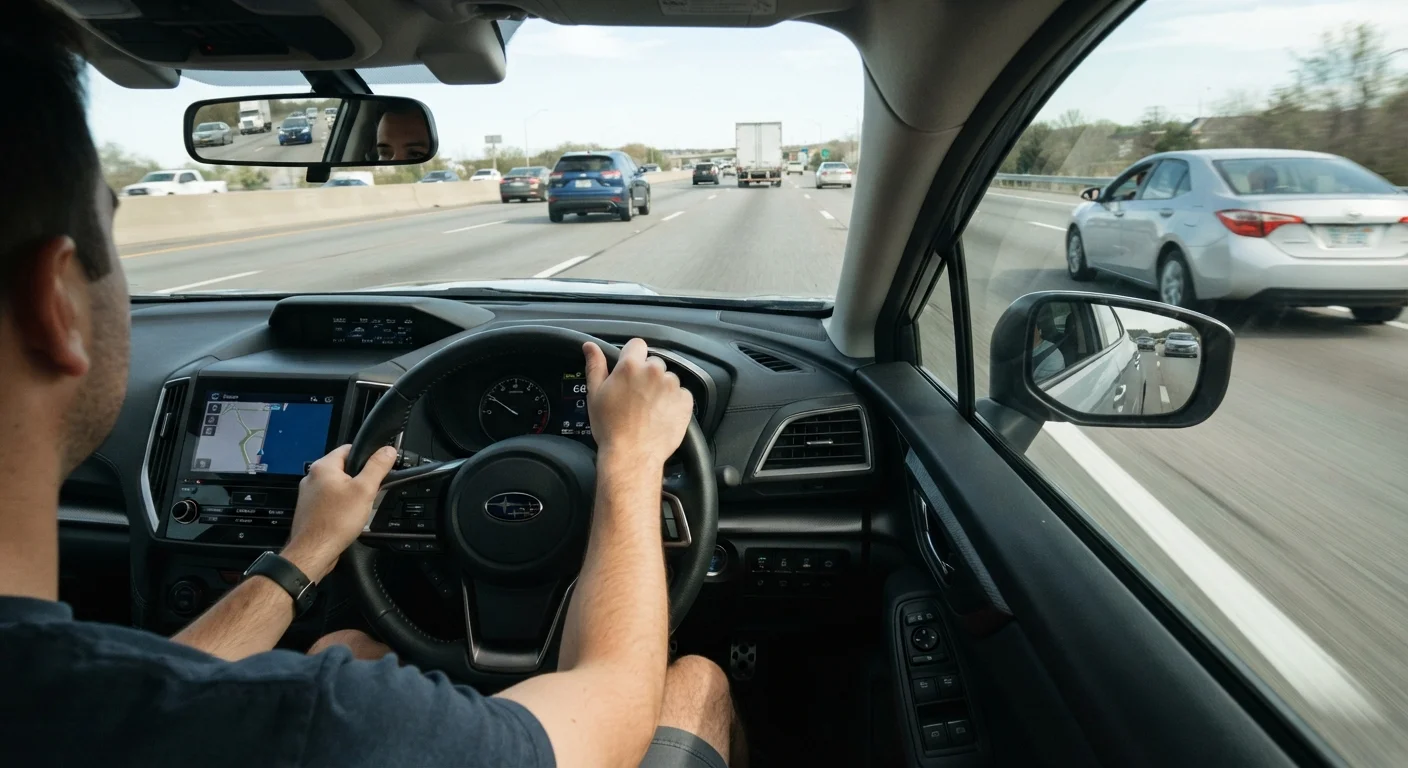
Photo: ArticleHood.com | Precision In Every Word editorial
What Blind Spots Actually Are
A blind spot is any area around your vehicle that your mirrors don't show you and that falls outside your direct field of vision when seated in normal driving position. Every vehicle has them - sedans, SUVs, pickup trucks, and especially large commercial vehicles. The shape, size, and location of blind spots vary depending on vehicle design, mirror placement, seat height, and the driver's own physical position.
Mirrors are essential, but they cover a limited arc. The driver-side mirror shows a narrow slice of the lane to your left and behind you. The passenger-side mirror covers a similar band on the right. The rearview mirror handles what's directly behind. Between all three, there are still zones - typically off each rear quarter panel - where another vehicle can sit completely out of view. A mid-size car in your left blind spot can vanish entirely from your mirrors while traveling at highway speed right beside you.
Blind spot
An area around a vehicle that cannot be seen by the driver through mirrors or direct line of sight from the normal seated position. All vehicles have at least two significant blind spots, typically at the rear quarter panels.
A-pillar
The structural column on either side of a vehicle's windshield that supports the roof. A-pillars can temporarily block a driver's view of pedestrians, cyclists, or other vehicles, particularly when turning at intersections.
Shoulder check
A brief physical turn of the driver's head toward the adjacent lane before changing lanes. Also called a head check, it directly covers the blind zone that mirrors cannot.
Blind spot monitoring
An electronic driver-assistance feature that uses sensors or cameras to detect vehicles in the blind zone beside and behind the car, usually alerting the driver with a visual or audible warning.
Rear quarter panel
The section of a vehicle's body between the rear door (or rear wheel arch on two-door models) and the trunk. This area is the most common location for the primary blind spot on passenger vehicles.
Understanding where those gaps are is the first step to compensating for them. See our complete road safety guide for broader context on hazard awareness at every experience level.
Where the Gaps Are on a Typical Passenger Vehicle
| Primary blind spot location | Rear quarter panels, both left and right sides |
| Additional blind zones | Front corners, A-pillars, rear corners during reversing |
| Most vulnerable road users in blind spots | Motorcyclists, cyclists, and pedestrians |
| Vehicles with largest blind spots | Full-size trucks, SUVs, vans, and semi-trailers |
| Time a head check takes | Less than 1 second |
| Electronic aid available | Blind spot monitoring (supplement, not replacement for head checks) |
On a standard four-door sedan or crossover, the most significant blind spots fall in two zones: the left rear quarter (roughly the area from your rear pillar outward at about a 45-degree angle) and the right rear quarter (wider on the passenger side because of the greater distance from the driver's eye). A vehicle sitting in either zone can remain hidden during an entire lane-change maneuver if you rely only on mirrors.
There are additional, often overlooked gaps:
- Front corners: The hood can obscure pedestrians, cyclists, or low obstacles when pulling out of a parking space or driveway.
- Rear corners while reversing: Even with a rearview camera, the far corners behind the vehicle often fall outside the camera's field of view.
- A-pillars: The vertical columns framing your windshield can briefly hide motorcyclists or cyclists at intersections as you look through a turn.
- Headrests and passengers: A full car can reduce interior sightlines through the rear window significantly.
Larger vehicles compound the problem. Full-size pickup trucks and SUVs typically have taller hoods and wider rear quarters, expanding every blind zone. Drivers switching from a compact car to a truck or van often underestimate how much more coverage they've lost until they're already on the road.
Mirror Adjustment: Getting the Most Coverage Possible
Proper mirror adjustment won't eliminate blind spots, but it shrinks them. Many drivers set their side mirrors to show a sliver of their own vehicle - a familiar, comforting reference point. The problem is that framing wastes coverage on something you already know is there.
A widely recommended approach is to angle side mirrors outward until your own vehicle's flanks just disappear from view. At that position, the mirrors capture more of the adjacent lanes, and the overlap between the rearview and side mirrors becomes narrower, reducing the gap where a vehicle can hide. The goal is a near-seamless corridor of coverage from the center rearview through both side mirrors.
Side Mirror Angle: A Common Misconception
Before every trip, verify that your mirrors haven't shifted, especially after other people have driven the vehicle. A quick check takes seconds and costs nothing. Our pre-trip vehicle inspection guide walks through what to confirm before you pull out of the driveway.
The Head Check: What Mirrors Can't Replace
No mirror setup removes the need for a physical head check before changing lanes. A shoulder check - turning your head approximately 45 degrees toward the lane you're entering - takes less than a second and directly observes the blind zone your mirrors miss. It's taught in driver education for good reason: it works.
A few habits that reinforce the head check:
- Signal first, then check. Signaling before the head check gives drivers behind you time to react, which matters especially if you're about to move into a contested space.
- Check twice in heavy traffic. Conditions change fast. A gap can close between the time you first check and the time you actually move.
- Allow for motorcycles and cyclists. They occupy far less visual mass than a car and can be easy to miss even during a head check. Look deliberately for them, not just for vehicles the size of cars.
Blind spot monitoring systems - sensors that alert you when a vehicle enters the coverage gap - are increasingly common on newer vehicles. They're a genuine safety aid, but they're not foolproof. Sensor range, calibration, and sensor cleanliness all affect reliability. Treat any electronic aid as a supplement to good habits, not a substitute. Following distance and spatial awareness play a related role: the closer you follow, the less time you have to respond if something in a blind spot surprises you.
This article provides general driving safety information for educational purposes. Always follow the traffic laws and licensing requirements of your state or jurisdiction.
The content on this site is for informational purposes only and is not a substitute for professional advice. Always consult a qualified professional for guidance specific to your situation.