
Private Sale vs. Dealer Trade-In: Weighing Your Options When Selling a Car

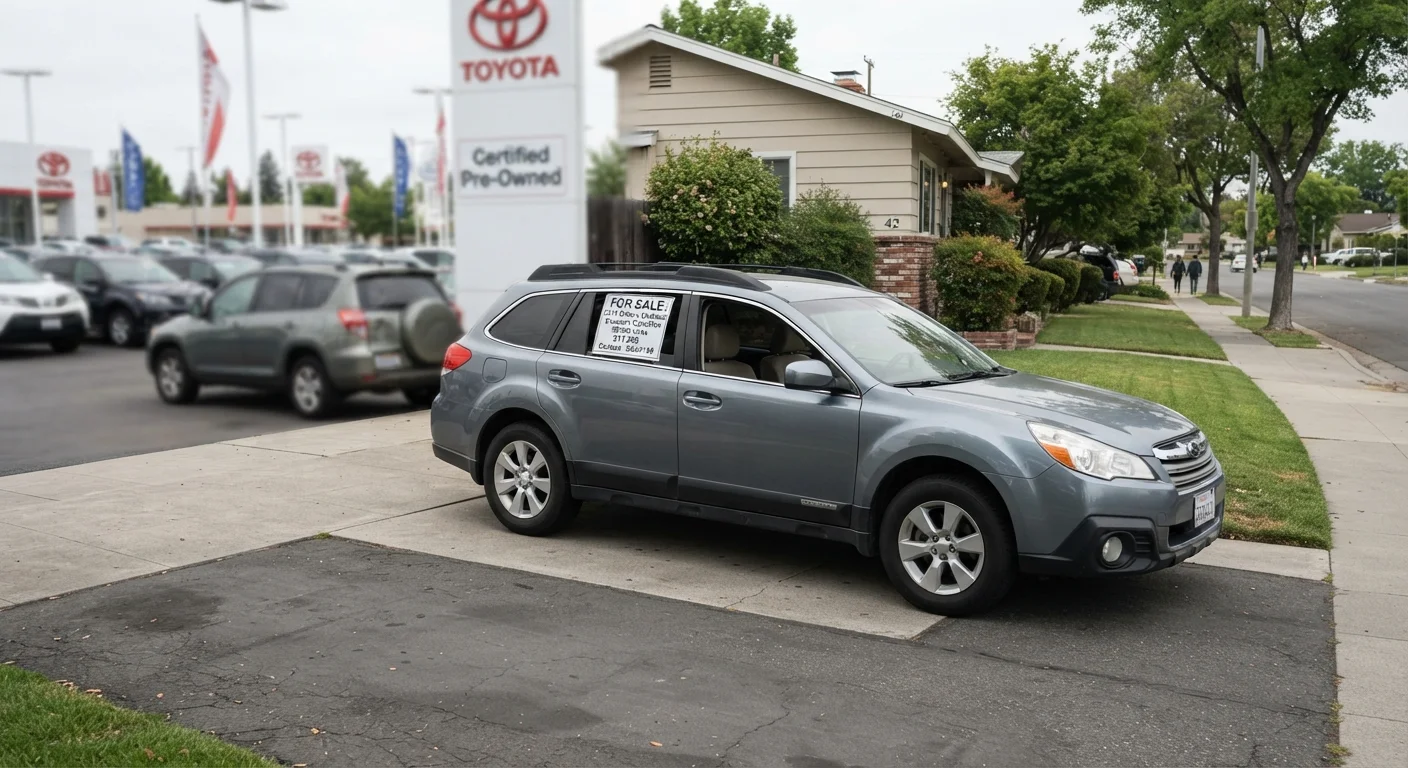
Photo: ArticleHood.com | Precision In Every Word editorial
Key Takeaways
- Private sales typically yield more money but demand significantly more time and effort from the seller.
- Dealer trade-ins are fast and convenient but usually return less than market value for your vehicle.
- Trade-in values may reduce the taxable amount on your next purchase in many US states.
- Safety and scam risks are real in private sales and require careful screening of potential buyers.
- Your timeline, financial situation, and risk tolerance should drive which route you choose.
Typically yields a higher sale price
Private buyers pay closer to retail market value, whereas dealers price their offers to leave room for reconditioning and profit margin.
You control the asking price and negotiation
Setting your own price means you can hold firm or negotiate based on your knowledge of the vehicle's condition and local demand.
No middleman taking a cut
Every dollar from the sale goes directly to you, with no dealer margin built in.
Wider potential buyer pool online
Online listing platforms have made it easier than ever to reach motivated buyers across your region.
Time-consuming from listing to closing
Writing the listing, responding to inquiries, scheduling viewings, and negotiating can stretch over days or weeks with no guaranteed outcome.
Paperwork and legal responsibility fall on you
Correctly transferring the title, completing a bill of sale, and notifying the DMV are your responsibility - errors can create liability after the sale.
Safety and fraud risks require vigilance
Meeting unknown buyers, allowing test drives, and handling payment carry risks that sellers need to actively manage with precautions.
No guarantee of a sale
A private listing may attract no serious buyers, leaving you managing an unsold vehicle indefinitely.
The Core Trade-Off: Money vs. Convenience
When it's time to move on from a vehicle, you have two main paths: sell it yourself to a private buyer or hand it off to a dealer as a trade-in. Neither option is a clear winner across the board. The decision comes down to how much money you want to walk away with versus how much time and energy you're willing to spend getting there.
Understanding the full financial picture of your vehicle - not just the selling price - matters here. See our complete financial guide to vehicle ownership for context on where the sale fits into the bigger picture.
$1,000-$3,000+
Typical gap between private sale and trade-in value
Industry observers generally estimate private sales return meaningfully more than dealer trade-ins, though the exact gap varies widely by vehicle type, condition, and local market.
Same day
Typical dealer trade-in transaction time
Dealer appraisals and trade-in offers are generally completed within a single dealership visit, often in under an hour.
Private Sale: Higher Ceiling, Higher Effort
Selling directly to another individual generally gets you closer to the vehicle's actual market value. You set the asking price, you negotiate, and you keep the full proceeds. That price gap between a private sale and a trade-in offer can be meaningful - sometimes in the thousands of dollars depending on the vehicle's age, condition, and demand.
But that upside comes with real work attached. You'll need to photograph the car well, write an honest and detailed listing, field inquiries, schedule test drives, and verify that potential buyers are legitimate. There's also paperwork to manage: transferring the title correctly, completing a bill of sale, and notifying your state's DMV. Mistakes here can leave you legally exposed after the sale.
Safety is a genuine concern too. Meeting strangers, allowing test drives, and accepting payment all carry risk. Sellers are generally advised to meet in well-lit public locations and to verify payment - cashier's checks have been used fraudulently, so understanding the safest payment methods is worth researching before you list.
Typically yields a higher sale price
Private buyers pay closer to retail market value, whereas dealers price their offers to leave room for reconditioning and profit margin.
You control the asking price and negotiation
Setting your own price means you can hold firm or negotiate based on your knowledge of the vehicle's condition and local demand.
No middleman taking a cut
Every dollar from the sale goes directly to you, with no dealer margin built in.
Wider potential buyer pool online
Online listing platforms have made it easier than ever to reach motivated buyers across your region.
Dealer Trade-In: Faster, Simpler, Typically Less Lucrative
Trading your car in at a dealership is about as straightforward as it gets. You bring the vehicle in, a buyer appraises it, and you receive an offer - usually within an hour. If you're already shopping for a replacement vehicle at that dealer, the trade-in value is applied directly to the deal, streamlining the whole transaction.
One underappreciated advantage: in many US states, trading in a vehicle reduces the taxable sale price of your next car. For example, if you buy a $30,000 car and receive a $10,000 trade-in credit, you may only pay sales tax on the $20,000 difference. Depending on your state's tax rate, that can partially offset the lower trade-in offer you'd accept compared to a private sale.
The downside is straightforward: dealers need to recondition and resell your car at a profit, so their offer will nearly always be lower than what a private buyer might pay. The convenience is real - but it has a price attached to it.
Time-consuming from listing to closing
Writing the listing, responding to inquiries, scheduling viewings, and negotiating can stretch over days or weeks with no guaranteed outcome.
Paperwork and legal responsibility fall on you
Correctly transferring the title, completing a bill of sale, and notifying the DMV are your responsibility - errors can create liability after the sale.
Safety and fraud risks require vigilance
Meeting unknown buyers, allowing test drives, and handling payment carry risks that sellers need to actively manage with precautions.
No guarantee of a sale
A private listing may attract no serious buyers, leaving you managing an unsold vehicle indefinitely.
What to Factor Into Your Decision
A few practical questions can help clarify which route makes more sense for your situation:
- How quickly do you need to sell? Private sales can take days or months. Dealer trade-ins close the same day.
- Is the car in good condition? Well-maintained vehicles in strong demand tend to fetch the largest premium in private sales. High-mileage or problem vehicles may not attract private buyers easily, making a trade-in more practical.
- Are you buying another car at the same time? If so, the trade-in tax savings and convenience may tilt the math in favor of the dealer route.
- How comfortable are you with negotiation and paperwork? Private sales involve both. If that's not in your comfort zone, the trade-in path removes that friction.
If you end up on the buying side of a private transaction in the future, our guide to verifying a used car before buying privately covers what any smart buyer should check before money changes hands.
State Tax Rules Vary on Trade-Ins
The content on this site is for informational purposes only and is not a substitute for professional advice. Always consult a qualified professional for guidance specific to your situation.