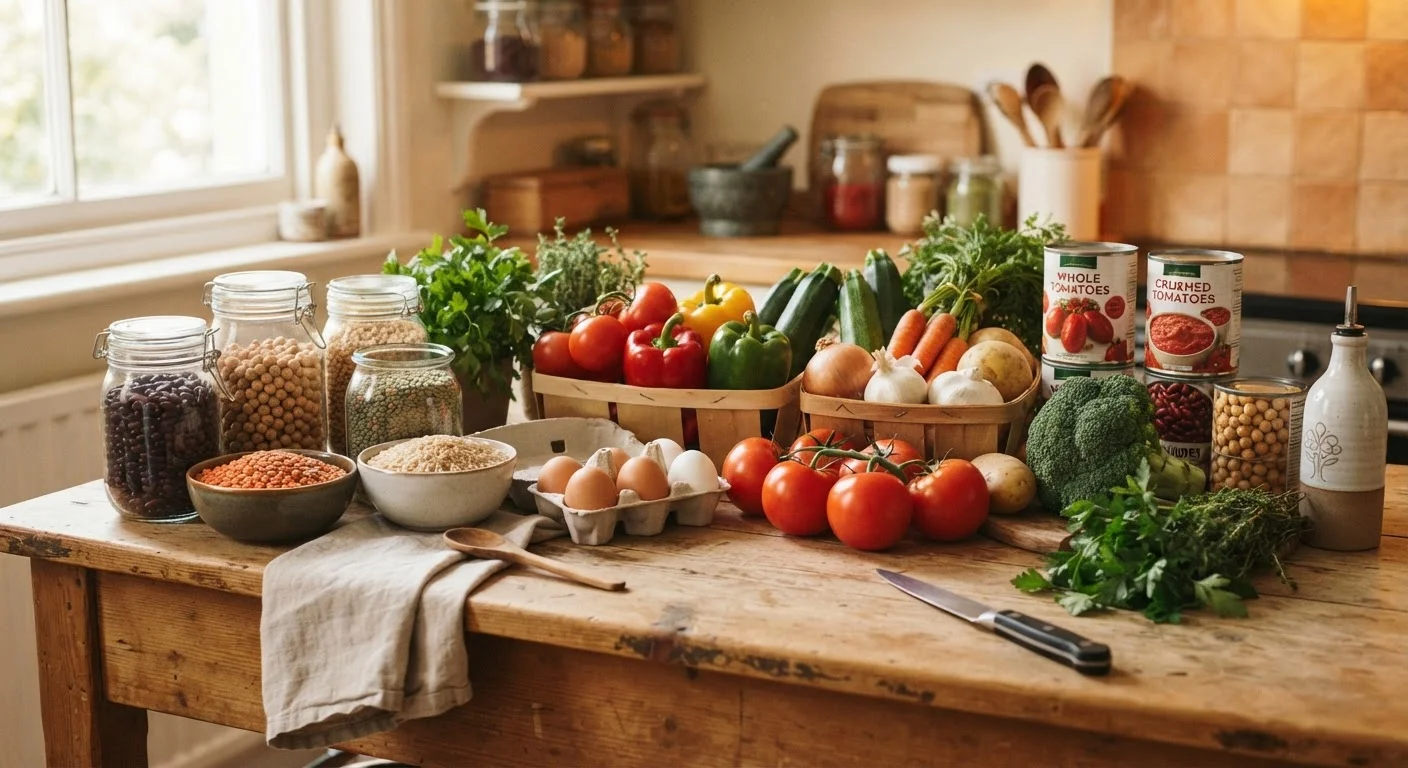
Nutritious food doesn't have to be expensive. Practical, evidence-informed strategies for getting solid nutritional value from a limited grocery budget.
Why Budget Eating Often Goes Wrong
Many people assume that eating cheaply means eating poorly - relying on instant noodles, fast food, or highly processed snacks because that's what feels affordable. In reality, this trade-off isn't inevitable. The problem isn't budget eating itself; it's that low-cost whole foods require a little more planning and basic cooking skill than their ultra-processed alternatives.
Understanding which foods give you the most nutritional return - fiber, protein, vitamins, minerals - per dollar spent is the foundation of smart budget nutrition. Once you know that, the strategy becomes clearer. For readers also working through how money gets allocated more broadly, our guide to building a first real budget offers a useful starting point.
A Note on Food Access and Equity
Budget nutrition advice sometimes overlooks real barriers: limited access to full-service grocery stores, no cooking facilities, or time constraints from multiple jobs. These strategies work best when the basics are accessible. Programs like SNAP (Supplemental Nutrition Assistance Program) and local food banks can provide a foundation; a registered dietitian or community nutrition program can offer individualized guidance when circumstances are more complex.
The Best Practices for Nutritious, Low-Cost Eating
The following evidence-informed practices are organized around what nutrition research consistently supports. None require expensive equipment, specialty stores, or advanced cooking skills.
1
Anchor your diet around dried legumes, whole grains, and eggs.
These three food groups consistently offer the highest nutritional density per dollar in US grocery stores. Dried beans and lentils supply protein, fiber, iron, and folate at a fraction of the cost of meat. Whole grains like oats, brown rice, and barley provide complex carbohydrates and B vitamins. Eggs deliver complete protein and key micronutrients for roughly $0.20-$0.30 each.
Example: A pot of lentil soup made with one pound of dried lentils, canned tomatoes, and onion costs under three dollars and provides six or more nutrient-rich servings.
2
Choose frozen and canned vegetables without hesitation.
Research consistently shows that frozen vegetables are nutritionally comparable to fresh, because they are typically flash-frozen shortly after harvest. Canned vegetables - especially those packed without added salt or sugar - are similarly valuable. Both formats cost significantly less than fresh produce and dramatically reduce spoilage waste.
Example: Frozen spinach, peas, and broccoli florets can be stirred into soups, stir-fries, and grain bowls all week without any prep time or spoilage risk.
3
Plan meals before you shop, not after.
Without a plan, shoppers tend to buy ingredients that don't combine into complete meals, leading to food waste and unplanned spending. A simple weekly plan built around two or three flexible base ingredients reduces both waste and the temptation to buy items that won't get used. This approach also reduces the frequency of expensive last-minute meals.
Example: Planning a batch of cooked brown rice at the start of the week means it can appear as a grain bowl base Monday, a stir-fry component Wednesday, and a soup addition Friday - maximizing value from one purchase.
4
Buy seasonal produce, or substitute frozen when it isn't.
In-season produce costs less because it's abundant and hasn't traveled far. Out-of-season fresh produce is often more expensive and may have diminished flavor and nutrient density. Substituting with frozen equivalents during off-peak seasons preserves nutrition at a lower price point.
Example: Fresh berries are expensive outside summer months; frozen blueberries cost a fraction of the price year-round and retain their antioxidant content well.
5
Reduce - but don't necessarily eliminate - meat, especially red and processed meat.
Meat, particularly beef and pork, is one of the highest per-pound costs in any grocery budget. Dietary guidelines from major health organizations support patterns that reduce red meat in favor of legumes, fish, poultry, and eggs. Shifting even two or three meals per week away from meat produces meaningful savings and aligns with broadly recommended dietary patterns.
Example: Replacing ground beef in a taco filling with well-seasoned black beans, cumin, and peppers cuts the meal cost by more than half while maintaining satisfying protein and fiber content.
6
Cook in batches and store strategically to cut waste.
Food waste is one of the largest hidden costs in household food spending. Batch cooking staples - a large pot of grains, a tray of roasted vegetables, a batch of beans - and refrigerating or freezing portions ensures ingredients get used before they spoil. Proper storage (airtight containers, labeling by date) extends shelf life meaningfully.
Example: Cooking a full cup of dried chickpeas on Sunday yields roughly three cups of cooked beans that can be portioned across three different weeknight meals, reducing both time and per-serving cost.
Start Here: Quick Wins You Can Act On Today
If you're not sure where to begin, these immediate actions will have a measurable impact on both your grocery bill and your nutritional intake. For a fuller picture of how to build meals around these principles, see our guide to building a healthier plate and our practical meal planning framework.
high
Swap one meat-based dinner this week for a lentil or bean dish using the same seasonings you already enjoy.
high
Check your freezer before your next grocery trip and build one meal around what's already there.
medium
Buy one bag of rolled oats and use it for breakfast three mornings this week instead of packaged cereal.
high
Write a simple five-dinner plan before you shop - even a rough list cuts impulse spending and food waste.
medium
Next time you reach for fresh asparagus or green beans out of season, check the frozen aisle for a less expensive equivalent.
~$0.25
Average cost per serving of dried lentils
USDA Economic Research Service data consistently shows dried legumes among the lowest cost-per-serving protein sources available in US grocery stores.
30-40%
Estimated share of food that US households waste
According to USDA estimates, US households discard roughly 30-40% of the food supply, representing a significant avoidable cost for budget-conscious families.
Comparable
Nutrient retention in frozen vs. fresh vegetables
Multiple peer-reviewed studies, including research published in the Journal of Food Composition and Analysis, have found frozen vegetables retain nutrients comparable to, and sometimes exceeding, fresh produce stored for several days.
This article is for general informational and educational purposes only. It is not a substitute for personalized dietary advice. If you have specific health conditions or nutritional concerns, consult a registered dietitian or qualified healthcare provider.
The content on this site is for informational purposes only and is not a substitute for professional advice. Always consult a qualified professional for guidance specific to your situation.