
Portion Sizes: Where Common Assumptions Go Wrong

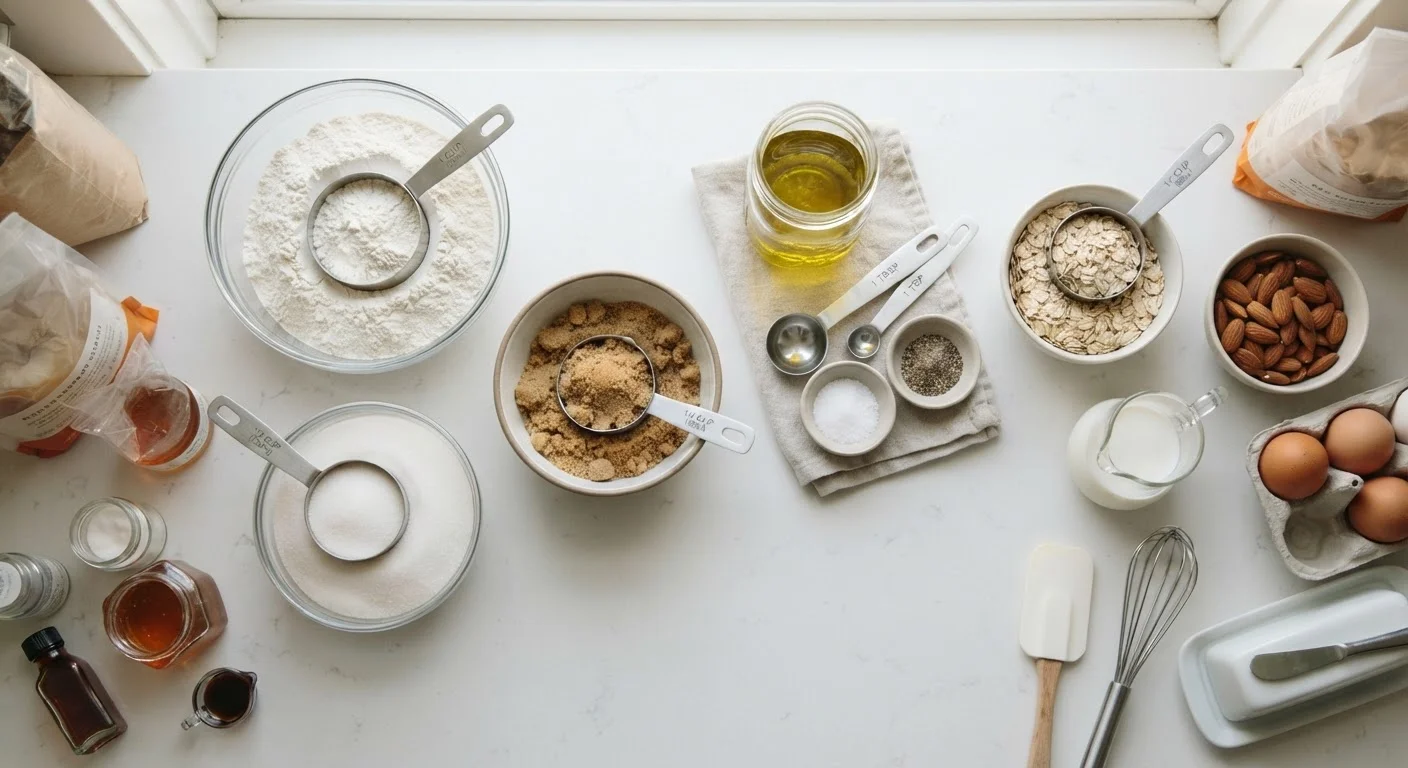
Photo: ArticleHood.com | Precision In Every Word editorial
Key Takeaways
- A standard serving size on a nutrition label is often much smaller than what people actually eat.
- Restaurant portions can be two to four times larger than government-defined serving sizes.
- Visual estimation of portion size is unreliable; simple reference tools make it more accurate.
- Calorie-dense foods like nuts and oils are especially easy to underestimate by eye.
- Understanding serving sizes helps you use nutrition labels more meaningfully and honestly.
Why Portion Distortion Is Such a Persistent Problem
Most people have a rough mental picture of what a "normal" amount of food looks like. The trouble is, that picture has been quietly reshaped over decades by restaurant culture, oversized packaging, and the simple fact that larger plates make larger portions look proportionate. Nutrition scientists call this portion distortion - the gradual drift between what a defined serving actually is and what we assume it to be.
This matters because virtually every number on a nutrition label - calories, sodium, saturated fat - is anchored to a specific serving size. If your actual portion is twice that amount, every figure on the label doubles too. Understanding where common assumptions break down is the first step toward using that information accurately. See our guide to what food labels are actually telling you for a fuller breakdown of how labels are structured.
Treating the whole package as one serving when it contains multiple servings.
Assuming restaurant portions equal one standard serving.
Underestimating calorie-dense foods like nuts, seeds, oils, and cheese.
Using volume measures interchangeably with weight measures on labels.
Ignoring that serving sizes can vary between similar products from different brands.
Practical Tools for Getting Portion Sizes Right
You don't need a food scale at every meal to improve your portion awareness. Researchers and registered dietitians commonly recommend simple hand-based reference points: a cupped palm approximates a half-cup of grains or legumes; a closed fist is roughly one cup of leafy greens or pasta; a thumb tip equals about one teaspoon of oil or nut butter. These aren't perfectly precise, but they're far more accurate than untrained estimation.
For packaged foods, the most reliable habit is reading the label before eating rather than after. Check the serving size in grams or cups, then compare it to what you're actually putting on your plate. Our article on misreading nutrition panels explores other common label pitfalls worth knowing.
2-4×
Restaurant portions vs. standard serving sizes
Research published in nutrition and public health journals consistently finds that typical restaurant entrée portions are two to four times larger than government-defined single servings.
~92%
Adults who misjudge calorie counts visually
Studies on portion estimation suggest the vast majority of adults significantly underestimate calories in large meals when relying on visual judgment alone.
Dining out adds another layer of challenge. Many restaurant entrées contain two or more label-equivalent servings in a single dish, with no nutrition information visible. Splitting portions, boxing half before eating, or choosing smaller menu options are strategies worth considering - not as rigid rules, but as options that can help you stay aware. For broader guidance on building balanced meals in any setting, explore our principles for building a healthier plate.
Don't Let Portion Tracking Become Obsessive
Ultimately, portion awareness isn't about restriction - it's about accuracy. When you know what a serving actually contains, you're better equipped to make genuinely informed choices rather than relying on assumptions that may be quietly off.
This article is for general informational and educational purposes only and is not a substitute for advice from a qualified healthcare or nutrition professional.
The content on this site is for informational purposes only and is not a substitute for professional advice. Always consult a qualified professional for guidance specific to your situation.