
What a Balanced Diet Actually Means (And Why the Definition Keeps Shifting)

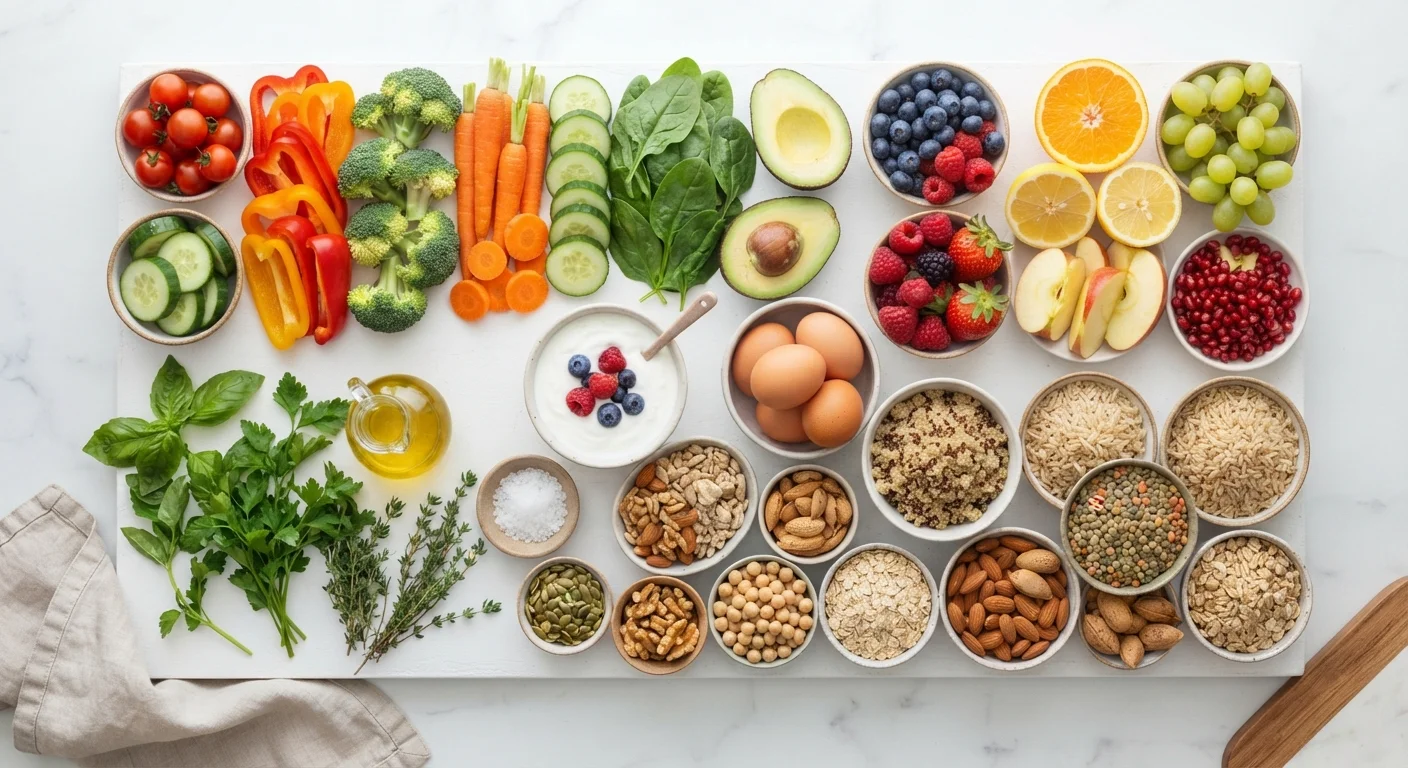
Photo: ArticleHood.com | Precision In Every Word editorial
Key Takeaways
- A balanced diet is defined by overall eating patterns, not individual meals or superfoods.
- Official dietary guidelines shift as new research emerges, but core principles - variety, moderation, whole foods - remain stable.
- No single macronutrient (fat, carb, or protein) is inherently harmful when consumed in appropriate context and quantity.
- Vegetables, fruits, whole grains, lean proteins, and healthy fats form the widely agreed foundation of a healthful diet.
- Cultural food traditions can absolutely fit within a balanced diet - flexibility is a feature, not a flaw.
Why 'Balanced Diet' Is Harder to Pin Down Than It Sounds
Ask ten people what a balanced diet looks like and you'll likely get ten different answers. That's not confusion - it reflects something real. Official guidance has shifted meaningfully over the past several decades, from the original four food groups to food pyramids to today's plate-based models. Each revision wasn't arbitrary. It responded to a growing body of research that revealed the older frameworks were oversimplified, sometimes shaped by industry influence, and not always grounded in the best available evidence.
What stays constant across all those revisions is a set of durable core principles: eat a wide variety of foods, emphasize whole and minimally processed options, keep added sugars and sodium in check, and don't rely on any single food or nutrient as a cure-all. The packaging of dietary advice changes; the underlying biology largely doesn't.
Understanding why guidance evolves - rather than seeing each update as proof that nutrition science is unreliable - is itself a useful tool for everyday eaters. The Food Explained hub is a good starting point for building that foundation.
Guidelines Reflect Populations, Not Individuals
The Core Components That Define Balance
Despite ongoing debates about specific nutrients, mainstream nutrition science broadly agrees on what a balanced diet includes:
- Vegetables and fruits - the most consistently supported foods across every major dietary guideline. Aim for variety in color, which reflects different phytonutrients (natural plant compounds with health-supporting properties).
- Whole grains - brown rice, oats, whole wheat, quinoa, and similar foods provide fiber, B vitamins, and minerals that refined grains largely lose during processing.
- Lean and varied proteins - including legumes, fish, poultry, eggs, nuts, seeds, and, in moderation, red meat. Protein needs vary by age, body size, and activity level.
- Healthy fats - from sources like olive oil, avocado, nuts, and fatty fish. Fat is not the enemy it was once framed as; the type and context matter far more than total fat intake.
- Dairy or fortified alternatives - for calcium, vitamin D, and other nutrients, though these can be obtained from non-dairy sources with careful planning.
Equally important is what a balanced diet limits: ultra-processed foods, high amounts of added sugar, excessive sodium, and alcohol. Limitation isn't the same as elimination - the pattern of eating over time is what shapes health outcomes, not any single meal.
90%
Americans not meeting vegetable intake recommendations
According to the U.S. Dietary Guidelines Advisory Committee, roughly 9 in 10 Americans fall short of recommended vegetable consumption.
57%
of U.S. calories from ultra-processed foods
A study published in BMJ Open estimated that ultra-processed foods account for more than half of daily calorie intake in the average American diet.
3x
Higher fiber intake in whole grains vs. refined
Whole grains generally contain roughly three times more dietary fiber than their refined counterparts, according to USDA nutrient data.
How to Actually Apply This at the Table
One of the most practical frameworks for visualizing balance is the USDA's MyPlate model: roughly half the plate filled with vegetables and fruit, a quarter with whole grains, and a quarter with protein, alongside a serving of dairy or equivalent. It's a starting point, not a rigid prescription.
Your cultural food traditions don't need to be abandoned to eat well. A balanced diet built around rice, beans, and vegetables looks different from one centered on lentils, flatbread, and yogurt - and both can be nutritionally sound. Balance is cuisine-agnostic. For more on that, see building a healthier plate across any cuisine.
Reading food labels is another practical skill. Knowing how to interpret serving sizes, macronutrient breakdowns, and % daily values helps you make more informed choices in the grocery aisle. Our guide to reading nutrition labels breaks down every section of a nutrition facts panel in plain terms.
A Simple Weekly Check-In
This article is for general informational and educational purposes only. It is not a substitute for personalized nutrition or medical advice. If you have specific health conditions or dietary concerns, consult a registered dietitian or qualified healthcare professional.
Frequently Asked Questions
The content on this site is for informational purposes only and is not a substitute for professional advice. Always consult a qualified professional for guidance specific to your situation.