
Why Calorie Counts on Labels Are Always Approximate

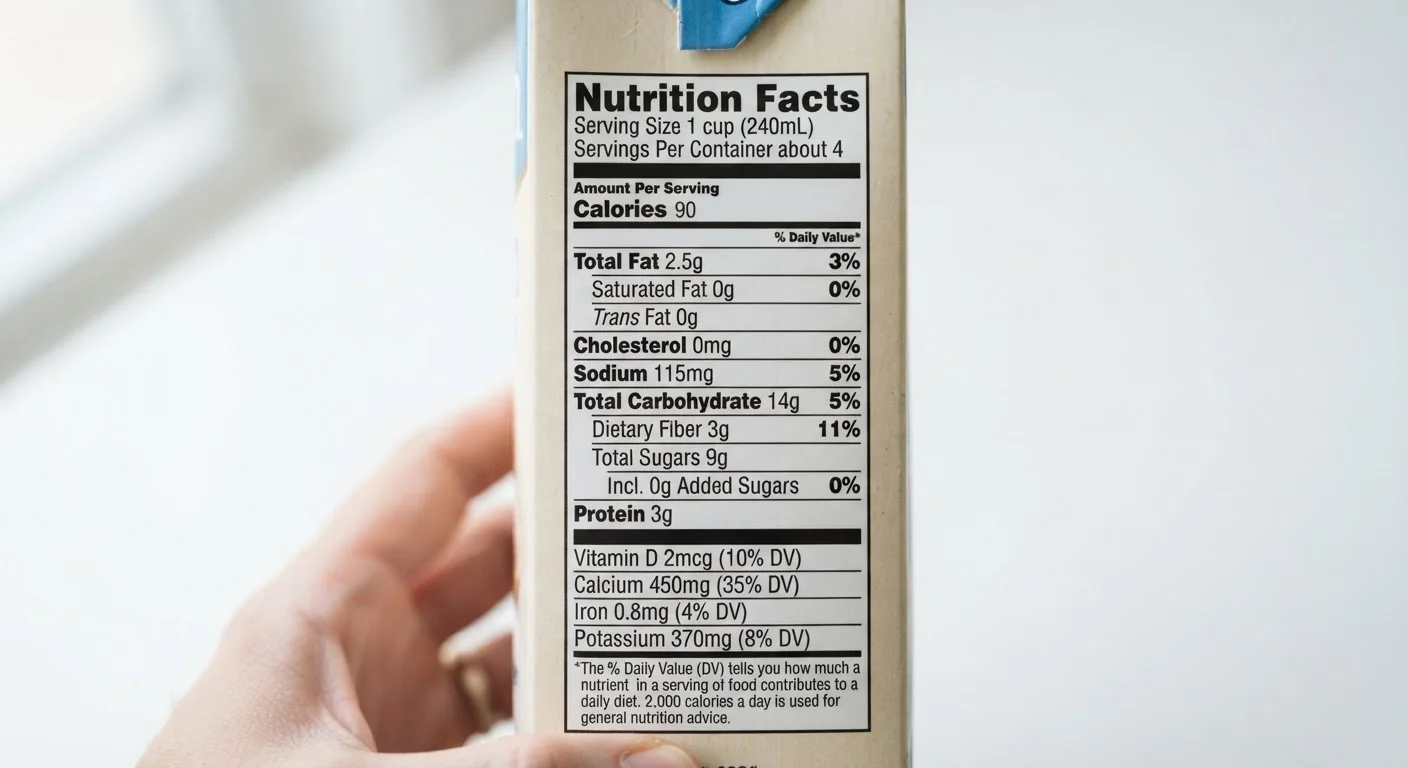
Photo: ArticleHood.com | Precision In Every Word editorial
Key Takeaways
- Calorie counts on food labels are calculated estimates, not exact measurements.
- The Atwater system, developed in the 1890s, is the foundation of modern calorie labeling.
- Individual digestion, food processing, and cooking all affect how many calories your body actually absorbs.
- The FDA allows up to a 20% margin of error on nutrient label declarations.
- Whole foods like nuts and legumes tend to have the largest gap between labeled and absorbed calories.
- Labels are useful guides for general dietary awareness, not precise accounting tools.
The Formula Behind the Number
When you look at a calorie count on a food package, you are not looking at a result from a direct measurement. You are looking at the output of a calculation - specifically, one rooted in the Atwater general factor system, a method developed by American chemist Wilbur Atwater in the 1890s.
The system works by assigning fixed energy values to the three main macronutrients: 4 calories per gram of protein, 4 calories per gram of carbohydrate, and 9 calories per gram of fat. Fiber receives its own lower value (around 2 calories per gram) because it resists full digestion. A food's total calorie count is then the sum of these products, based on how many grams of each macronutrient a lab analysis finds in a serving.
This approach is practical, cheap, and consistent across the food industry. It is also, by design, a generalization. The Atwater values were derived from average digestibility data collected from a small number of study participants in controlled conditions - conditions that do not mirror the full range of human biology, food preparation methods, or gut microbiome diversity we now know exists.
20%
FDA's permitted margin of error on label calorie values
Under FDA regulations, declared calorie values on food labels may deviate by up to 20% from the actual measured content.
~20%
Fewer absorbed calories from whole almonds vs. label
Research published in the American Journal of Clinical Nutrition found that whole almonds deliver roughly 20% fewer calories than their nutrition label indicates, due to incomplete fat absorption.
1890s
Origin of the Atwater calorie calculation system
The general factor system used to calculate food label calories was developed by chemist Wilbur Atwater and has been the industry standard for well over a century.
Why Digestion Complicates the Picture
The calorie a food contains and the calorie your body actually extracts from it are not the same thing. How much energy you absorb depends on several factors the Atwater system cannot account for individually.
Food structure matters. Whole almonds, for instance, encase their fat in cell walls that partially resist digestion. Studies have found that the body absorbs roughly 20% fewer calories from whole almonds than the label suggests. Grinding those same almonds into almond butter makes the fat far more bioavailable, closing the gap significantly.
Cooking changes calorie availability. Heat breaks down cell walls and denatures proteins, making nutrients easier to absorb. A raw carrot and a cooked carrot have nearly the same labeled calorie count, but cooked vegetables typically yield more usable energy per gram because digestion becomes more efficient.
Your gut microbiome plays a role. Emerging research suggests that individual differences in gut bacteria affect how efficiently people extract energy from the same foods - particularly from fiber and complex carbohydrates. Two people eating identical meals may absorb meaningfully different amounts of energy from them.
Focus on Food Structure, Not Just Numbers
Legal Margins and Label Realities
The FDA does not require manufacturers to verify calorie counts by burning samples of food in a laboratory device called a bomb calorimeter (which measures total chemical energy, not digestible energy). Instead, companies may use nutrient databases, lab analysis of macronutrients, or calculation from ingredients - all of which introduce their own sources of variation.
Compounding this, the FDA permits a 20% margin of error on the declared values for most nutrients, including calories. A label that reads 250 calories is legally compliant as long as the product contains no more than 300 calories. This tolerance exists partly to account for natural variation in ingredients: a batch of strawberries harvested in June will not have the exact same sugar content as one harvested in August.
For a broader look at what each section of a label actually represents, see our guide on reading a nutrition label without getting lost in the numbers. And if you want to understand how label claims beyond calories are regulated - or sometimes loosely defined - our article on what food labels are actually telling you goes deeper into that terrain.
“The calorie is a useful unit of measure, but treating a food label as an exact energy readout misunderstands what the number represents. It is an estimate built on averages - a tool for comparison, not precision accounting.”
— Marion Nestle, Professor Emerita of Nutrition, Food Studies, and Public Health, New York University
What This Means for Everyday Eating
None of this means calorie labels are useless. They are valuable as a relative guide - helping you compare one product to another, or gauge whether a serving fits broadly within your dietary goals. The problem arises when they are treated as precise accounting.
A practical takeaway: the further a food is from its whole, unprocessed state, the more closely the label is likely to reflect what your body actually absorbs. Highly processed foods with easily digestible starches and emulsified fats are more fully extracted by digestion. Whole grains, legumes, seeds, and raw vegetables tend to deliver somewhat fewer calories than stated.
If you find yourself fixating on exact calorie totals, it is worth remembering that the number on the packet has an inherent margin of uncertainty baked in - and that misreading nutrition panels is a common issue that goes well beyond calories alone. Zooming out to focus on overall dietary patterns - variety, minimally processed foods, adequate fiber and protein - tends to serve long-term health better than precise calorie arithmetic.
This article is for general informational and educational purposes only and is not a substitute for personalized nutritional or medical advice. Consult a qualified healthcare professional or registered dietitian for guidance specific to your health needs.
Frequently Asked Questions
The content on this site is for informational purposes only and is not a substitute for professional advice. Always consult a qualified professional for guidance specific to your situation.