
Cross-Contamination in the Kitchen: What It Is and How It Happens

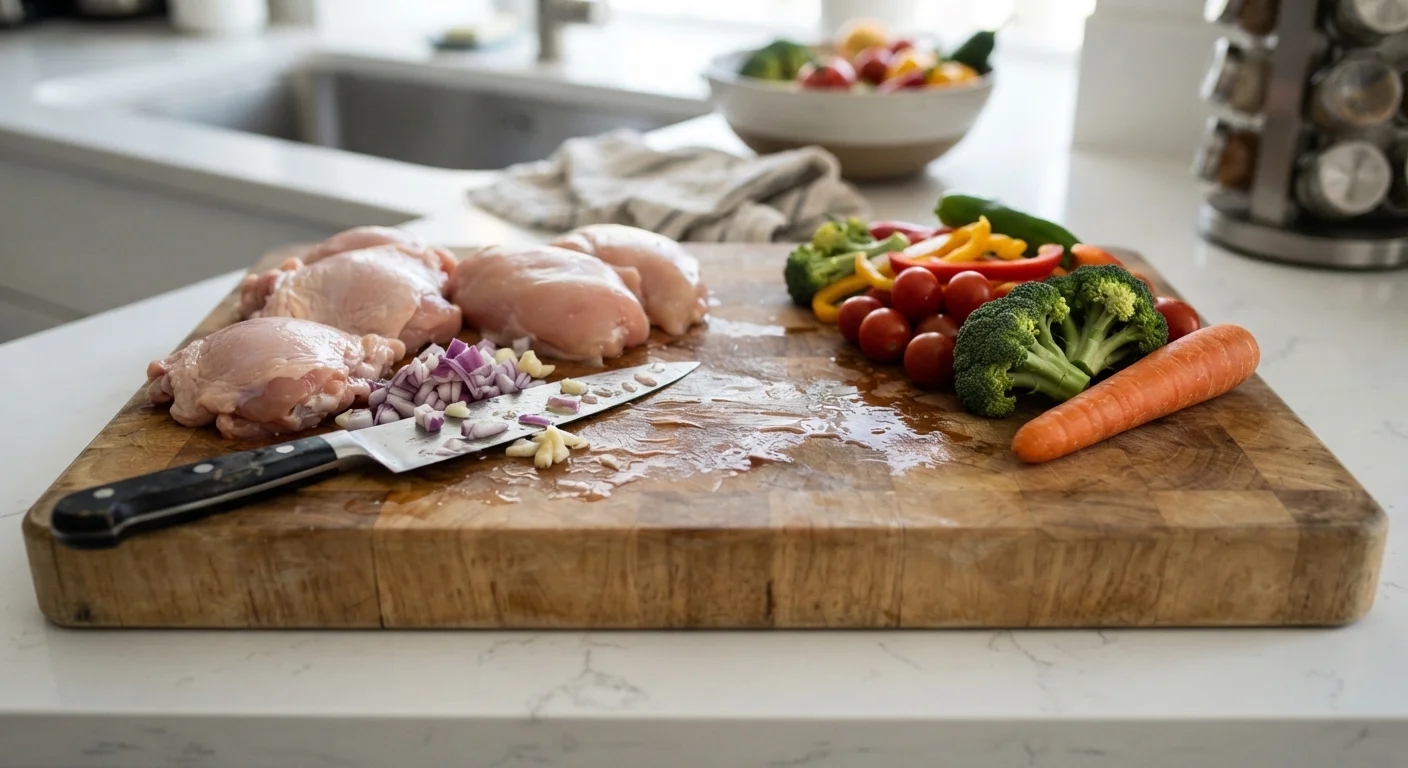
Photo: ArticleHood.com | Precision In Every Word editorial
Key Takeaways
- Cross-contamination occurs when harmful microorganisms transfer from one food, surface, or hand to another.
- Raw meat, poultry, and seafood are the most common sources of pathogens that cause foodborne illness.
- Separate cutting boards, thorough handwashing, and proper food storage dramatically reduce the risk.
- Cross-contamination also applies to allergens - critical for households managing food allergies or celiac disease.
- Most kitchen cross-contamination is invisible, making consistent habits more important than relying on sight or smell.
What Cross-Contamination Actually Means
Cross-contamination is the transfer of harmful microorganisms - bacteria, viruses, or other pathogens - from one food, surface, utensil, or person to another. When those pathogens reach food that won't be cooked further (think salad greens or sliced fruit), they can multiply and cause foodborne illness after consumption.
The term also covers allergen cross-contamination - when a food protein like gluten or peanut comes into contact with food intended to be free of it. For someone with celiac disease or a severe allergy, even tiny amounts matter. See our guide to gluten and who needs to avoid it for more on that dimension.
Understanding what cross-contamination is - and that it's often completely invisible - is the foundation of safer cooking at home.
Cross-Contamination Applies to Allergens Too
The Most Common Ways It Happens
Cross-contamination in home kitchens typically falls into four categories:
- Food-to-food contact: Raw chicken juices dripping onto vegetables stored below it in the fridge, or a raw burger patty resting on the same plate used to serve it cooked.
- Surface-to-food contact: Cutting raw meat on a board, then chopping herbs on the same unwashed board. Bacteria from the meat transfer directly to the herbs.
- Hand-to-food contact: Handling raw poultry and then grabbing a handful of shredded cheese without washing hands in between.
- Utensil-to-food contact: Using the same tongs or knife for raw and cooked foods without washing between uses.
Many of these happen during normal, well-intentioned cooking - often because cooks are moving quickly or don't realize the risk. Our article on food safety temperature rules explains why pathogens on raw foods are so dangerous before heat is applied.
48 million
Americans affected by foodborne illness annually
According to the U.S. Centers for Disease Control and Prevention (CDC), an estimated 48 million people experience foodborne illness each year in the United States.
~40%
Of foodborne outbreaks linked to home kitchens
Research published in food safety literature consistently identifies the home kitchen as one of the most common settings for foodborne illness events, often involving improper food handling.
Best Practices for Preventing Cross-Contamination
The good news: preventing cross-contamination doesn't require professional equipment. It requires consistent habits. The following practices cover the main risk points in a typical home kitchen.
Use separate, color-coded cutting boards for raw proteins and ready-to-eat foods.
Wash hands with soap and water for at least 20 seconds after handling raw meat, poultry, or seafood.
Store raw meat, poultry, and seafood on the lowest refrigerator shelf, sealed in containers or bags.
Never return cooked food to a plate or tray that held it raw.
Wash and sanitize countertops and utensils between uses with different ingredient categories.
Quick Wins You Can Apply Today
You don't have to overhaul your entire kitchen routine at once. Start with a few high-impact changes and build from there. The pre-cook prep checklist is a helpful companion for putting these habits into a practical workflow.
This article is for general food safety education and is not a substitute for guidance from a qualified food safety professional or public health authority. Individuals managing serious food allergies or health conditions should consult appropriate medical or dietary professionals.
The content on this site is for informational purposes only and is not a substitute for professional advice. Always consult a qualified professional for guidance specific to your situation.