
How Salt Actually Works in Cooking - Beyond Just 'Adding Flavour'

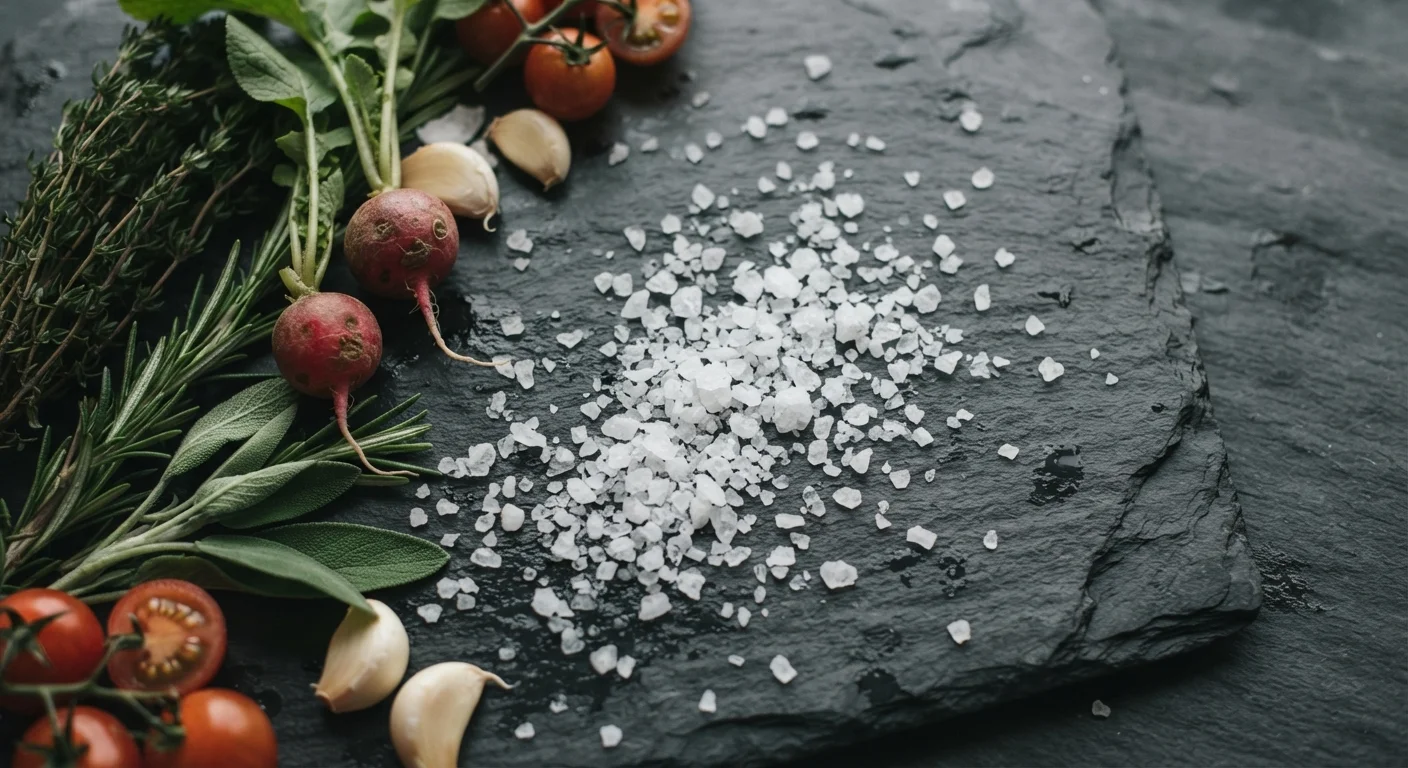
Photo: ArticleHood.com | Precision In Every Word editorial
Key Takeaways
- Salt enhances existing flavours rather than simply adding its own taste.
- It draws moisture out of food through osmosis, affecting texture and browning.
- Salt denatures proteins, which changes the texture of meat, fish, and eggs.
- It suppresses bitterness, making sweet and savory flavors more pronounced.
- Timing matters - when you salt food affects the final outcome significantly.
- Different salt types vary in crystal size and density, not just flavor.
Salt as a Flavour Enhancer, Not Just a Flavour
Most home cooks reach for salt to make food taste "less bland." But that framing undersells what's really happening. Salt doesn't just add its own flavour - it acts on the other flavours already in your food, making them more vivid and easier to perceive.
One well-documented mechanism is bitterness suppression. Sodium ions interfere with the receptors that detect bitter compounds, which is why a pinch of salt in coffee or dark chocolate doesn't make them taste salty - it makes them taste smoother and more rounded. This is also why unsalted food so often tastes flat rather than simply unsalty.
Salt also enhances the volatility of aromatic compounds, meaning food releases more of its characteristic smell when properly seasoned. Since aroma accounts for a large portion of what we perceive as "taste," this is a significant functional effect. For a deeper look at how these flavour-engineering principles apply at industrial scale, see the science behind ultra-processed food palatability.
~75%
Of perceived taste attributed to aroma
Research in sensory science consistently shows that the majority of what we call 'taste' is actually retronasal smell, which salt enhances by increasing aromatic compound release.
2x
Sodium difference between salt types per teaspoon
A teaspoon of fine table salt contains roughly twice the sodium of the same volume of coarse kosher salt due to differences in crystal density and packing.
45 min
Recommended dry-brine window for steaks
Culinary food scientists and professional chefs commonly recommend at least 45 minutes for salt to complete the osmosis-reabsorption cycle in red meat before cooking.
Osmosis, Moisture, and Texture: The Physical Effects of Salt
When salt contacts the surface of food - particularly vegetables or raw meat - it draws moisture outward through a process called osmosis. Water moves from areas of lower salt concentration (inside the food) toward areas of higher concentration (the salt on the surface). This is why salted cucumbers or eggplant weep liquid within minutes.
For vegetables, this can be desirable - it softens texture, removes excess water that might dilute a sauce, and concentrates flavour. For meat, the process is more nuanced. An initial moisture loss is followed, given enough resting time, by reabsorption. The drawn-out liquid mixes with dissolved salt and is pulled back into the muscle, carrying seasoning deep into the flesh and partially dissolving proteins along the way. This is the science behind dry-brining - salting meat and resting it, uncovered, before cooking.
The drier surface that results from this process also promotes the Maillard reaction (the browning responsible for a well-seared crust), because less surface moisture means more efficient heat transfer to the food itself.
Dry-Brine Meat the Night Before
How Salt Changes Protein Structure
Salt denatures proteins - meaning it disrupts the bonds that keep protein molecules tightly coiled. This is the same process heat causes, but salt does it chemically and usually more gently.
In fish or chicken, salt applied ahead of time begins to break down surface proteins, creating a texture that is firmer yet more tender when cooked. In eggs, dissolved salt weakens the protein network before cooking, resulting in a softer scramble. In bread dough, salt tightens gluten strands - the protein network formed when flour is hydrated - making dough more elastic and giving bread better structure and chew.
These are not minor effects. They're reasons why professional kitchens season food at multiple stages of cooking, not just at the end. The common cooking myths most home cooks believe article explores how this kind of food science overturns a lot of well-meaning kitchen folklore.
Timing and Type: Practical Considerations for Home Cooks
When you add salt matters as much as how much you add. Salting a steak 45 minutes before cooking gives osmosis time to complete the full cycle of moisture loss and reabsorption. Salting immediately before cooking leaves surface moisture that steams the meat rather than searing it. Salting after cooking seasons only the surface.
Salt type also matters more than many cooks realize. Table salt, kosher salt, and flaky sea salt all contain essentially the same mineral, but their crystal structures differ dramatically. A teaspoon of fine table salt contains roughly twice the sodium of a teaspoon of Diamond Crystal kosher salt, because the crystals pack more densely. Using them interchangeably without adjusting quantities is a common source of over-salted food. For general food knowledge that cuts through this kind of confusion, the Food Explained hub is a useful reference.
The guiding principle is to taste as you go, add salt in layers throughout cooking, and understand what you're trying to achieve at each stage - browning, tenderising, flavour amplification, or finish.
This article is for informational purposes only and is not a substitute for professional culinary or medical nutrition advice.
Frequently Asked Questions
The content on this site is for informational purposes only and is not a substitute for professional advice. Always consult a qualified professional for guidance specific to your situation.