
Roasting vs Baking: Two Oven Methods That Are Not the Same Thing

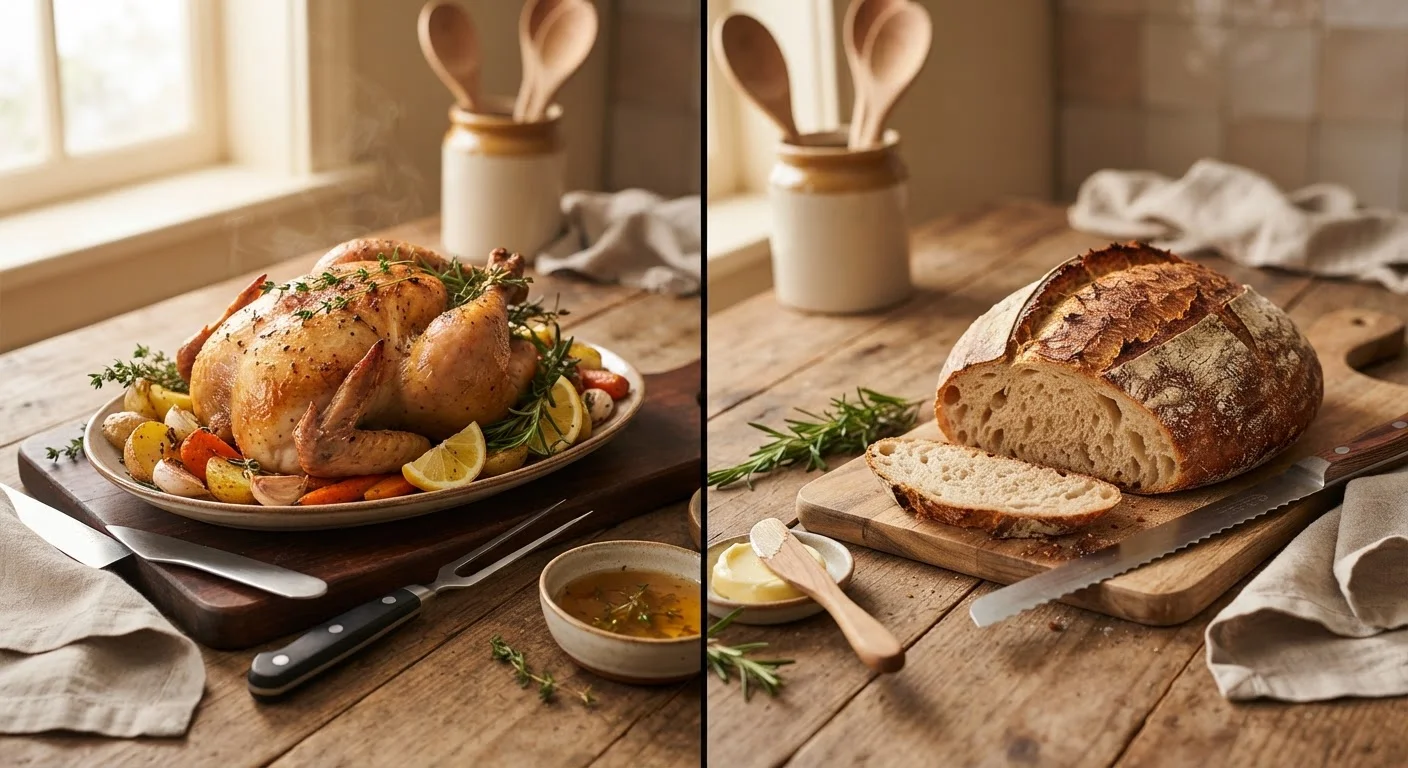
Photo: ArticleHood.com | Precision In Every Word editorial
Key Takeaways
- Roasting uses higher temperatures to brown and caramelize food with existing structure.
- Baking uses controlled, often lower heat to set and transform wet or loose mixtures into a solid form.
- The distinction lies mainly in what the food is, not just what temperature the oven is set to.
- Both methods use dry oven heat, but they serve fundamentally different culinary purposes.
- Knowing which method to apply helps you achieve better texture and flavor in your cooking.
What Actually Separates Roasting from Baking
Both roasting and baking happen in an oven. Both rely on dry, ambient heat rather than submerging food in liquid or cooking it over an open flame. So why treat them as different techniques at all?
The answer comes down to what the heat is doing to the food - and what kind of food you're starting with.
Roasting applies high heat (typically 375°F-450°F or higher) to food that already has structure: a whole chicken, a rack of lamb, a sheet pan of carrots and potatoes. The goal is browning on the outside - specifically a process called the Maillard reaction, which occurs when proteins and sugars on a food's surface meet high heat and develop complex, savory flavor and a golden-brown color. Caramelization, the browning of natural sugars, also contributes. The interior cooks through from the heat that penetrates inward, but the outside gets attention first.
Baking, by contrast, typically applies moderate, steady heat (often 300°F-375°F) to foods that start out as loose mixtures - batters, doughs, or egg-based dishes. The heat doesn't just warm the food; it transforms it. Proteins coagulate, starches gelatinize, and leavening gases (from yeast, baking powder, or baking soda) expand to create structure where none existed before. A cake batter becomes a cake. A shapeless lump of dough becomes a loaf of bread.
| Criterion | Roasting | Baking |
|---|---|---|
| Typical temperature range | 375°F-450°F+ | 300°F-375°F |
| Starting food state | Already solid and structured | Loose batter, dough, or egg mixture |
| Primary goal | Browning, caramelization, crispy exterior | Setting structure, rise, even cook-through |
| Role of fat | Promotes surface browning | Contributes to texture and crumb structure |
| Common foods | Chicken, vegetables, beef, fish | Bread, cakes, muffins, casseroles, quiche |
| Precision required | Moderate - some flexibility in temp | High - chemistry depends on accuracy |
In short: roasting works with structure; baking creates it. That's the core of the distinction.
Why the Difference Matters in Practice
Understanding these two methods helps you read recipes more confidently and make better decisions when improvising. When a recipe tells you to roast broccoli at 425°F, it's asking you to drive off moisture quickly so the florets get crispy and take on color rather than steam into softness. If you dropped that temperature significantly, you'd end up with pale, limp vegetables - technically cooked, but missing the texture and flavor the technique is designed to produce.
Conversely, if you bake a banana bread at roasting temperatures, the outside will set and darken before the interior has had time to rise and cook through - producing a dense, gummy center under a thick crust.
285°F
Approximate temperature Maillard browning begins
Food science literature identifies the Maillard reaction as beginning around 285°F (140°C), explaining why roasting temperatures are deliberately set above this threshold.
~212°F
Temperature at which surface moisture must evaporate
Browning cannot occur on a wet surface; food's exterior must reach above 212°F (100°C) - the boiling point of water - before color and crust can develop.
There's also the question of fat. Roasting almost always involves coating food with some oil or fat, which conducts heat to the surface and encourages browning. Baking may or may not involve fat, but when it does (butter in a cake, oil in a muffin), that fat plays a structural role in the final texture rather than a browning role on the exterior.
This is worth keeping in mind the next time you're cooking something unfamiliar. If it's dense, firm, and already solid, high-heat roasting is likely your friend. If it's wet, loose, or chemically active (think anything with leavening), baking's moderate, even heat is what you need. For a deeper look at how heat works across other cooking methods, see our guide on the difference between sautéing, frying, and stir-frying - techniques that, like roasting and baking, are easier to master once you understand the logic behind them.
And if you're still getting comfortable with how oven heat relates to stovetop heat, our article on understanding your stovetop across different recipes covers that ground in accessible, practical terms.
The content on this site is for informational purposes only and is not a substitute for professional advice. Always consult a qualified professional for guidance specific to your situation.