
The Difference Between Sautéing, Frying, and Stir-Frying

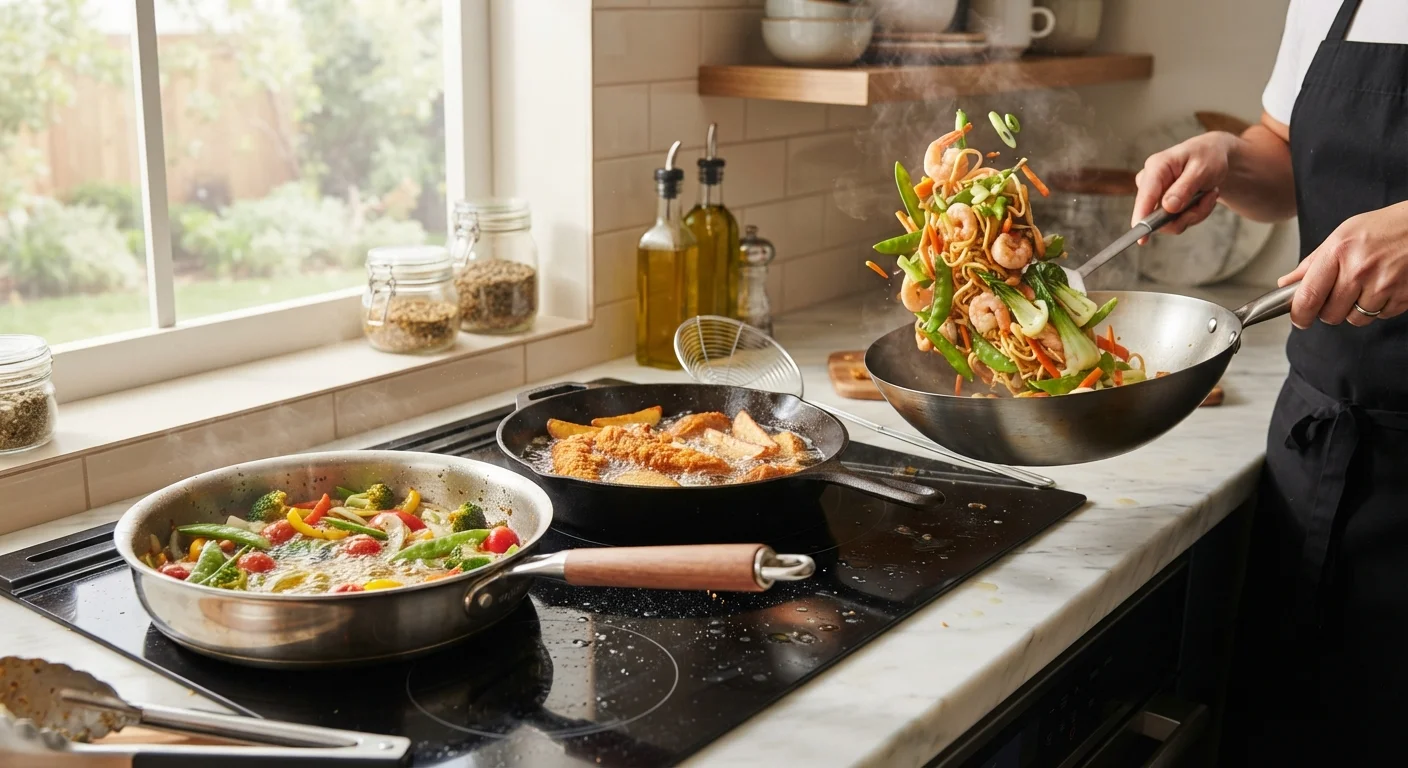
Photo: ArticleHood.com | Precision In Every Word editorial
Key Takeaways
- Sautéing uses moderate heat, minimal fat, and occasional stirring for tender, lightly browned results.
- Frying submerges or partially submerges food in hot oil to create a crispy, sealed exterior.
- Stir-frying uses very high heat and constant movement to cook small pieces quickly while preserving texture.
- The amount of fat, the heat level, and how much you move the food are the three defining variables.
- Choosing the wrong technique for an ingredient can leave food soggy, overcooked, or unevenly done.
Why These Three Techniques Get Confused
All three methods involve a hot pan, some fat, and food that sizzles. That surface-level similarity is why home cooks often blur the lines - or use the terms interchangeably when they really mean very different things. The confusion usually shows up on the plate: vegetables that are limp when they should be crisp, chicken that steams instead of browns, or fried food that turns out greasy rather than golden.
Understanding what separates sautéing, frying, and stir-frying comes down to three variables: how much fat you use, how high you set the heat, and how often you move the food. Get those three right, and the technique starts to feel intuitive. For a broader look at stovetop heat management, see understanding your stovetop across different recipes.
Sautéing: Moderate Heat, Minimal Fat, Occasional Movement
The word sauté comes from the French verb meaning "to jump" - a nod to the occasional toss that keeps food moving without constant stirring. In practice, sautéing uses a thin layer of fat (usually just enough to coat the pan) over medium to medium-high heat. Food is cut into manageable pieces and cooked just long enough to develop a light golden color while staying tender inside.
This technique works well for delicate proteins like chicken breast or shrimp, sliced mushrooms, onions, and leafy greens. The key is not crowding the pan - too much food at once drops the temperature and causes steaming rather than browning. That browning, known as the Maillard reaction (the chemical process that creates flavor when proteins and sugars are exposed to heat), is what gives sautéed food its appealing color and savory depth.
Dry Your Ingredients Before They Hit the Pan
Frying: Generous Fat, High Heat, Minimal Movement
Frying is defined by the volume of fat involved. Deep frying fully submerges food in oil heated to around 325-375°F (163-190°C). Pan frying (sometimes called shallow frying) uses enough oil to come partway up the sides of the food, flipping once to cook both sides. In both cases, the food is largely left alone - movement disrupts the crust formation that makes fried food satisfying.
The high-temperature oil quickly seals the exterior, creating a barrier that keeps interior moisture in while building the trademark crispiness on the outside. Foods for frying are often breaded or battered to amplify this effect. The trade-off is that frying requires more attention to oil temperature - oil that's too cool makes food absorb excess fat and turn greasy; oil that's too hot burns the coating before the interior cooks through.
Never Leave Hot Oil Unattended
Stir-Frying: Very High Heat, Small Pieces, Constant Motion
Stir-frying is the fastest of the three. Originating in Chinese cooking traditions, it relies on very high heat - often the maximum your burner allows - and a wok or wide pan that conducts heat efficiently. Ingredients are cut small and uniform so they cook in seconds rather than minutes, and they're kept moving almost constantly to prevent burning.
The goal is what cooks call wok hei (roughly translated as "breath of the wok") - a slightly smoky, charred quality that comes from brief, intense heat contact. Vegetables should finish crisp-tender, not soft; proteins should have a quick sear. Adding ingredients in stages (denser items first, delicate ones last) is essential. For a helpful prep habit that makes stir-frying much less chaotic, read about what mise en place actually means - having everything cut and ready before the pan gets hot is non-negotiable with this technique.
Side-by-Side: How the Three Methods Compare
The table below summarizes the key differences across all three techniques to make the distinctions concrete at a glance.
| Sautéing | Pan Frying | Deep Frying | Stir-Frying | |
|---|---|---|---|---|
| Fat amount | Thin coat | Shallow layer | Full submersion | Light coat in wok |
| Heat level | Medium to medium-high | Medium-high | High (controlled) | Very high |
| Food movement | Occasional toss | Flip once | Minimal | Constant stirring |
| Typical cook time | 5-15 minutes | 8-20 minutes | 3-10 minutes | 2-5 minutes |
| Best for | Tender proteins, vegetables | Breaded cutlets, fish | Battered foods, fries | Bite-sized, quick meals |
| Texture result | Lightly browned, tender | Crispy exterior, moist inside | Deeply crispy crust | Crisp-tender, slightly charred |
For readers curious about how these stovetop methods contrast with oven cooking, roasting vs. baking offers an equally useful breakdown of dry-heat oven techniques.
The content on this site is for informational purposes only and is not a substitute for professional advice. Always consult a qualified professional for guidance specific to your situation.