
What 'Mise en Place' Actually Means - and Why It Changes How You Cook

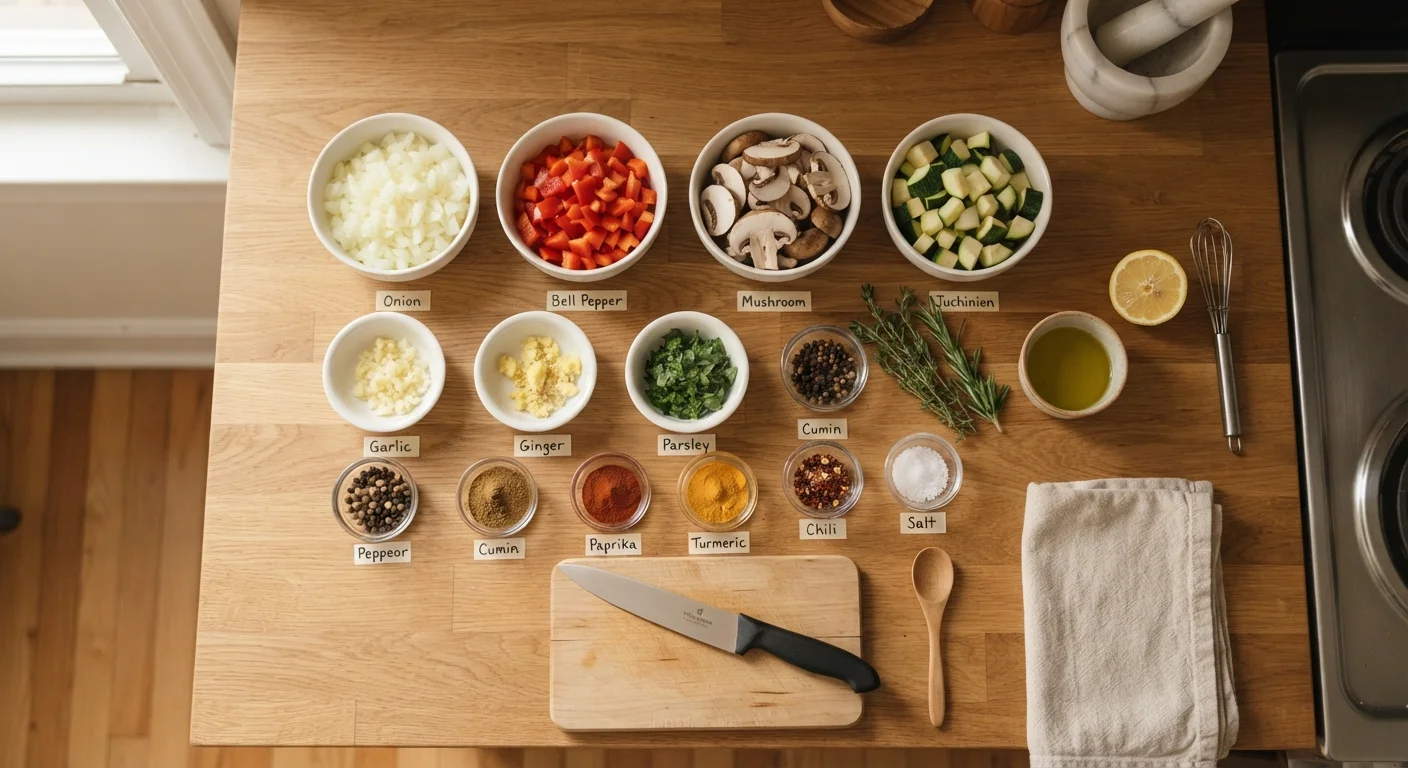
Photo: ArticleHood.com | Precision In Every Word editorial
Key Takeaways
- Mise en place means preparing and organizing all ingredients before cooking starts.
- The practice reduces errors, stress, and the risk of overcooking while distracted.
- It applies equally to home cooks and professional chefs.
- Reading the full recipe first is the foundation of good mise en place.
- Small prep bowls or ramekins help keep measured ingredients organized and ready.
Where the Concept Comes From
Mise en place originated in professional French kitchens, where a busy service requires precision timing. A line cook who stops to peel garlic while a sauce reduces is a cook who burns the sauce. The solution: finish all preparation before the heat ever turns on.
The principle migrated out of restaurant kitchens and into culinary schools, and from there into home cooking guides - because it turns out the underlying logic applies everywhere. Whether you're making a quick stir-fry or a slow-braised dish, the chaos of searching for ingredients mid-cook is the same problem at any scale.
Today, mise en place is considered one of the most foundational kitchen habits a cook can develop. It's not about being fancy - it's about being ready. See our guide to reading a recipe for how to pair this habit with smart recipe interpretation.
What It Actually Looks Like in Practice
In practical terms, mise en place is a sequence of steps you take before cooking begins:
- Read the full recipe. Every step. This is non-negotiable. You'll discover that the onions need to be diced small, that the chicken needs to come to room temperature, or that two ingredients go into the pan at the same time.
- Gather your equipment. Pull out the pots, pans, spatulas, and baking dishes you'll need. Nothing derails a recipe faster than realizing the right pan is in the dishwasher.
- Measure and prep ingredients. Chop vegetables, mince garlic, measure liquids, open cans. Place each prepped ingredient in a small bowl or container.
- Arrange your workspace. Organize ingredients in the order you'll use them, closest to the stove or prep area first.
That's it. The concept is simple - the discipline is in actually doing it consistently.
Use Small Bowls - Even Inexpensive Ones
If you want to take this further, a pre-cooking checklist can help you build the habit systematically.
Why It Makes a Real Difference
The benefits of mise en place aren't abstract. They show up immediately in how cooking feels - and in how food turns out.
~30%
Reduction in perceived cooking stress
Culinary education research consistently links structured pre-cooking preparation to lower self-reported stress and fewer cooking errors among home cooks.
Step 1
Read the full recipe before anything else
Culinary instructors across major cooking schools identify full recipe review as the single most impactful habit home cooks can develop.
When you're not scrambling to chop an onion while butter browns in a pan, you can actually watch the pan. You can smell when garlic is close to done. You can add the next ingredient at exactly the right moment. Timing - which is at the heart of most cooking - becomes manageable rather than stressful.
There's also a cognitive benefit. Prepping ingredients forces you to engage with the recipe before the pressure of heat and timing kicks in. You catch ambiguous instructions early, when you still have time to look something up. You notice if you're missing an ingredient before you're halfway through cooking.
This matters especially with techniques where timing is critical - like sautéing or stir-frying, where ingredients move fast. Our explainer on the difference between sautéing, frying, and stir-frying shows exactly why having everything ready before the pan gets hot is so important for those methods.
Building It Into How You Cook
The most common obstacle is simply the urge to start cooking immediately. It can feel like prepping first is slowing you down. In reality, it usually shortens the total time and almost always improves the result.
A useful reframe: think of mise en place as part of cooking, not a delay before it. The prep is the cooking - just the earlier phase of it.
Once it becomes habit, you'll start extending the concept naturally. You'll read recipes the night before. You'll recognize which ingredients need advance prep. You might even combine it with weekly meal planning to do shared prep tasks - like washing and chopping vegetables - across multiple meals at once.
Mise en place won't change what you cook. But it will change how confidently and calmly you cook it - and that shapes everything from how the food tastes to how much you enjoy making it. Pair this mindset with a thoughtful approach to building a balanced plate and you have a solid foundation for better meals at home.
Frequently Asked Questions
The content on this site is for informational purposes only and is not a substitute for professional advice. Always consult a qualified professional for guidance specific to your situation.