
The Essential Pantry: What Staple Ingredients Make Weeknight Cooking Actually Manageable

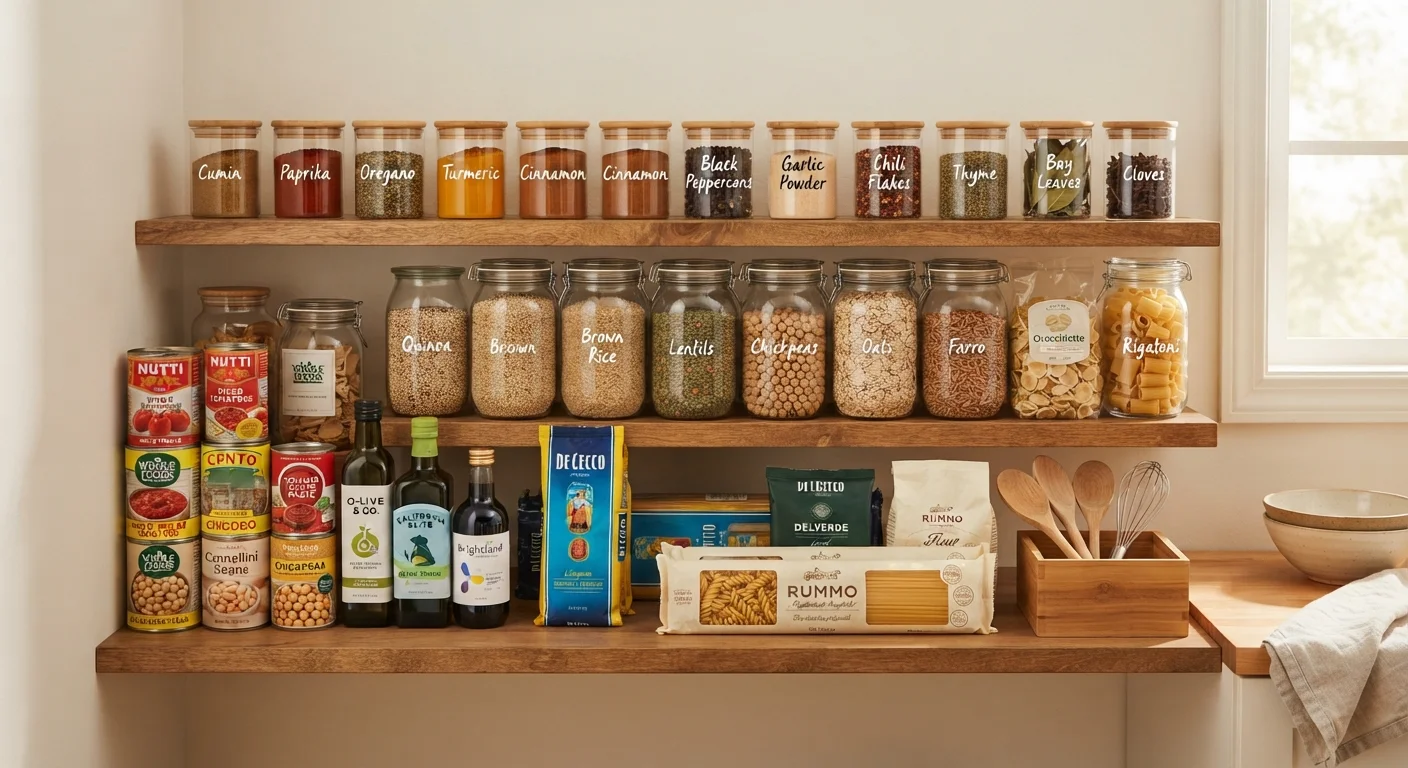
Photo: ArticleHood.com | Precision In Every Word editorial
Why Your Pantry Is the Real Meal Planner
Most weeknight cooking stress doesn't happen at the stove - it happens at 5:30 p.m. when you're staring into a half-empty fridge with no clear plan. A well-stocked pantry changes that equation. When shelf-stable staples are already in place, you need far fewer fresh ingredients to put together a complete, satisfying meal.
Think of your pantry as a permanent foundation. Fresh proteins, vegetables, and dairy rotate in and out, but the pantry stays consistent - giving you the building blocks to cook reliably without starting from scratch each week. If you want to pair this approach with a broader strategy, see meal planning for real life for a practical framework that fits around a realistic schedule.
| Average pantry staple shelf life (dry goods) | 1-3 years (USDA Food Safety and Inspection Service) |
| Recommended minimum grain varieties to keep stocked | 2-3 types |
| Spice potency window (ground spices) | ~12 months (General culinary consensus) |
| Canned goods safety after best-by date | Often safe if unopened and undamaged; quality may decline (USDA Food Safety and Inspection Service) |
| FIFO method | First In, First Out - rotate older stock to the front |
The Core Pantry Categories
Dry Goods and Grains
Pasta, rice, quinoa, rolled oats, and dried lentils are workhorses. They store for months, cook quickly (especially with smaller pasta shapes or quick-cooking grains), and absorb flavor from whatever you add. Keep at least two or three varieties so you have textural variety across the week.
Canned and Jarred Items
Canned whole or crushed tomatoes are arguably the most versatile pantry item in existence - the base of pasta sauces, stews, curries, and braises. Canned beans (chickpeas, black beans, cannellini) add protein and fiber with no prep time. Canned fish like tuna or sardines round out the protein options without refrigeration. Look for low-sodium versions when available, since you can always add salt but can't take it out.
Oils, Vinegars, and Condiments
A neutral oil (such as canola or light olive oil) handles high-heat cooking, while extra-virgin olive oil works for dressings, finishing, and lower-heat sautéing. A good-quality red wine vinegar or apple cider vinegar adds brightness to dishes that taste flat. Soy sauce or tamari, fish sauce, and a jar of Dijon mustard each punch well above their weight in building savory depth.
Aromatics and Spices
Garlic (fresh or jarred), onion powder, smoked paprika, cumin, dried oregano, red pepper flakes, and bay leaves cover a wide range of global flavor profiles. Ground spices lose potency after about a year, so keep stock manageable and refresh regularly. A small, organized spice collection beats a large, chaotic one every time.
Pantry staple
A shelf-stable ingredient kept on hand consistently to form the base of many different meals. Staples typically have long storage lives and versatile applications across cuisines.
FIFO (First In, First Out)
A storage rotation method where older items are placed at the front and newer items go to the back. It minimizes waste by ensuring older stock gets used before it expires.
Umami
A savory taste quality found in ingredients like soy sauce, fish sauce, tomatoes, and aged cheeses. Adding umami-rich condiments is an efficient way to deepen the flavor of simple dishes.
Aromatics
Ingredients - typically onions, garlic, celery, and carrots - used at the start of cooking to build a flavor base. In pantry form, dried aromatics like garlic powder and onion powder serve a similar role.
Stocking Smart: Practical Principles
A common mistake is over-buying. A pantry crammed with items you never use isn't a resource - it's clutter. A few guiding principles help:
- Stock what you actually cook. If you never make curry, a large jar of curry paste will expire unused. Start with what's familiar, then expand gradually.
- Use the FIFO method (first in, first out): place newer items behind older ones so nothing gets forgotten at the back of the shelf.
- Check labels for sodium and additives. Canned goods vary widely. Comparing labels takes seconds and helps you choose options that fit your dietary preferences.
- Restock as you deplete, not all at once. Adding one or two items to a weekly grocery run keeps the pantry current without a large upfront investment.
For a broader look at managing home systems efficiently - including storage and organization - the household essentials guide is a solid companion resource. And once your pantry is set, this pre-cooking prep checklist can help each meal come together more smoothly.
90%
Of common weeknight meals covered by ~20 pantry items
Culinary educators broadly estimate a small core set of staples underlies the vast majority of everyday home cooking across cuisines.
1-3 years
Typical shelf life for properly stored dry pasta and grains
According to the USDA Food Safety and Inspection Service, many dry goods remain safe and high quality well beyond one year when stored in cool, dry conditions.
This article is for general informational purposes only and does not constitute dietary or medical advice. For personalized guidance, consult a registered dietitian or qualified healthcare professional.
The content on this site is for informational purposes only and is not a substitute for professional advice. Always consult a qualified professional for guidance specific to your situation.