Kitchen Basics

Your Refrigerator Is Not a Magic Preserver — Common Storage Mistakes Explained

Your Refrigerator Is Not a Magic Preserver — Common Storage Mistakes Explained

Photo: ArticleHood.com | Precision In Every Word editorial

Find out which storage habits quietly spoil food faster, cause cross-contamination, or give false confidence about shelf life.

Key Takeaways

  • Refrigerator temperature should be set at or below 40°F to slow bacterial growth effectively.
  • Raw meat stored above ready-to-eat foods is one of the most common cross-contamination risks at home.
  • Airtight containers — not just covered bowls — dramatically slow moisture loss and odor transfer.
  • Many foods labeled 'refrigerate after opening' still have strict use-by windows once opened.
  • Overpacking a fridge blocks airflow and creates warm pockets where bacteria thrive.

Why Your Fridge Isn't Doing All the Work

Most people treat their refrigerator as a food safety guarantee — a box that keeps everything fresh indefinitely. In reality, a fridge only slows bacterial growth; it doesn't stop it. How you arrange, package, and temperature-manage your food determines whether it stays safe or quietly spoils before it looks or smells off.

Foodborne illness affects millions of Americans each year, and a significant share of those cases trace back to improper home storage, according to food safety researchers. The good news: the fixes are straightforward once you know what to look for. Understanding a few foundational rules can dramatically reduce waste and lower your household's risk. This connects directly to everyday preventive health habits — small, consistent actions that protect you over time.

1

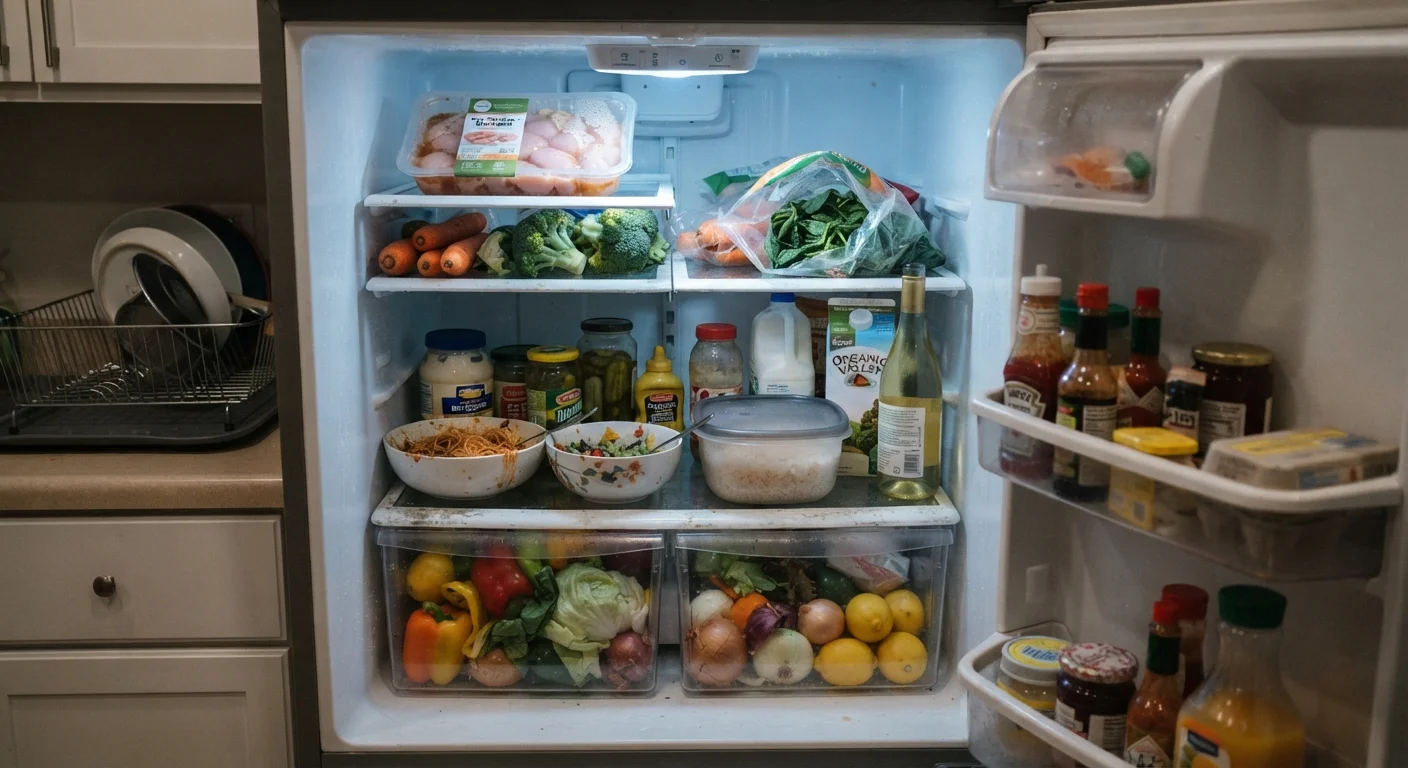
Storing raw meat on upper shelves above ready-to-eat foods.

Why it happens: Shelf placement often follows convenience — whatever fits goes wherever there's space. Most people don't think about the direction liquids drip.
How to avoid: Always place raw meat, poultry, and seafood on the lowest shelf of the refrigerator in a leak-proof container or sealed bag. Ready-to-eat items like leftovers, deli foods, and produce go on higher shelves where they can't be dripped on.
2

Setting the refrigerator temperature too high — above 40°F (4°C).

Why it happens: Many fridge dials use vague settings like 1–5 rather than actual temperatures, and most households never verify the internal temp with a thermometer.
How to avoid: Use an inexpensive refrigerator thermometer to confirm your fridge holds at or below 40°F. The freezer should sit at 0°F. Check after any adjustment — dial changes can take several hours to stabilize.
3

Leaving food in loosely covered or uncovered containers.

Why it happens: A plate covered with plastic wrap feels adequate, but it rarely creates a proper seal. It's also a quicker step than finding a fitting lid.
How to avoid: Transfer leftovers to airtight containers before refrigerating. This slows moisture loss, prevents odor transfer between foods, and reduces the surface exposure that accelerates spoilage. Properly sealed food also keeps other fridge contents from absorbing strong smells.
4

Overstuffing the refrigerator so cold air can't circulate.

Why it happens: After grocery shopping, it's natural to fill every available inch. The fridge feels more organized and 'full' — but airflow is invisible.
How to avoid: Leave space between items, especially near the back wall and around vents. Cold air needs to move freely to maintain a consistent temperature throughout. A refrigerator that runs warm in certain spots can allow bacteria to multiply even when the dial is set correctly.
5

Misreading 'use by' and 'best by' dates as hard safety cutoffs.

Why it happens: Date labels appear to offer clear guidance, but they're largely manufacturer estimates of peak quality, not federally mandated safety deadlines — which most consumers don't realize.
How to avoid: Learn to distinguish date types: 'use by' on perishables like deli meat carries more weight than 'best by' on shelf-stable items. When in doubt, rely on smell, texture, and appearance — but know that some dangerous bacteria produce no detectable signs. When genuinely uncertain, discard the item.
6

Putting hot food directly into the refrigerator in deep containers.

Why it happens: The instinct is to cool food quickly, and the fridge seems like the fastest route. Deep pots trap heat in the center much longer than the outside suggests.
How to avoid: Divide hot food into shallow containers (no more than 2 inches deep) before refrigerating. This allows the entire portion to cool rapidly and evenly, limiting the time food spends in the bacterial danger zone between 40°F and 140°F.

The Mistakes That Quietly Undermine Food Safety

Most storage errors aren't dramatic — they're slow, invisible, and repeatable. The section below walks through the most common ones, why they happen, and what to do instead. For a deeper look at how harmful bacteria travel from one food to another in your kitchen, see our guide on cross-contamination in the kitchen.

The 'Sniff Test' Has Real Limits

Relying on smell alone to judge food safety is genuinely risky. Several bacteria responsible for foodborne illness — including Salmonella and certain strains of E. coli — produce no detectable odor, color change, or texture difference. Food can look and smell completely normal and still make you seriously ill. Use date labels, proper storage times, and food safety guidelines alongside sensory checks, not instead of them.

Once you've corrected your fridge habits, applying the same logic to your pantry compounds the benefit. Our pantry organization guide covers layout principles and storage logic for dry goods using the same accessible approach.

This article is for general food safety education only. It does not constitute medical or dietary advice. If you believe you have experienced foodborne illness, contact a qualified healthcare professional.

Food & Nutrition Editorial Team

ArticleHood.com | Precision In Every Word

Food & Nutrition Editorial Team is the collective byline for our editorial team and contributor network. Articles published under this byline or an editorial pen name are researched, written, and reviewed according to our editorial standards for clarity, consistency, and independence before publication.

Eating WellKitchen BasicsFood Explained
View author profile

The content on this site is for informational purposes only and is not a substitute for professional advice. Always consult a qualified professional for guidance specific to your situation.