
Pantry Organization from the Ground Up

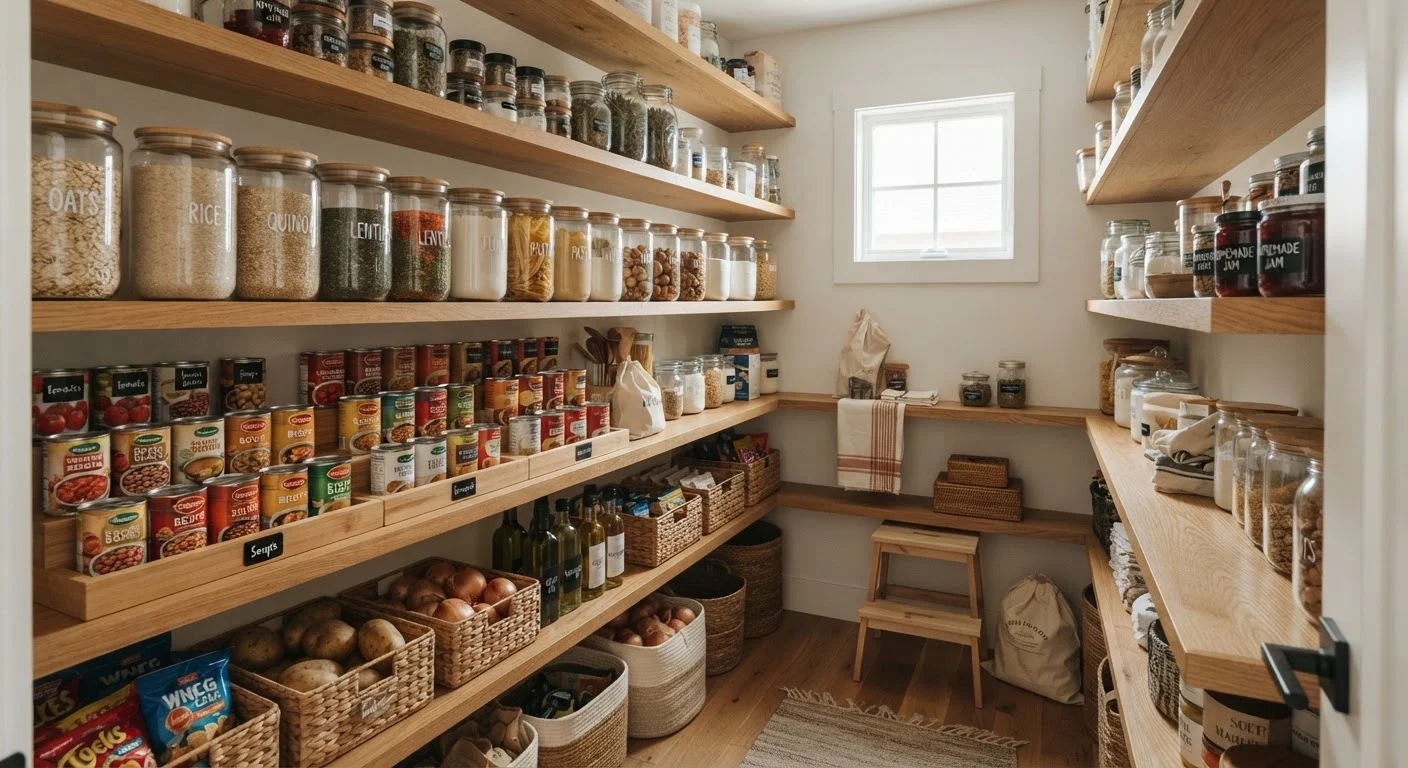
Photo: ArticleHood.com | Precision In Every Word editorial
Key Takeaways
- Empty and sort your pantry before building any organization system.
- Place frequently used items at eye level and less-used items higher or lower.
- Clear containers and labels reduce searching time and prevent duplicate purchases.
- A consistent restocking habit matters more than the containers you choose.
- Group items by how you cook, not just by food category.
Start by Taking Stock
Before buying a single bin or label, pull everything out. This is the most important step beginners skip - and the reason many pantry systems collapse within a month. You cannot organize a space you don't fully understand.
As you empty shelves, sort items into four groups: things you use regularly, things you use occasionally, things that are expired or stale, and duplicates you didn't realize you had. Discard expired food and consolidate duplicates honestly. If you find three half-open bags of the same lentils, that's a signal your current system isn't working.
This initial clear-out is really a form of focused decluttering. If you find the process bigger than expected, our article on decluttering without the overwhelm offers a manageable, room-by-room approach that applies here too.
Layout Logic: Where Things Should Go
Good pantry layout follows a simple principle: the more often you use something, the easier it should be to reach. That means organizing by frequency of use, not just by food type.
- Eye level: Everyday staples - cooking oils, canned goods, pasta, grains, and snacks you reach for daily.
- Upper shelves: Rarely used items, overflow stock, appliances, or large baking equipment.
- Lower shelves: Heavier items like large bottles, bulk bags, or a small step stool.
Within each zone, group items by how you actually cook. A baking zone might hold flour, sugar, baking powder, and vanilla together. A weeknight dinner zone might cluster canned beans, broth, and pasta sauces. This logic reflects how the kitchen basics of meal preparation actually flow - not how a grocery store organizes its aisles.
Group by meal habit, not food type
Containers, Labels, and Smart Storage
Containers serve two real functions: they make quantities visible at a glance, and they keep dry goods fresher longer by limiting air exposure. Clear containers are the most useful choice because you can see fill levels without opening anything.
You don't need a matching set to start. Repurposed glass jars work well for grains, legumes, and baking staples. The priority is airtight seals for items prone to going stale - flour, nuts, cereals, and crackers especially.
Labels prevent the most common pantry frustration: not knowing what's in an unmarked container. At minimum, label anything that looks similar to something else. If you transfer items out of their original packaging, note the expiration date on the label too.
If your pantry is a single cabinet rather than a dedicated room, the principles still apply - you'll just need to think more creatively about vertical space. See our storage solutions for small kitchens for approaches tailored to tighter spaces.
Packaging tells you something useful
Habits That Keep It Working
A pantry system only holds if it's maintained - and maintenance is mostly about small, consistent actions rather than big periodic overhauls.
Two habits make the largest difference. First, practice first-in, first-out (FIFO): when restocking, move older items to the front and place newer purchases behind them. This alone significantly reduces food waste. Second, assign every category a fixed home. When items always return to the same spot, the pantry stays coherent without effort.
Every few months, do a quick audit: check dates, consolidate partial packages, and adjust zones if your cooking habits have shifted. If you've been making more soups, the broth and canned goods zone might need more real estate.
For a broader view of how storage logic fits into running a household efficiently day to day, the household essentials guide is a helpful companion resource. And once your pantry is well-organized, stocking it thoughtfully becomes the natural next step - our piece on essential pantry staples covers which core ingredients make weeknight cooking genuinely manageable.
Don't overbuy to fill a newly organized space
Frequently Asked Questions
The content on this site is for informational purposes only and is not a substitute for professional advice. Always consult a qualified professional for guidance specific to your situation.