
Storage Solutions for Small Kitchens: Approaches Worth Knowing

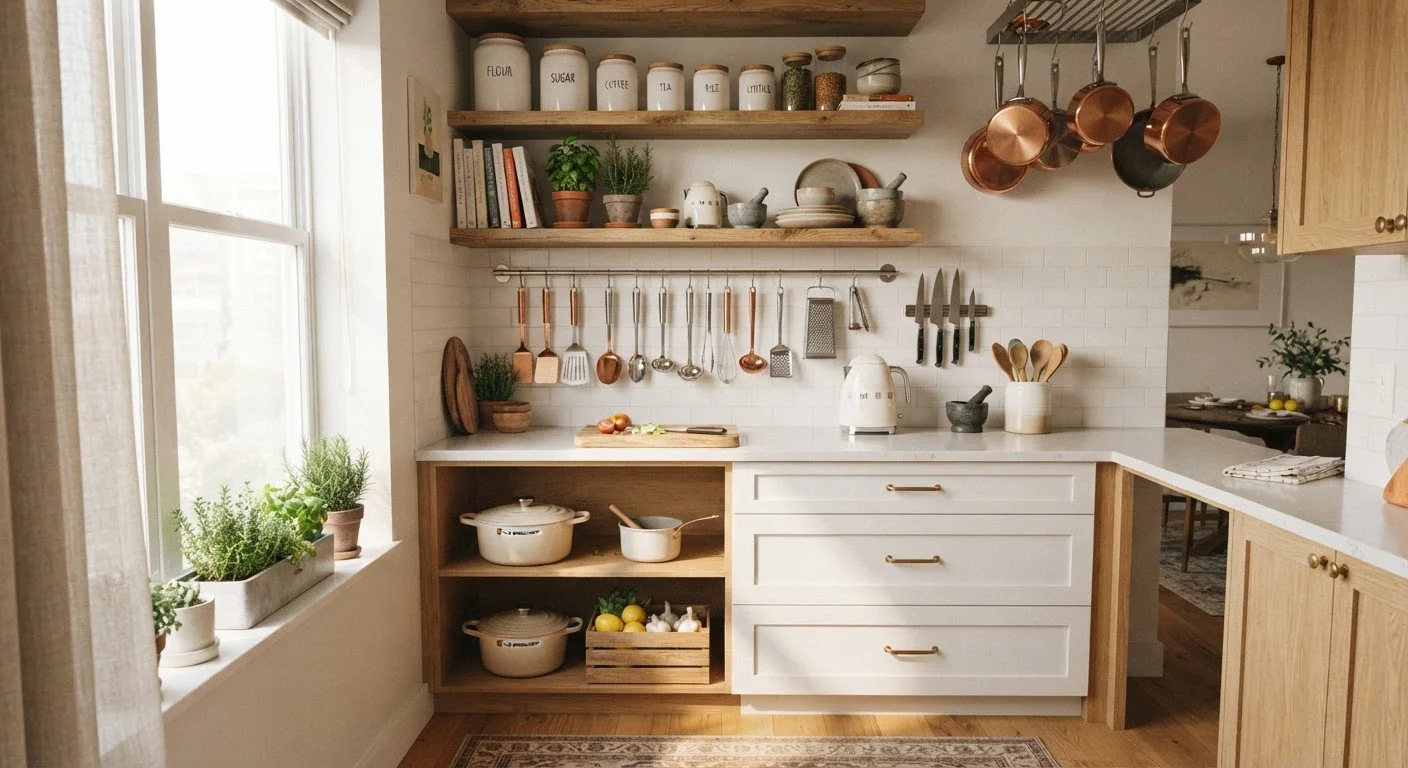
Photo: ArticleHood.com | Precision In Every Word editorial
Key Takeaways
- Vertical space - walls, cabinet tops, and door backs - is often the most underused storage area in small kitchens.
- Decluttering before organizing prevents wasted effort; redundant tools take up space that useful items could occupy.
- Drawer dividers and uniform containers turn chaotic drawers and shelves into systems that stay organized over time.
- Magnetic and hanging storage free up counter and cabinet space without requiring permanent structural changes.
- Multi-purpose tools and stackable cookware reduce the total volume of gear a small kitchen needs to hold.
Why Small Kitchen Storage Feels So Difficult
Small kitchens present a real organizational puzzle. You need the same tools, appliances, and pantry staples as a larger kitchen, but often have a fraction of the cabinet and counter space to hold them. The result - for many households - is clutter that makes cooking feel harder than it should be.
The good news is that most small-kitchen storage problems don't require a renovation to fix. They respond well to strategy: thinking vertically, using surfaces that usually go empty, and choosing storage tools that fit the actual space. If your kitchen also spills into a pantry area, our pantry organization guide covers layout logic and storage habits that complement these approaches.
Below are seven practical strategies worth knowing - each one targeted at a specific type of space problem common in compact kitchens.
Go Vertical with Wall-Mounted Shelving
Most kitchens have several feet of wall space between the counter and the ceiling that sits completely unused. Installing open shelves in this zone - for frequently used dishes, glasses, or dry goods - moves items off the counter without hiding them behind cabinet doors. Keep shelves accessible by storing daily-use items at eye level and reserving higher shelves for less-used pieces.
If you're considering open shelving, it's worth understanding what makes it work long-term. Open shelving can look cluttered quickly when a few key principles are ignored - consistency in what you display and how items are arranged matters significantly.
Wall space between counter and ceiling is among the most overlooked storage opportunities in any kitchen.
Use Cabinet Doors and Drawer Backs
The inside surfaces of cabinet doors are often completely bare. Adhesive or screw-mounted hooks, slim racks, and tension-bar organizers can hold spice packets, aluminum foil rolls, cutting boards, or cleaning supplies - all without touching shelf space. The same logic applies to the back of the pantry door, if you have one. These surfaces add storage without visually affecting the room at all.
Cabinet door interiors add hidden storage that costs almost nothing and takes minutes to set up.
Install a Magnetic Knife Strip or Hanging Utensil Rail
Knife blocks take up meaningful counter space. A wall-mounted magnetic strip holds knives securely at eye level, freeing the counter entirely. Similarly, a horizontal rail with S-hooks - mounted beneath upper cabinets or on a backsplash wall - can hold ladles, spatulas, whisks, and measuring spoons. This is especially useful when drawer space is limited, since utensil drawers tend to fill fast and become difficult to search.
Moving knives and utensils to wall-mounted storage can free an entire drawer for other kitchen essentials.
Add Drawer Dividers and Uniform Containers
Drawers without dividers become catch-all zones where items migrate and stack unpredictably. Simple dividers - adjustable ones that fit the drawer's width - create fixed zones for different categories: baking tools, measuring spoons, rubber bands, twist ties. Applied the same way to pantry shelves, uniform containers (same shape and size) allow for tighter packing and make it easier to see what's available at a glance.
Consistent containers and dividers convert disorganized drawers into systems that maintain themselves over time.
Stack Cookware Strategically with Protective Liners
Pots and pans are among the bulkiest items in any kitchen. Stacking them saves space, but unprotected stacking can scratch surfaces. Felt pan protectors placed between stacked pans prevent damage and also help with noise. Lids, which are often the real problem, can be stored vertically in a lid rack or repurposed file organizer mounted inside a lower cabinet - keeping them accessible without letting them rattle around loose.
Lid racks and pan protectors let you stack cookware safely, recovering significant cabinet volume.
Make the Most of the Space Above Cabinets
The gap between cabinet tops and the ceiling often goes unused or becomes a passive collecting point for dust. For items used only occasionally - a large stockpot, a stand mixer used a few times a year, or entertaining platters - this zone works well as storage. Baskets or labeled bins keep items contained and easy to identify without needing to pull everything down to search. A small step stool nearby makes access straightforward and safe.
Above-cabinet space suits seasonal or rarely used items, keeping them out of the way but not truly inaccessible.
Audit Tools for Redundancy and Multi-Purpose Alternatives
Storage problems are partly a volume problem. Before adding more organizers, it's worth asking whether everything in the kitchen genuinely earns its space. Duplicate peelers, three-in-one gadgets doing the same job, and appliances used once a year all consume storage that functional items could use. Replacing several single-use tools with one multi-purpose alternative - or simply removing what's rarely touched - can free more space than any organizer will. This pairs naturally with a broader decluttering process for the whole household.
Reducing redundant tools frees more space than adding storage - audit before you organize.
Putting It All Together
None of these approaches require major investment or construction. The consistent thread is intentionality: before adding any organizer or shelf, it helps to reduce what you're storing. A room-by-room decluttering approach can reveal how much rarely used equipment is quietly consuming your limited kitchen real estate.
Start With One Zone, Not the Whole Kitchen
If you want to take the visual side further - making the space feel as well as function larger - small-room décor adjustments offer complementary strategies around scale, color, and layout. Storage and style aren't mutually exclusive, even in tight quarters.
The content on this site is for informational purposes only and is not a substitute for professional advice. Always consult a qualified professional for guidance specific to your situation.