
Lisbon or Porto: Choosing the Right Portuguese City for Your Trip

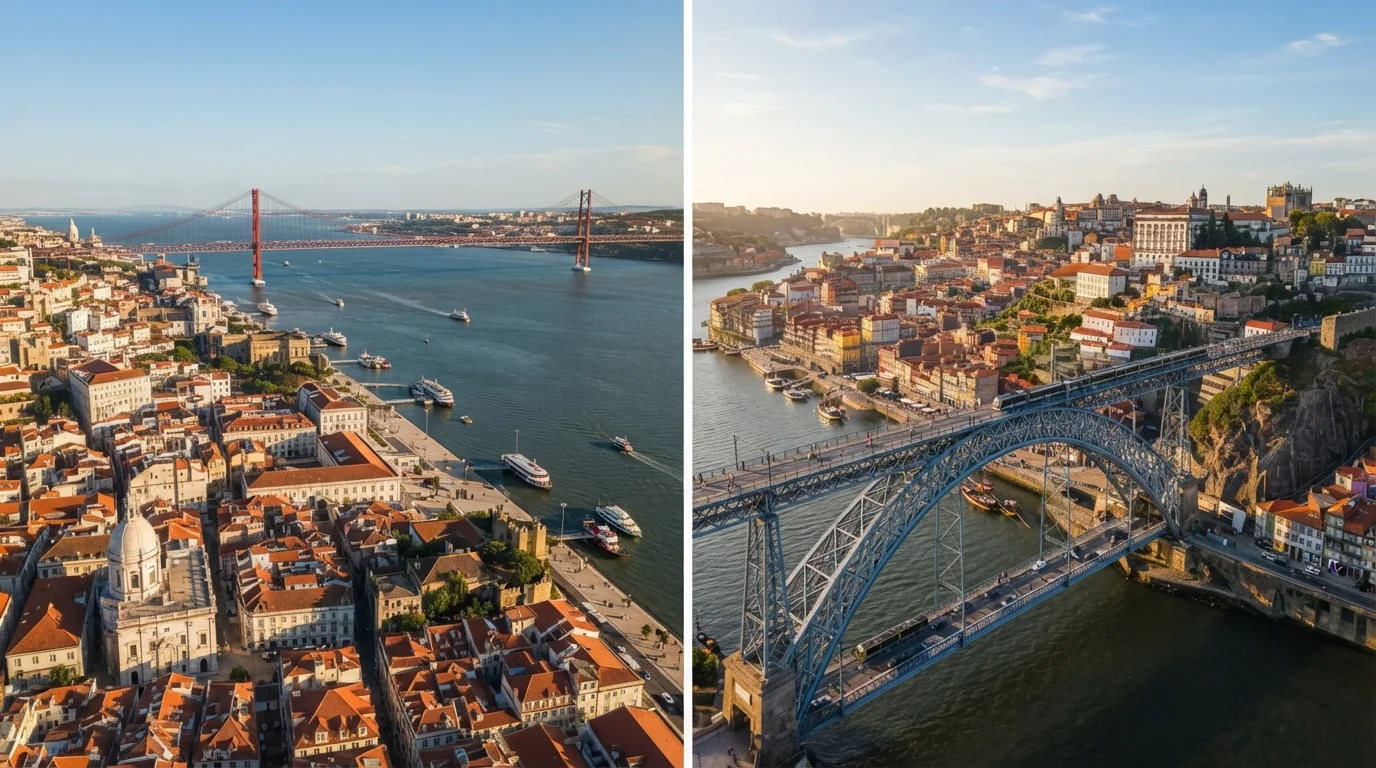
Photo: ArticleHood.com | Precision In Every Word editorial
Key Takeaways
- Lisbon is larger and more diverse, with distinct neighbourhoods spread across seven hills near the Atlantic.
- Porto is more compact and walkable, built steeply above the Douro River gorge in northern Portugal.
- Both cities have thriving food scenes, but Porto leans into hearty northern cuisine and port wine culture.
- Lisbon suits travellers wanting more varied day trips, including beaches and the Sintra palaces.
- Porto rewards slow, neighbourhood-level exploration and appeals to those drawn to craft culture.
- Either city works as a standalone destination; combining both in one trip is genuinely feasible given the short rail distance.
How the Two Cities Actually Feel
Portugal is a small country, but Lisbon and Porto feel like they belong to different temperaments. Lisbon, the capital, spreads generously across seven hills above the wide mouth of the Tagus River. Its scale is metropolitan - there are neighbourhoods that feel like separate villages, a modernising restaurant scene, and a cosmopolitan energy drawn partly from the city's long Atlantic-facing history. First-time visitors sometimes underestimate how much ground there is to cover.
Porto, by contrast, is built into a steep gorge where the Douro River cuts toward the sea. It is physically dramatic in a way that photographs only partially capture - streets drop sharply, granite churches crowd narrow lanes, and the view from the upper city across to the port wine lodges of Vila Nova de Gaia is among the most distinctive urban panoramas in Europe. The city has a reputation for directness and a working-class pride that still shapes its character even as tourism has grown significantly.
Neither city is a theme park version of Portugal. Both have grit alongside their beauty, and both reward visitors who slow down enough to notice the everyday rhythms - a pastelaria at morning rush hour, a fado bar that only fills after midnight, a miradouro (viewpoint) where locals actually sit.
Neighbourhoods, Food, and What to Do
In Lisbon, the neighbourhoods worth exploring most are Alfama (the oldest, Moorish-origin district), Mouraria, Príncipe Real, and the riverfront Baixa-Chiado corridor. Each has its own personality. Alfama is where fado - Portugal's soulful, melancholic music tradition - is most atmospheric after dark. If building a trip around a single cultural thread interests you, planning around one deep interest like fado or architecture can yield a far richer experience than trying to do everything.
Porto's essential geography centres on the Ribeira waterfront, Miragaia, and the hillside Bonfim neighbourhood. The food culture here leans northern and unapologetically hearty - the francesinha (a dense, sauce-smothered meat sandwich) is Porto's signature dish, and bacalhau (salt cod) appears in dozens of local variations. Wine explorers will find that a half-day across the bridge in Gaia, visiting port lodges, is one of Portugal's genuinely memorable experiences.
| Criterion | Lisbon | Porto |
|---|---|---|
| City scale | Large, spread-out capital | Compact, walkable core |
| Terrain | Seven hills, wider streets | Steep gorge, narrow lanes |
| Signature food | Pastéis de nata, seafood | Francesinha, bacalhau |
| Wine culture | Widespread but not focused | Port wine, Douro Valley nearby |
| Day-trip options | Sintra, beaches, Óbidos | Douro Valley, Braga, Minho |
| Nightlife range | Broad and cosmopolitan | Concentrated and local |
| Azulejo tile culture | Present throughout city | Particularly spectacular |
| Tourist density | High, especially in summer | Growing but still less intense |
Day-trip options diverge significantly. From Lisbon, Sintra's fairy-tale palaces, the walled town of Óbidos, and Atlantic beaches at Cascais are all under an hour away. Porto's natural extension is upstream into the Douro Valley - a UNESCO-recognised wine landscape of terraced vineyards - or north toward the Minho region and the spa town of Braga.
Practical Logistics and How to Combine Both
Lisbon's public transport is more developed - its metro covers much of the city, and trams connect the hilltop neighbourhoods (though tram 28, heavily touristed, moves slowly). Porto is genuinely walkable in its historic core, though its hills are steep enough to make comfortable footwear non-negotiable. Both cities have well-connected international airports.
~3 hrs
Train journey between Lisbon and Porto
The Alfa Pendular high-speed service connects the two cities, making a combined trip straightforward for most itineraries.
2nd
Porto's ranking among Europe's leading destinations
Porto has repeatedly ranked among Europe's most-visited cities in European Best Destinations awards, reflecting its rapid rise in international tourism.
The two cities sit roughly three hours apart by Alfa Pendular train - a comfortable, scenic journey that makes combining them in a single trip very practical. A common itinerary gives three to four nights in each, arriving in one and departing from the other. Whether you plan independently or consider a structured tour is a separate question worth thinking through; comparing independent travel against guided tours can help clarify which approach suits your style and comfort level.
Visiting Both Cities in One Trip
Prices, transport schedules, and entry requirements can change. Always verify current details through official Portuguese tourism sources and your country's government travel advisory before booking.
The content on this site is for informational purposes only and is not a substitute for professional advice. Always consult a qualified professional for guidance specific to your situation.