
Independent Travel vs. Guided Tours: A Practical Comparison

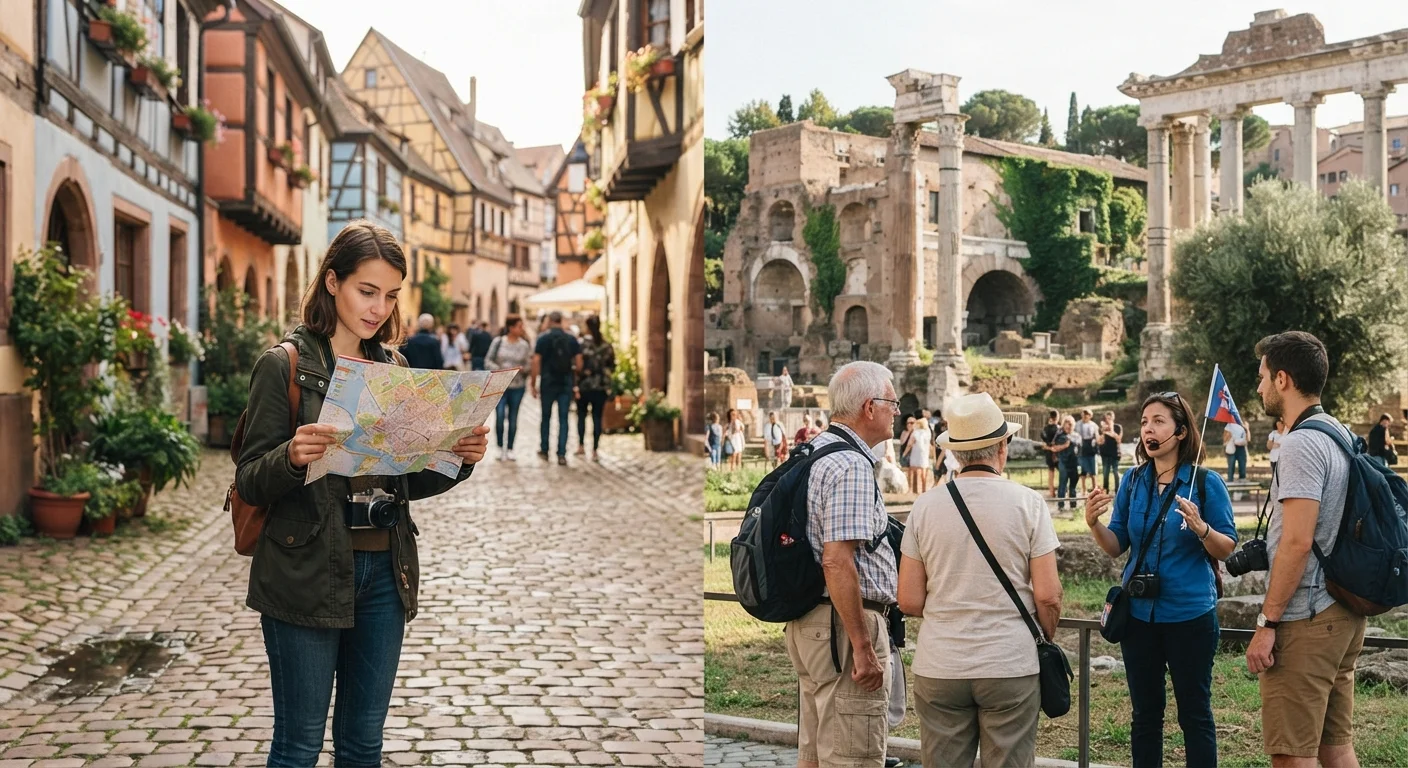
Photo: ArticleHood.com | Precision In Every Word editorial
Key Takeaways
- Independent travel offers flexibility but requires more planning, research, and tolerance for uncertainty.
- Guided tours provide structure and expert context but may limit spontaneity and personal pacing.
- Cost differences between the two approaches depend heavily on destination, style, and travel duration.
- Many experienced travelers combine both: joining a tour for specific sites while exploring independently elsewhere.
- The right choice depends on your destination's accessibility, language barriers, and your own travel comfort level.
What Each Approach Actually Looks Like on the Ground
Independent travel means booking your own transport and accommodation, building your own itinerary, and making decisions in real time. That could mean a meticulously planned two-week itinerary or a loose framework with deliberately empty days. Guided tours, by contrast, range from large coach-based sightseeing groups to intimate small-group expeditions with specialist guides - and the experience varies dramatically across that spectrum. Before committing to any tour, it's worth understanding exactly what's included and what the daily rhythm actually looks like.
Neither model is inherently richer or more authentic. A thoughtful solo traveler can have superficial experiences; a well-chosen specialist tour can unlock genuine depth. The honest question is which structure better fits your temperament, the destination, and the kind of trip you want to have.
| Criterion | Independent Travel | Guided Tours |
|---|---|---|
| Flexibility | Full control over pace and itinerary | Fixed schedule, limited deviation |
| Planning burden | High - research and logistics on you | Low - most logistics handled |
| Cost transparency | Variable; surprises are common | Usually bundled and predictable |
| Local depth | Depends on traveler's effort | High with specialist guides |
| Social dynamic | Self-determined | Built-in group structure |
| Accessibility for first-timers | Can be daunting in complex regions | Supportive and lower-stress |
| Best trip length | Any, especially extended travel | Short to medium trips |
Cost: More Complicated Than It Looks
On the surface, independent travel seems cheaper - you control every spending decision. But the comparison is rarely that simple. Guided tours often include accommodation, transport between sites, and entrance fees in a single price, making the real cost harder to compare at a glance. In destinations where haggling, transport logistics, or last-minute bookings routinely inflate costs, a tour's bundled price can sometimes be competitive.
Independent travel rewards those who plan ahead and travel flexibly - particularly for off-season trips, where accommodation and flights may be significantly more affordable. But unexpected costs - a missed train, a booking error, a night in an unplanned city - add up in ways that a fixed tour price doesn't allow. For trip planning purposes, budget both approaches fully before assuming one is cheaper.
~40%
Travelers mixing independent and guided elements
Industry surveys consistently suggest a large share of leisure travelers combine self-directed days with at least one organized tour or excursion per trip.
2-3x
Cost variance for similar routes by approach
Travel researchers note that the same itinerary can vary significantly in total cost depending on booking timing, flexibility, and whether logistics are bundled.
Depth, Access, and the Question of Authenticity
One of the persistent criticisms of guided tours is that they can insulate travelers from genuine encounter - visiting sites on a schedule, rarely straying from the approved route. That criticism has merit in some cases, but it doesn't apply universally. Specialist guides with deep local knowledge can open doors - literally and figuratively - that independent travelers may never find. Walking tours done well are a good example: the difference between a perfunctory circuit and a revelatory one often comes down entirely to who's leading it.
Independent travel, meanwhile, creates space for the kind of unscripted encounter that often defines a trip in retrospect: a conversation that turns into a long lunch, an unmarked path that leads somewhere memorable. That said, serendipity isn't guaranteed - it also requires enough comfort with uncertainty to let it happen. If you're drawn to building an entire trip around one passion, planning around a single cultural interest is a model that works well independently or with a specialist guide.
Who Each Approach Suits Best
Independent travel tends to suit experienced travelers, those comfortable navigating language barriers, and anyone whose interests are too specific or idiosyncratic to fit a standard itinerary. It's also the natural model for extended travel - weeks or months on the road don't lend themselves to tour structures.
Guided tours make the most sense when the destination itself rewards expert interpretation - complex historical sites, culturally nuanced regions, or places where access genuinely requires a local intermediary. They also provide a social structure that solo travelers sometimes miss. For context on how solo and group dynamics shift the planning equation more broadly, solo vs. group travel is worth reading alongside this comparison. And it's worth noting that tour marketing doesn't always match what's delivered - reading operator descriptions critically is a skill worth developing before you book.
The Hybrid Approach Is Worth Considering
The content on this site is for informational purposes only and is not a substitute for professional advice. Always consult a qualified professional for guidance specific to your situation.