
The Amalfi Coast, Honestly: Stunning Scenery and Serious Logistical Friction

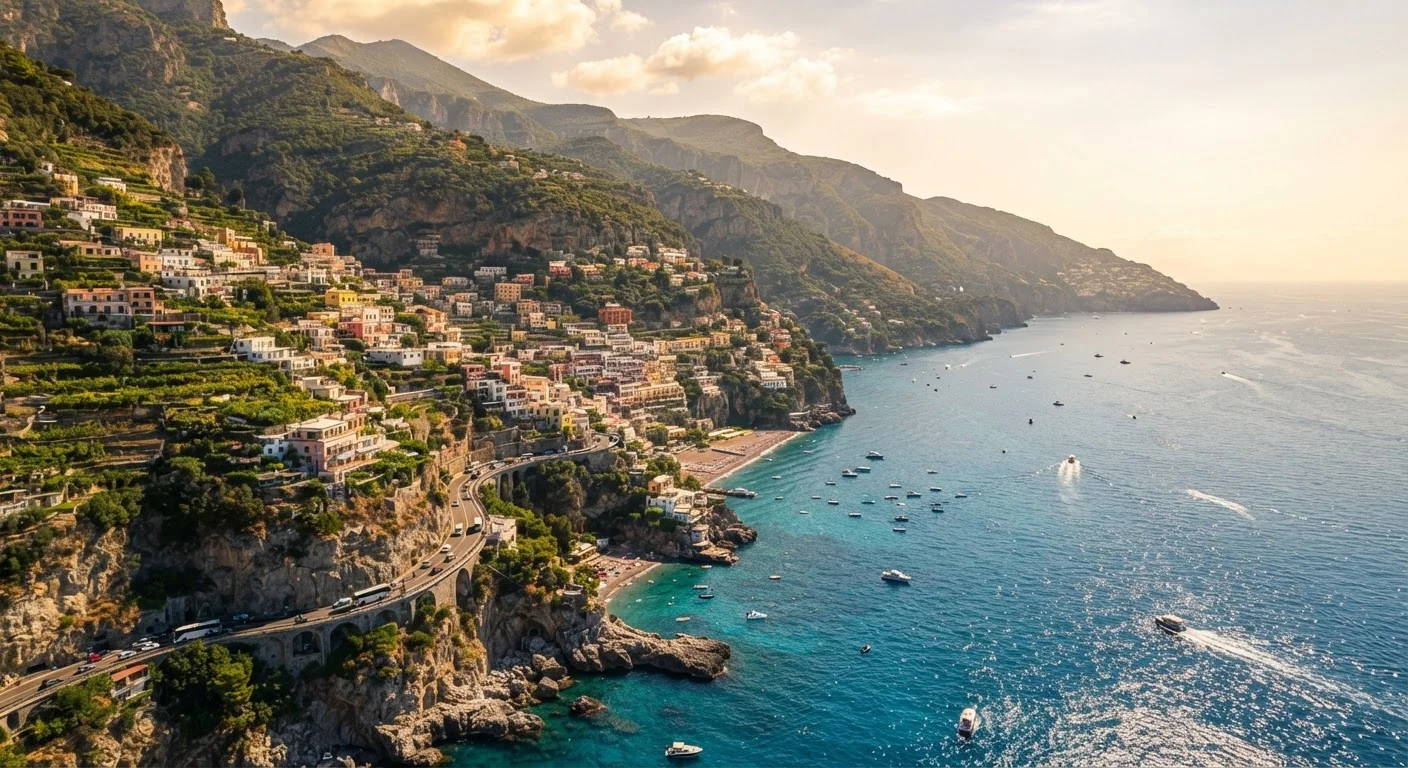
Photo: ArticleHood.com | Precision In Every Word editorial
Key Takeaways
- The Amalfi Coast delivers world-class scenery but requires serious logistical patience.
- Summer crowds and narrow roads make transportation a genuine challenge.
- Visiting in shoulder season - April, May, or October - dramatically changes the experience.
- Costs here run notably higher than elsewhere in southern Italy.
- The coast rewards visitors who slow down and plan realistically, not those expecting a breezy getaway.
Scenery that genuinely lives up to the hype
The cliffs, villages, and sea views here are legitimately among the most dramatic in Europe. The visual impact holds even for seasoned travelers who've seen a great deal of the Mediterranean.
Rich cultural and culinary depth
Beyond the views, the coast offers excellent limoncello and local seafood, medieval architecture in Amalfi town, and world-class gardens like Villa Rufolo in Ravello.
Variety of experiences within a compact area
Hiking, swimming, boat trips, historic towns, and quiet hilltop villages are all accessible within a relatively small geographic corridor - making it possible to shape very different kinds of days.
Strong ferry and boat culture
Traveling by sea between towns is often faster than the road, genuinely scenic, and one of the most memorable ways to experience the coast from the water looking back at the cliffs.
Road congestion is severe in peak season
The single coastal road cannot handle modern tourist volumes in July and August. Travelers who underestimate transit times frequently miss reservations or spend hours in traffic.
Prices run significantly above Italian averages
Accommodation, dining, and boat hire all carry a premium that reflects the destination's global profile. Budget travelers need to plan carefully to keep costs manageable.
Summer crowds diminish the experience
Peak-season visitor numbers on the main promenades and beaches reach a density that many travelers find exhausting rather than enjoyable. The intimacy the coast is famous for largely disappears.
Steep terrain is physically demanding
Most towns involve significant stair-climbing, and navigating with heavy luggage or mobility limitations requires advance planning. Not all accommodation or beaches are easily accessible.
Limited parking and driving stress
Self-driving the coast is genuinely stressful - narrow roads, hairpin bends, and aggressive local traffic make it challenging even for confident drivers, and parking in towns is often impractical.
Why the Amalfi Coast Still Earns Its Reputation
There's a reason the Amalfi Coast appears on virtually every list of Italy's essential experiences. The 30-mile stretch of coastline between Positano and Vietri sul Mare - designated a UNESCO World Heritage Site in 1997 - offers something genuinely rare: vertical villages stacked against limestone cliffs, lemon groves cascading down terraced hillsides, and water that shifts from emerald to deep cobalt depending on the hour. No photograph fully prepares you for it.
The towns themselves each carry distinct personalities. Ravello sits high above the water, cathedral-quiet and given to music festivals and panoramic gardens. Amalfi town retains the bones of a medieval maritime republic. Positano is glamorous and steep, its pastel facades practically tumbling into the sea. Together they form a corridor of experiences that rewards genuine curiosity - provided you arrive with realistic expectations about what the journey involves.
Scenery that genuinely lives up to the hype
The cliffs, villages, and sea views here are legitimately among the most dramatic in Europe. The visual impact holds even for seasoned travelers who've seen a great deal of the Mediterranean.
Rich cultural and culinary depth
Beyond the views, the coast offers excellent limoncello and local seafood, medieval architecture in Amalfi town, and world-class gardens like Villa Rufolo in Ravello.
Variety of experiences within a compact area
Hiking, swimming, boat trips, historic towns, and quiet hilltop villages are all accessible within a relatively small geographic corridor - making it possible to shape very different kinds of days.
Strong ferry and boat culture
Traveling by sea between towns is often faster than the road, genuinely scenic, and one of the most memorable ways to experience the coast from the water looking back at the cliffs.
The Logistical Reality Most Travel Writing Glosses Over
Here's what the glossy images rarely show: the SS163 - the single coastal road threading the entire coast - is barely wide enough for two cars in many sections, and it handles buses, scooters, delivery trucks, and tourist vehicles simultaneously. In July and August, traffic can bring forward progress to a standstill for stretches that feel almost absurd. A 15-minute drive on a map can easily become 90 minutes in practice.
Ferries and the regional bus (SITA Sud) are genuinely useful alternatives, but both operate on schedules that don't always align with traveler plans, and the bus in particular runs crowded and hot in summer. Parking in most towns is either unavailable or expensive. If you're planning to stay in one base town and day-trip along the coast, budget generous time and have backup plans.
Road congestion is severe in peak season
The single coastal road cannot handle modern tourist volumes in July and August. Travelers who underestimate transit times frequently miss reservations or spend hours in traffic.
Prices run significantly above Italian averages
Accommodation, dining, and boat hire all carry a premium that reflects the destination's global profile. Budget travelers need to plan carefully to keep costs manageable.
Summer crowds diminish the experience
Peak-season visitor numbers on the main promenades and beaches reach a density that many travelers find exhausting rather than enjoyable. The intimacy the coast is famous for largely disappears.
Steep terrain is physically demanding
Most towns involve significant stair-climbing, and navigating with heavy luggage or mobility limitations requires advance planning. Not all accommodation or beaches are easily accessible.
Limited parking and driving stress
Self-driving the coast is genuinely stressful - narrow roads, hairpin bends, and aggressive local traffic make it challenging even for confident drivers, and parking in towns is often impractical.
The good news: many of these pressures ease considerably outside of peak season. Off-season travel comes with real trade-offs, but on the Amalfi Coast, the case for visiting in April, May, or October is particularly strong - quieter roads, more reasonable accommodation rates, and a coast that feels like it belongs to you rather than a crowd.
Cost, Crowds, and Setting Expectations
The Amalfi Coast is expensive by almost any Italian benchmark. Accommodation in Positano routinely runs well above the national average, and dining along the waterfront reflects the captive-audience economics of a world-famous destination. Budget travelers can find ways to manage - staying slightly inland, eating at spots a street or two back from the main promenades, using public transport consistently - but this is not a destination that rewards the assumption of value.
1997
Year Amalfi Coast received UNESCO World Heritage status
The coastline was inscribed for its exceptional natural beauty and the cultural landscape shaped by centuries of human settlement on steep terrain.
~30 miles
Total length of the Amalfi Coast stretch
The coast runs from Positano in the west to Vietri sul Mare in the east, with the single SS163 road as the primary overland connection between towns.
Crowds at peak summer are not merely inconvenient - they actively reshape the experience. Walking the main street in Positano in August means navigating shoulder-to-shoulder traffic. The famous Sentiero degli Dei (Path of the Gods) hiking trail, one of the coast's great inland walks, becomes genuinely congested on summer weekends. Understanding what you gain and give up by traveling outside peak season is worth doing before you lock in dates here.
If the Amalfi Coast's logistics feel like too much, or if you're looking to complement a visit with somewhere less touristed, the broader Mediterranean has real alternatives. Quieter corners of the Mediterranean offer comparable beauty with dramatically less friction - worth considering as a contrast or a companion leg to any southern Italy itinerary.
A Note on Entry, Conditions, and Verification
The content on this site is for informational purposes only and is not a substitute for professional advice. Always consult a qualified professional for guidance specific to your situation.