
Brake Wear: What's Normal, What's a Warning Sign, and When to Act

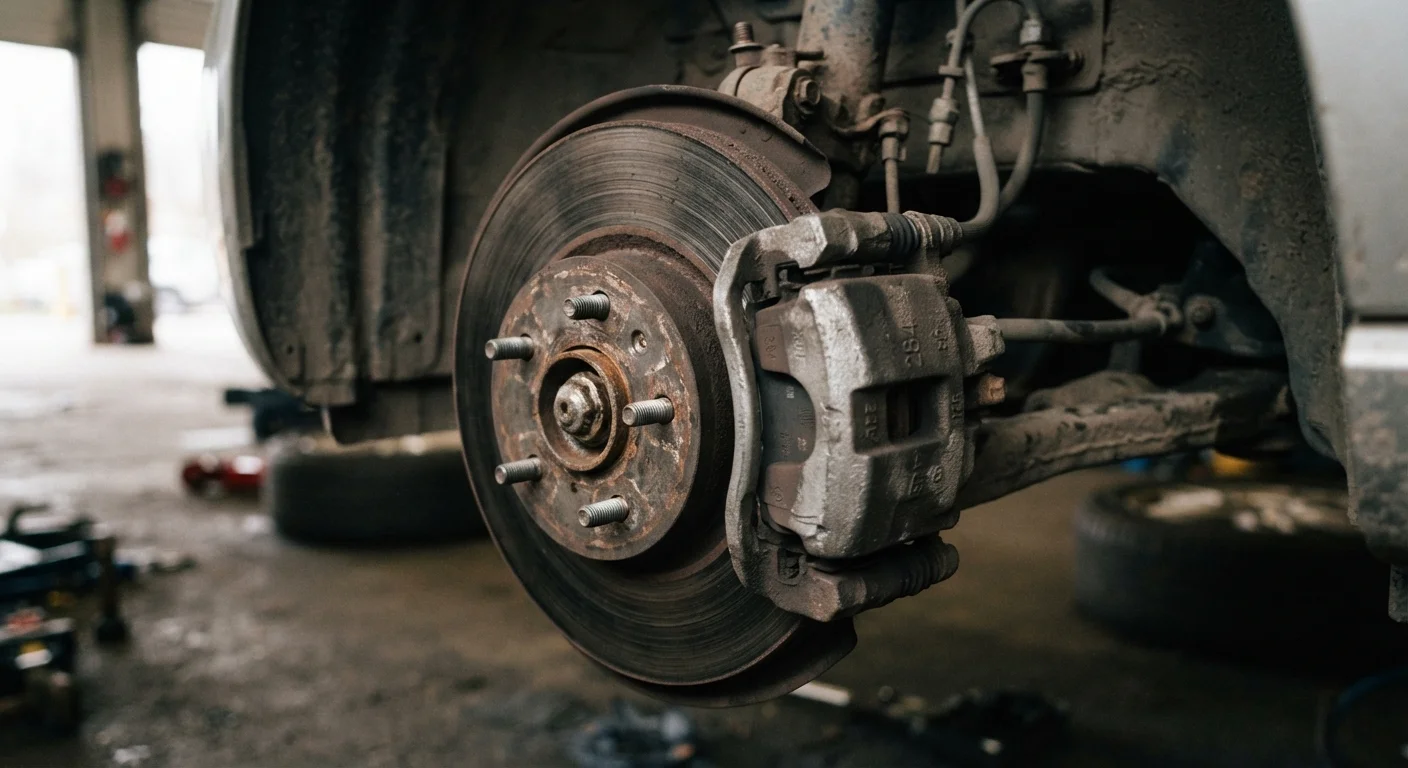
Photo: ArticleHood.com | Precision In Every Word editorial
Key Takeaways
- Squealing at low speeds often signals a built-in wear indicator - an intentional warning, not necessarily an emergency.
- Grinding sounds or a pulsating pedal usually mean rotor damage is already occurring and the vehicle needs prompt inspection.
- A soft or spongy brake pedal may point to air in the brake lines or a fluid leak - both require immediate attention.
- Stop-and-go city driving wears pads significantly faster than steady highway miles.
- Deferred brake maintenance can turn a low-cost pad replacement into a much more expensive rotor or caliper job.
- A qualified mechanic should inspect brakes at least once a year or whenever a symptom appears.
How Brake Pads Wear Down Normally
Brake pads are designed to wear out - that's by design. They act as the sacrificial layer that protects more expensive components like rotors and calipers. Under ordinary driving conditions, front pads typically last between 25,000 and 65,000 miles, while rear pads often last longer because less braking force is applied there. These ranges are wide because driving habits matter enormously: frequent hard stops in city traffic eat through pads far faster than relaxed highway cruising.
Normal wear produces no dramatic symptoms. You might notice very faint dust on your wheels (brake dust is a natural byproduct) or a slight reduction in pedal travel as pads thin. Neither is cause for alarm. What matters is staying within a regular inspection schedule - at minimum, have a mechanic check pad thickness during your annual service or tire rotation. See your car's full maintenance schedule for guidance on when brake checks typically fall.
Use Tire Rotations as a Brake Checkup
Warning Signs and What Each One Means
Not every brake noise means the same thing. Understanding what each symptom signals helps you decide how urgently to act.
- Squealing or squeaking (especially at low speeds): Most brake pads include a small metal wear indicator tab that contacts the rotor when the pad reaches a low-but-not-critical thickness. The resulting squeal is intentional - it's your car telling you to book an inspection soon, not necessarily this instant. That said, don't ignore it for months.
- Grinding or metal-on-metal scraping: This usually means the pad material is fully worn and the metal backing plate is now contacting the rotor directly. Rotor damage is likely already occurring. This warrants prompt inspection - not a wait-and-see approach.
- Pulsating or vibrating pedal: A pedal that pulses underfoot when you brake often indicates warped rotors, which can result from overheating or uneven wear. The vehicle should be inspected relatively soon.
- Pulling to one side: If the car drifts left or right under braking, one brake may be applying more force than the other - a stuck caliper or uneven pad wear are common causes.
- Soft or spongy pedal: A pedal that travels further than usual before engaging the brakes, or feels mushy, may indicate air in the brake lines or a fluid leak. This is a safety-critical symptom that deserves same-day attention. It's also worth checking your dashboard warning lights, as a brake warning light may accompany this symptom.
Morning Squealing Is Often Harmless
What Affects How Quickly Brakes Wear
Several factors accelerate brake wear beyond the averages:
- Driving environment: Urban stop-and-go traffic is far harder on brakes than highway driving. If you commute in a dense city, expect shorter pad life.
- Driving habits: Late, hard braking is harder on pads than gradual, anticipatory slowing. Keeping a longer following distance gives you more time to ease off rather than panic-stop.
- Vehicle weight: Heavier vehicles - trucks, SUVs, or cars regularly loaded with cargo or passengers - require more braking force, which increases wear rates.
- Terrain: Hilly or mountainous driving puts extra demand on brakes, especially on long descents where drivers may ride the brakes instead of using engine braking.
- Brake quality and type: Pad compounds vary. Performance or sport pads may offer better stopping power but wear faster; standard OEM-spec pads are engineered for the balance your vehicle was designed around.
Ignoring early symptoms rarely saves time or money. As explained in our article on how deferred maintenance compounds costs, letting worn pads go unchecked typically damages rotors - turning a straightforward pad replacement into a more involved and costly repair.
25,000-65,000 mi
Typical front brake pad lifespan
This range reflects significant variation based on driving style, vehicle weight, and traffic conditions - city driving tends toward the lower end.
3-4 mm
Pad thickness that triggers inspection
Most manufacturers and mechanics use this threshold as the point at which replacement should be planned; new pads are typically 10-12 mm thick.
~$150-$300
Typical pad replacement cost (per axle)
General estimates vary widely by vehicle type and labor market; rotor replacement adds substantially more, illustrating why early action is cost-effective.
When to Act: A Simple Decision Framework
You don't need to be a mechanic to make a reasonable call about urgency. Use this as a rough guide:
| Symptom | Likely Cause | How Urgently to Act |
|---|---|---|
| Occasional light squeal | Wear indicator tab | Schedule inspection within a few weeks |
| Consistent grinding | Pad fully worn, rotor contact | Inspect promptly - within days |
| Pedal pulsation | Warped rotors | Inspect soon |
| Vehicle pulling under braking | Uneven wear or stuck caliper | Inspect soon |
| Soft or spongy pedal | Air in lines or fluid leak | Same-day attention - do not delay |
Safe driving depends on reliable brakes, so when in doubt, have a qualified mechanic take a look. Good brake health is also part of broader safe driving habits - the more confidently you understand your vehicle, the better prepared you are for whatever the road brings.
This article is for general informational purposes only. Always consult a qualified mechanic for diagnosis and repair of your specific vehicle.
Frequently Asked Questions
The content on this site is for informational purposes only and is not a substitute for professional advice. Always consult a qualified professional for guidance specific to your situation.