
The Pros and Cons of Skipping the Dealer for Routine Servicing

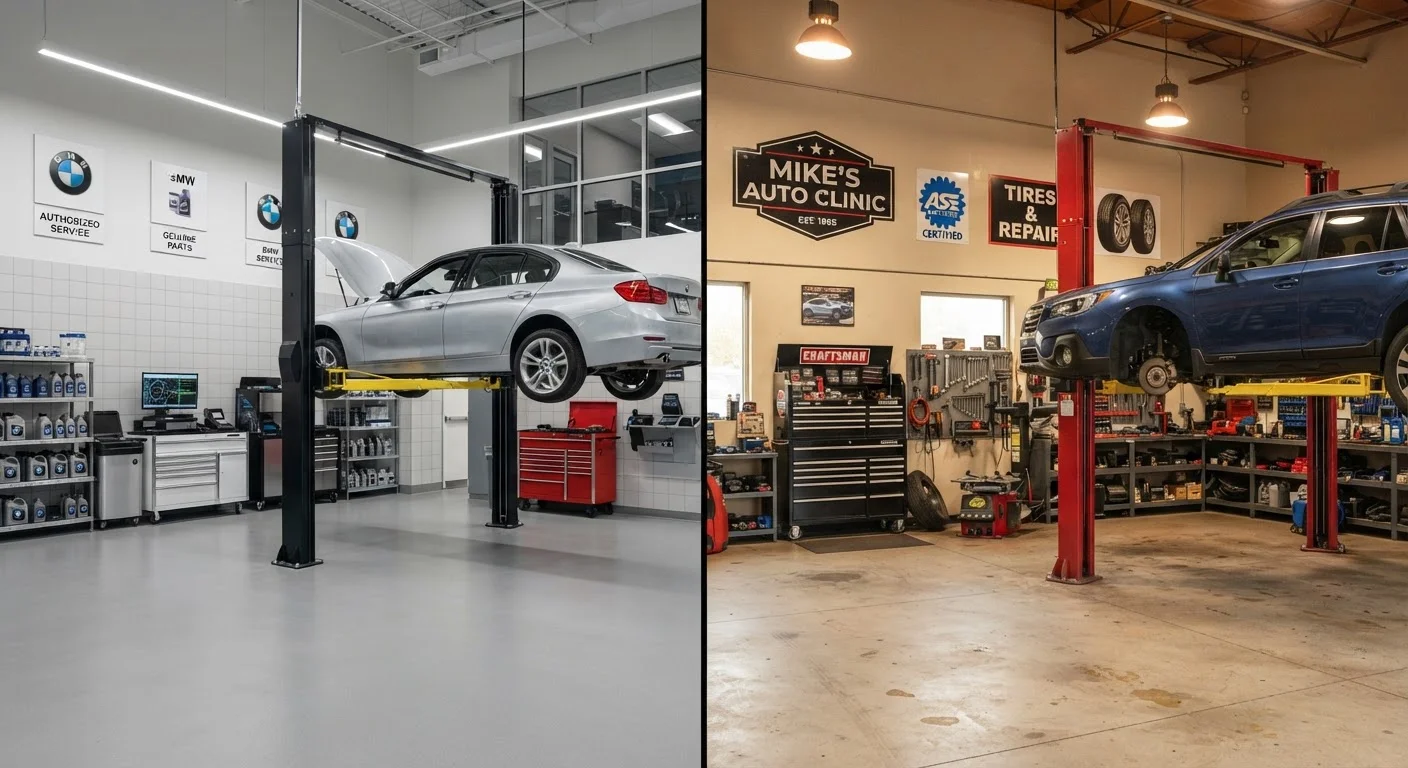
Photo: ArticleHood.com | Precision In Every Word editorial
Key Takeaways
- Independent shops often charge less for routine services like oil changes and tire rotations.
- Using a non-dealer shop does not void your warranty under federal law, provided you keep service records.
- Dealership technicians are factory-trained and have direct access to manufacturer-specific tools and software.
- Independent shops vary widely in quality - vetting them carefully matters more than the category itself.
- Keeping thorough service records is important regardless of where you get your car serviced.
Lower labor rates on routine services
Independent shops typically charge less per hour than dealership service departments, which can add up meaningfully across several routine visits per year.
More flexible, personalized service experience
Smaller shops often provide faster scheduling and let you speak directly with the technician working on your vehicle, which can build genuine trust over time.
Warranty protection under federal law
The Magnuson-Moss Warranty Act generally allows independent servicing without voiding your warranty, provided the work meets manufacturer specs and you keep records.
Practical choice for older, out-of-warranty vehicles
Once a vehicle is past its warranty period, the strategic reasons to pay dealer premiums for routine work largely disappear, making independent shops a cost-effective default.
Quality varies significantly between shops
Unlike dealerships, independent shops have no standardized training requirement, so the gap between an excellent shop and a poor one can be wide - vetting is essential.
May lack proprietary diagnostic tools
Some manufacturer-specific software and calibration tools are only available to authorized dealers, which can matter for newer vehicles with advanced electronics.
No direct access to recall and service bulletin updates
Dealerships receive technical service bulletins from manufacturers automatically; independent shops may not catch manufacturer-identified issues specific to your model.
Service history gaps can complicate warranty claims
While not a legal requirement, a continuous dealer service record can make warranty dispute resolution smoother if a manufacturer questions whether work was performed correctly.
What's Actually at Stake with Routine Servicing
Oil changes, tire rotations, filter replacements, fluid top-offs - routine maintenance is unglamorous but genuinely important. Where you get it done can affect your wallet, your warranty, and the long-term health of your vehicle. The good news is that federal law gives you more flexibility than many drivers realize.
The Magnuson-Moss Warranty Act generally prohibits manufacturers from voiding a vehicle warranty simply because you had service performed at an independent shop - as long as the work meets the manufacturer's specifications and you retain documentation. That single fact opens up real choices for most drivers. For a broader grounding in what routine service actually involves, see our guide for first-time owners.
The Case for Skipping the Dealer
Independent shops often have a meaningful cost advantage on bread-and-butter services. Labor rates at dealerships tend to run higher, and some dealers upsell additional services during routine visits. A well-reviewed independent mechanic can perform the same oil change or brake inspection for notably less.
Lower labor rates on routine services
Independent shops typically charge less per hour than dealership service departments, which can add up meaningfully across several routine visits per year.
More flexible, personalized service experience
Smaller shops often provide faster scheduling and let you speak directly with the technician working on your vehicle, which can build genuine trust over time.
Warranty protection under federal law
The Magnuson-Moss Warranty Act generally allows independent servicing without voiding your warranty, provided the work meets manufacturer specs and you keep records.
Practical choice for older, out-of-warranty vehicles
Once a vehicle is past its warranty period, the strategic reasons to pay dealer premiums for routine work largely disappear, making independent shops a cost-effective default.
Beyond price, independent shops sometimes offer more flexible scheduling and a more personal relationship with the technician actually working on your car. If you find a shop you trust, that consistency has real value. And for an out-of-warranty vehicle, there's rarely a technical reason to pay dealer rates for a straightforward oil change or air filter swap.
Deferred or poorly performed maintenance, wherever it happens, is where costs compound - our article on why skipping maintenance costs more long-term explains how small neglect turns into large repair bills.
Where the Dealer Has a Genuine Edge
Factory-trained technicians and proprietary diagnostic tools are real advantages, not just marketing. Modern vehicles - especially those with advanced driver-assistance systems, hybrid powertrains, or over-the-air software updates - can require dealer-level equipment to service correctly. An independent shop may not have the software licenses needed to reset certain systems or properly complete some calibrations.
Quality varies significantly between shops
Unlike dealerships, independent shops have no standardized training requirement, so the gap between an excellent shop and a poor one can be wide - vetting is essential.
May lack proprietary diagnostic tools
Some manufacturer-specific software and calibration tools are only available to authorized dealers, which can matter for newer vehicles with advanced electronics.
No direct access to recall and service bulletin updates
Dealerships receive technical service bulletins from manufacturers automatically; independent shops may not catch manufacturer-identified issues specific to your model.
Service history gaps can complicate warranty claims
While not a legal requirement, a continuous dealer service record can make warranty dispute resolution smoother if a manufacturer questions whether work was performed correctly.
If your vehicle is still under a manufacturer's warranty, some warranty claims are easier to process when the dealer has a continuous service history on file. It doesn't legally protect the warranty by itself, but it can smooth the process if a dispute arises. Dealers also receive technical service bulletins and recall notices directly, which means they're often first to know about manufacturer-identified issues with your specific model.
Keep Your Service Records - Always
How to Make the Right Call for Your Situation
The most useful question isn't "dealer or independent?" - it's "what does this specific job require, and who is qualified to do it?" For a tire rotation or cabin air filter replacement, qualification is easy to meet. For a transmission software update or a hybrid battery service, the bar is higher.
~30%
Typical labor rate premium at dealerships
Industry estimates from consumer automotive research commonly suggest dealership labor rates run roughly 30% higher than independent shops, though this varies by region and service type.
2 in 3
Car owners who use independent shops
Consumer research from the Auto Care Association has indicated that a majority of US vehicle owners use independent repair facilities rather than dealerships for maintenance.
Vetting an independent shop takes some effort. Look for ASE (Automotive Service Excellence) certification, read recent reviews, and don't hesitate to ask how familiar they are with your specific make. A shop that specializes in your vehicle's brand or type may actually outperform a general dealership service department. For a practical breakdown of which maintenance tasks are suitable for different levels of expertise, our piece on tasks worth DIYing vs. leaving to a pro is worth a read.
Whatever you decide, keep every receipt and service record. Documentation is what protects you - with warranty claims, with resale value, and with managing long-term vehicle costs.
The content on this site is for informational purposes only and is not a substitute for professional advice. Always consult a qualified professional for guidance specific to your situation.