
Kitchen Measurement Explained: Volume, Weight, and When Each One Matters

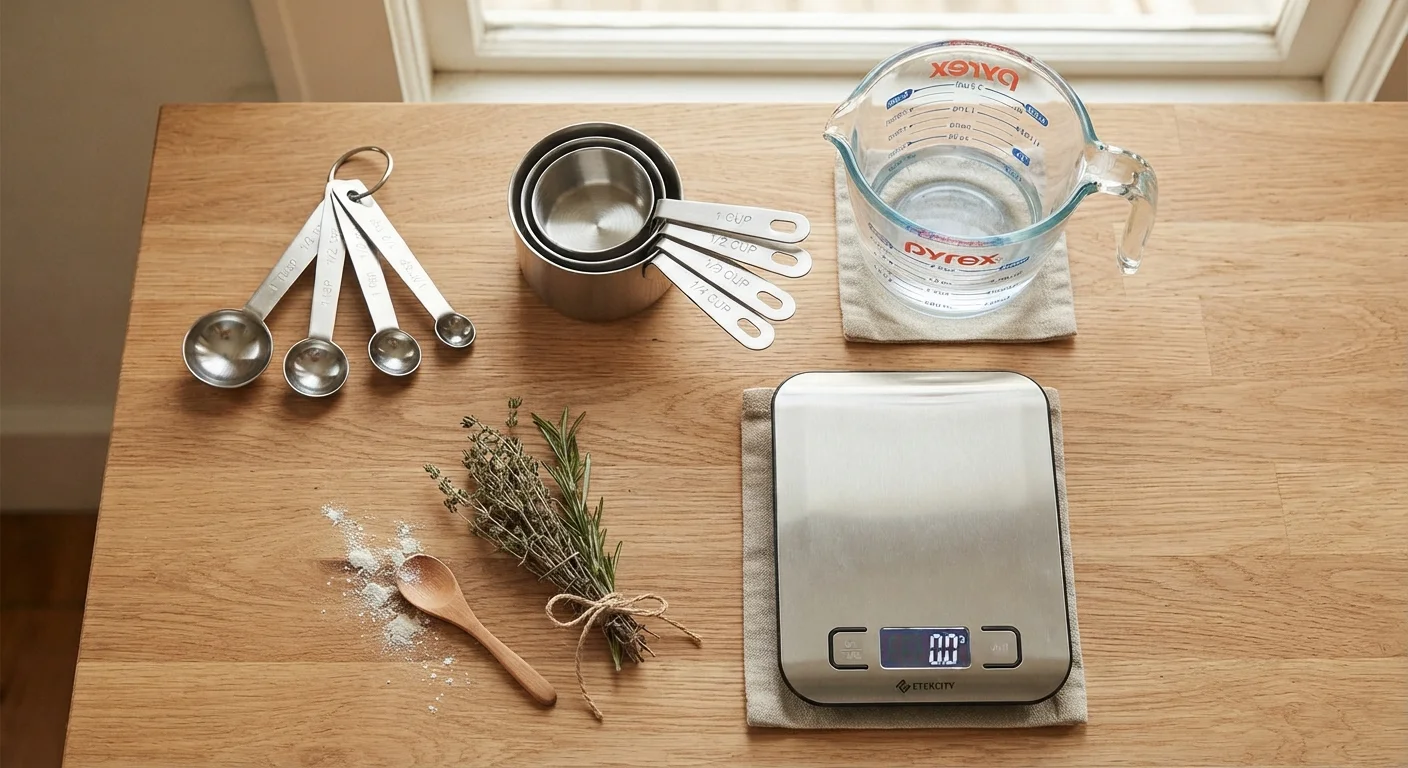
Photo: ArticleHood.com | Precision In Every Word editorial
Two Systems, One Kitchen
Open almost any recipe and you'll encounter a mix of units: a cup of flour, 200 grams of butter, a teaspoon of salt, 240 millilitres of milk. Understanding what these numbers actually mean - and which system to trust - is one of the most practical skills a home cook can build.
Broadly, kitchen measurement falls into two approaches: volume (how much space an ingredient takes up) and weight (how heavy it actually is). Both are valid, but they behave very differently depending on what you're measuring and how precise the recipe needs to be.
For a deeper look at how ingredients relate to nutrition information, our guide to reading an ingredient list explains the conventions behind how foods are described and quantified on packaging.
| US cup in millilitres | 240 ml |
| Tablespoon in millilitres | 15 ml |
| Teaspoon in millilitres | 5 ml |
| Weight ounce in grams | ~28 g |
| Fluid ounce in millilitres | ~30 ml |
| Packed vs. spooned cup of flour (weight difference) | Up to ~30 g (Varies by flour type and packing technique) |
Volume Measurement: Cups, Tablespoons, and Millilitres
Volume measures how much physical space an ingredient occupies. In the United States, home recipes most commonly use cups, tablespoons, and teaspoons. Much of the rest of the world uses metric units - millilitres (ml) and litres (L).
Volume works reliably for liquids: water, milk, oil, and broth flow to fill whatever container you use, giving a consistent result. It's less reliable for dry ingredients like flour, cocoa powder, or oats, because how tightly you pack a cup changes the amount significantly. A loosely spooned cup of all-purpose flour weighs roughly 120-125 grams; a scooped, packed cup can weigh 150 grams or more - a difference large enough to affect the texture of baked goods.
The standard US cup equals 240 ml (approximately 8 fluid ounces). A tablespoon is 15 ml, and a teaspoon is 5 ml. These relationships are fixed, so a reliable set of measuring cups and spoons removes most of the guesswork.
Volume measurement
A way of quantifying ingredients by the space they occupy, using units like cups, tablespoons, teaspoons, millilitres, and litres. Most reliable for liquids.
Weight measurement
A way of quantifying ingredients by their mass, using grams or ounces on a kitchen scale. Produces the most consistent and repeatable results for dry ingredients.
Fluid ounce
A unit of volume equal to approximately 30 millilitres. Completely separate from weight ounces, despite sharing a name. Used for measuring liquids.
Tare
The 'zero out' function on a digital kitchen scale. Pressing tare resets the reading to zero after placing a bowl on the scale, so you measure only the ingredient's weight.
Spoon-and-level method
A technique for measuring dry ingredients by volume: spoon the ingredient into the measuring cup until heaped, then sweep a straight edge across the top to remove the excess without packing.
Weight Measurement: Grams and Ounces
Weight tells you exactly how much of an ingredient you have, regardless of how it's packed or shaped. A kitchen scale measuring in grams (g) or ounces (oz) is the most precise and repeatable tool available to a home cook.
Weight measurement is especially valuable in baking, where small variations in flour, sugar, or leavening can noticeably change a result. Professional bakeries and serious home bakers almost universally prefer grams. Many modern recipes - particularly those originating outside the US - will give weights rather than volumes for dry ingredients as a result.
Grams are metric; ounces (weight ounces, not fluid ounces) are part of the US customary system. It's worth noting that a fluid ounce is a volume unit (about 30 ml), while a weight ounce is a mass unit (about 28 grams). These are different things, which is a common point of confusion.
Fluid Ounces vs. Weight Ounces: A Common Mix-Up
When Precision Matters - and When It Doesn't
Not every recipe demands precise measurement. Soups, stews, stir-fries, and most savory dishes tolerate variation well. If you add a little more onion or a slightly generous pour of stock, the dish adapts. These are forgiving contexts where volume measures - and even intuitive handfuls - work fine.
Baking is the exception. Bread, cakes, pastries, and cookies depend on chemical reactions between ingredients in specific ratios. Too much flour makes a dense cake; too little leavening means bread that won't rise. Here, weight measurements in grams produce the most reliable results.
A useful rule of thumb: liquid in a glass measuring jug, dry ingredients on a scale. If a recipe only gives volume for dry ingredients and you don't have a scale, use the spoon-and-level method - spoon the ingredient into the measuring cup until it's heaped, then sweep a straight edge across the top to level it off without pressing down.
For more on navigating recipe instructions with confidence, see our guide to reading a recipe before you start cooking. And if you want to understand how ingredient quantities connect to the nutrition information you see on food packaging, reading a nutrition label walks through every section in plain terms.
The content on this site is for informational purposes only and is not a substitute for professional advice. Always consult a qualified professional for guidance specific to your situation.