
Open Shelving Looks Effortless - Until It Doesn't

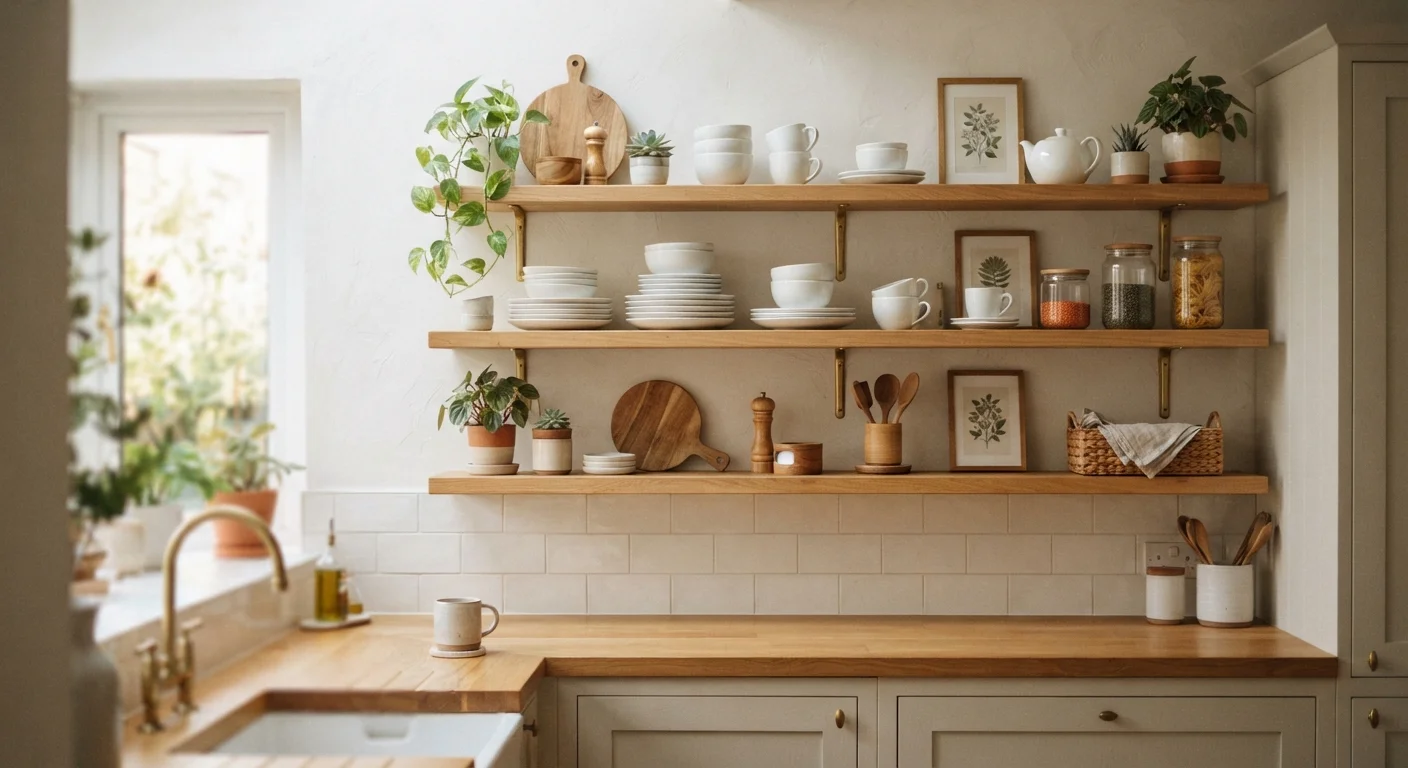
Photo: ArticleHood.com | Precision In Every Word editorial
Key Takeaways
- Overcrowding shelves is the single fastest way to make open storage look chaotic.
- Mismatched heights and depths create visual restlessness even when individual items are attractive.
- Dust and grease accumulate quickly on open shelves, so only display what you're willing to maintain.
- Grouping items by color, material, or function gives the eye a place to rest.
- Open shelving rewards editing - what you leave off matters as much as what you put on.
Why Open Shelving Goes Wrong So Often
Open shelving promises something genuinely appealing: a kitchen or living room that feels relaxed, curated, and personal. Styled well, it signals confidence and warmth. But the same quality that makes it attractive - full visibility - is exactly what makes it unforgiving. Every mismatched mug, dusty bowl, and random bottle is on permanent display.
The good news is that most open-shelving failures come down to a small set of repeatable mistakes, not some mysterious design instinct that only professionals possess. Understanding what goes wrong - and why - puts you in a much stronger position to get it right. See our guide to decluttering versus minimalism for useful context on editing your belongings before committing items to open display.
Displaying too many items at once, leaving no breathing room between objects.
Using objects of nearly identical height across an entire shelf, creating a flat, monotonous line.
Mixing too many unrelated colors, textures, and materials without any unifying thread.
Putting purely functional, utilitarian items on open shelves without any visual consideration.
Neglecting the wall color or shelf material behind and beneath the objects on display.
Building a Shelf That Looks Intentional
Once you understand the mistakes above, the path forward becomes clearer. Styling open shelves isn't about perfection - it's about giving the eye enough structure to feel at ease. Start by choosing a restrained color palette and consistent material story, then edit ruthlessly before anything goes back on the shelf.
Open Shelves Are High-Maintenance by Nature
If your shelves live in or near the kitchen, consider whether open storage is the right call at all for high-use items. Our storage strategies for small kitchens article covers when closed storage or hybrid approaches make more practical sense. For pantry-adjacent shelving decisions, pantry organization from the ground up offers a helpful framework.
Don't Install Shelves Without Checking Wall Structure
The same visual principles that apply to shelves carry over to other display decisions around your home. If you've enjoyed styling your shelves, the same logic of grouping, rhythm, and restraint applies when planning a gallery wall. And if the broader issue is too much stuff to display sensibly, decluttering without the overwhelm offers a practical starting point before you style a single shelf.
68%
Homeowners who cite clutter as a top stressor
According to a survey by the National Association of Professional Organizers, nearly 7 in 10 homeowners say clutter negatively affects their sense of calm at home.
3x
More surface area exposed to dust vs. closed cabinets
Interior design professionals commonly note that open shelving requires significantly more frequent cleaning than closed cabinetry in equivalent kitchen environments.
The content on this site is for informational purposes only and is not a substitute for professional advice. Always consult a qualified professional for guidance specific to your situation.