
What Interior Designers Mean by 'Scale and Proportion'

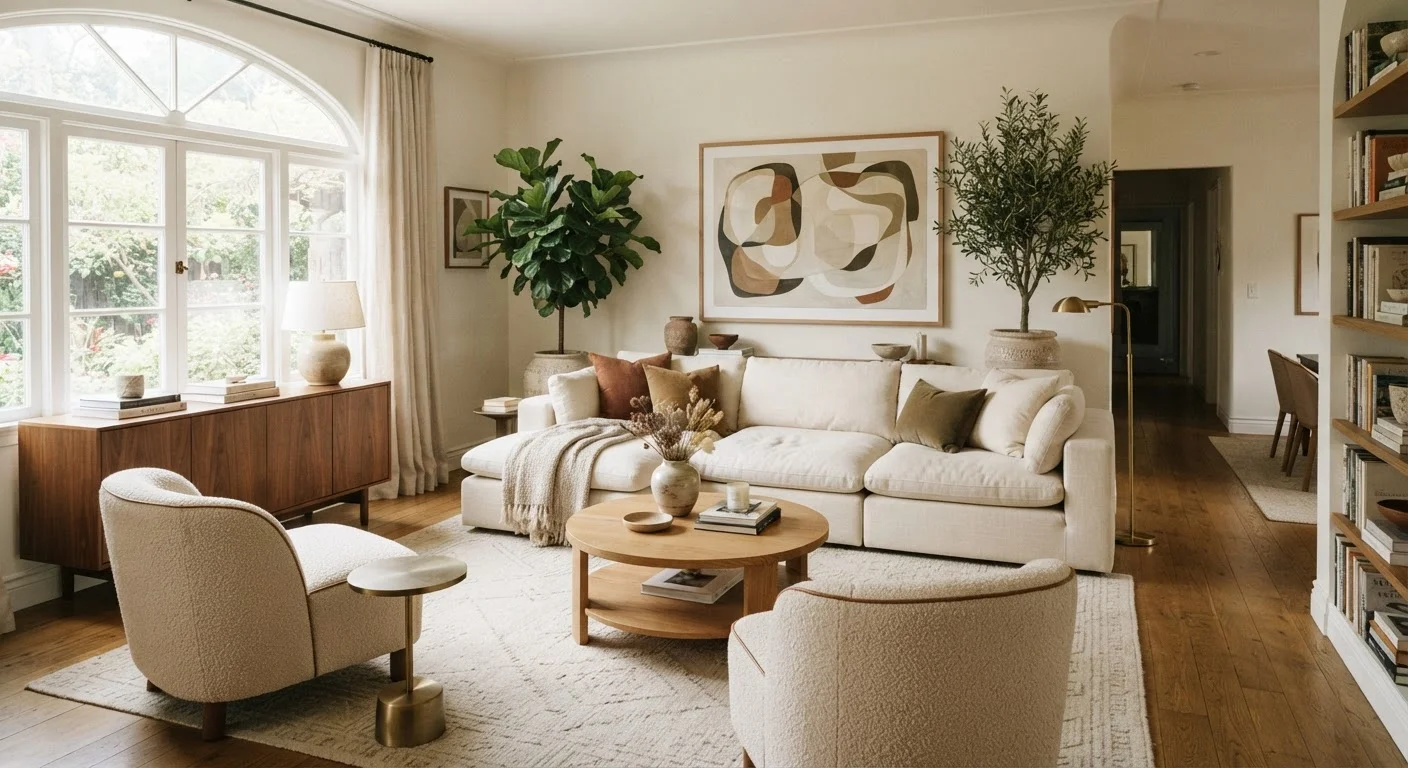
Photo: ArticleHood.com | Precision In Every Word editorial
Key Takeaways
- Scale measures how an object's size relates to the overall room; proportion measures relationships between objects.
- A common mistake is choosing furniture that is too small for a large room, making it feel empty and disconnected.
- Ceiling height is a key reference point - taller ceilings can support larger, more dramatic pieces.
- You don't need to measure everything precisely; training your eye through observation goes a long way.
- Rugs, artwork, and lighting are the items most often chosen at the wrong scale in residential rooms.
Why These Two Principles Matter More Than Trends
Walk into a room that feels immediately comfortable and you've likely encountered good scale and proportion, even if you couldn't name it. These aren't abstract design concepts reserved for professionals - they're the invisible framework behind every room that just works.
Trends come and go, but scale and proportion are constants. A velvet sofa, a rattan chair, a sleek Scandinavian shelf - any of these can look right or wrong depending entirely on how well it fits the space around it and the objects nearby. Getting these two things right is often the difference between a room that feels curated and one that feels like a furniture showroom floor.
Texture in Home Décor: The Element Most People Overlook is another foundational principle that works hand-in-hand with scale - once your sizing is right, layering textures adds the depth that makes a room feel truly complete.
57-60"
Recommended artwork hanging height from floor
This range, corresponding to average eye level, is a widely cited guideline in professional interior design practice.
10-12"
Ideal clearance between chair seat and table top
Furniture ergonomics guidelines generally recommend this range for comfortable dining and workspace seating.
6-8"
Gap between art bottom and furniture top
Design professionals commonly recommend this spacing when hanging artwork above a sofa, console, or headboard.
Scale: Reading the Room Before You Shop
Scale is always relative. A 10-foot sectional isn't inherently too big - it depends entirely on the room it lives in. Before purchasing any significant piece of furniture or décor, it helps to understand two measurements: the room's square footage and its ceiling height.
Ceiling height is particularly underused as a reference point. In a room with 9-foot ceilings, a tall bookcase or dramatic floor lamp can feel grounded and intentional. In a room with standard 8-foot ceilings, the same bookcase might feel oppressive. Rooms with low ceilings generally benefit from lower-profile furniture and horizontal lines, while high-ceilinged rooms can support taller, more vertical pieces.
The three items most frequently chosen at the wrong scale in home interiors are rugs, artwork, and lighting. Rugs are almost always too small - a rug should anchor a seating area, not float beneath a coffee table like a small island. Artwork is often hung too high and chosen too small, leaving walls looking bare. And overhead lighting is frequently underscaled: a pendant or chandelier that looks bold in a showroom can disappear in a large dining room.
Use Painter's Tape Before You Buy
Proportion: How Objects Relate to Each Other
If scale is about the room, proportion is about relationships. A tall, slender floor lamp next to a low, wide sofa creates a jarring contrast - not because either is wrong in isolation, but because they don't speak to each other proportionally. A lamp with more visual weight, or a sofa with a slightly higher back, would bring those two elements into better balance.
Think about proportion as conversation between objects. A dining table and its chairs need to be proportionate - both in seat height relative to tabletop height (typically 10 to 12 inches of clearance) and in visual weight, meaning a delicate glass-top table with chunky upholstered chairs will feel mismatched.
The Rule of Three in Home Styling is a useful companion principle here - grouping objects in odd numbers naturally creates visual balance, and understanding proportion helps you choose items of varying heights and sizes that work together within that grouping.
Training Your Eye Without a Design Degree
Professional designers develop an instinct for scale and proportion through years of practice, but everyday readers can sharpen their eye with a few deliberate habits. One of the most effective: photograph your room before making changes, then study the image. The camera flattens the scene in a way that makes sizing issues immediately obvious - a too-small rug or an awkward furniture gap that you stopped noticing in person jumps out in a photo.
Another approach is to tape out the footprint of furniture you're considering on the floor using painter's tape before you buy. This gives you a true sense of how much floor space a piece will occupy relative to the room and other furniture around it.
For rooms that present ongoing challenges, Small Room, Big Impact offers practical décor adjustments - including how mirrors and furniture placement can shift how a space feels without changing its actual dimensions.
Ultimately, scale and proportion aren't rules to memorize - they're a lens for observing what's working and what isn't. Once you start looking through that lens, rooms that feel effortless begin to make sense.
“Proportion is the most difficult quality to achieve in a room - and the most important. It is what gives a room its sense of inevitability.”
— Albert Hadley, Influential American interior designer and co-founder of Parish-Hadley Associates
Frequently Asked Questions
The content on this site is for informational purposes only and is not a substitute for professional advice. Always consult a qualified professional for guidance specific to your situation.