
The Rule of Three in Home Styling: Why Odd Numbers Work

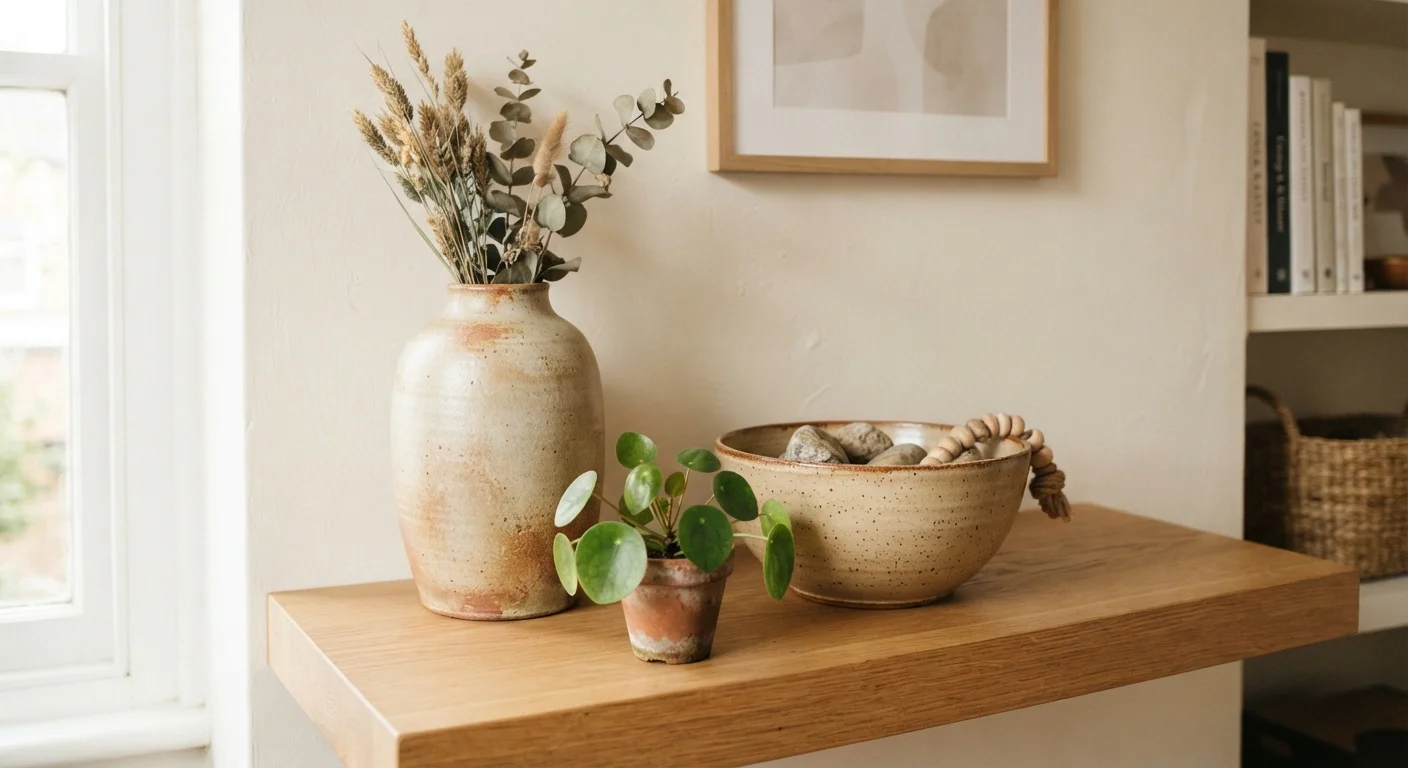
Photo: ArticleHood.com | Precision In Every Word editorial
Key Takeaways
- Odd-numbered groupings, especially threes, feel more natural and visually interesting than even pairs.
- Vary the height, scale, and texture of objects in a group to add depth and prevent monotony.
- The rule of three works in virtually every room - from shelves to tabletops to mantels.
- Even numbers create symmetry, which has its place, but odd numbers create energy and movement.
- You don't need to buy new items - rearranging what you own in odd-number groups can transform a space.
Why Odd Numbers Feel More Natural
If you've ever arranged décor on a shelf and felt that something was slightly off - even when each individual piece was attractive - even-numbered groupings may be the culprit. Two matching objects sit in perfect equilibrium; the eye reads them instantly and moves on. That resolution happens so fast it can feel flat or static.
Odd-numbered groups work differently. With three objects, the eye doesn't settle on a single axis - it travels between the pieces, creating a sense of movement and interest. Interior designers sometimes describe this as a grouping that "breathes." The slight asymmetry keeps the viewer engaged without tipping into disorder.
This isn't a modern invention. The principle has roots in classical art and composition, where painters and photographers long noticed that three-point arrangements guide the eye more effectively than two- or four-point ones. In home styling, the same logic applies at the scale of a coffee table or a mantelpiece.
Odd Numbers Beyond Three
How to Build a Grouping of Three
The most effective trios follow one simple guideline: vary at least two of three qualities - height, scale, and texture. A tall vase, a mid-height candle, and a small succulent in a pot check all three boxes. The variation creates a visual triangle, which is inherently stable and satisfying to look at.
Here's a practical approach to assembling your own grouping:
- Anchor with height. Start with your tallest piece. This becomes the visual anchor and sets the ceiling of your arrangement.
- Add a mid-height piece. Place it slightly in front of or beside the anchor, not directly behind it. Depth matters - flat arrangements in a single line look staged.
- Ground with something low. A small object at the base of the grouping completes the triangle and gives the eye a resting point.
For surfaces like open shelves, this principle is especially important. Open shelving tends to go wrong when items are lined up at the same height or in symmetrical pairs - odd-number groupings are one of the key fixes.
Try It Before Buying Anything New
Where to Apply It Room by Room
The rule of three isn't limited to one type of surface. Here's how it translates across common spaces:
- Living room: On a coffee table, group a tray, a stack of books, and a single decorative object. On a console, try a lamp, a framed piece, and a small plant.
- Bedroom: A nightstand works well with three items at varying heights - a lamp, a small dish or clock, and a book or botanical.
- Kitchen: A trio of canisters in graduated sizes, or three potted herbs on a windowsill, add visual interest without cluttering counter space.
- Bathroom: Three small vessels - a soap dish, a candle, and a small plant or object - turn a plain counter into a styled moment.
Pairing this approach with thoughtful texture choices adds another layer of richness. Texture is often the element most overlooked in home décor, but it's what makes an arrangement feel layered rather than flat. A smooth ceramic next to a rough linen object next to a glossy glass vase gives a trio genuine depth.
Scale is equally important - a grouping that's too uniform in size reads as a collection rather than a composition. For more on getting proportion right, see what interior designers mean by scale and proportion.
3
The most effective grouping size in design composition
Interior designers and visual artists consistently cite groups of three as the most reliably pleasing arrangement for guiding the eye across a surface.
2-3 qualities
Variables to change within a trio
Varying height, scale, or texture - ideally at least two of the three - is what transforms a random cluster into a considered vignette, according to standard styling practice.
When Even Numbers Are the Right Call
The rule of three is a guide, not a law. There are plenty of situations where even numbers - especially pairs - are the correct choice. Two matching bedside lamps create a sense of calm and symmetry in a bedroom. A pair of matching urns at an entryway signals formality and intention. Gallery walls sometimes use grid arrangements that are deliberately even, and that structure is part of what makes them work.
The broader principle is this: odd numbers tend to create energy and movement, while even numbers create balance and calm. Knowing when you want each quality - and mixing them across a room - is what gives a space both life and ease.
Before rearranging everything at once, it helps to evaluate what you already have. A room-by-room décor audit can reveal where odd-number groupings might make an immediate difference without requiring any new purchases.
Frequently Asked Questions
The content on this site is for informational purposes only and is not a substitute for professional advice. Always consult a qualified professional for guidance specific to your situation.